Ministers reject Waspi calls for compensation after rethink

 Getty Images
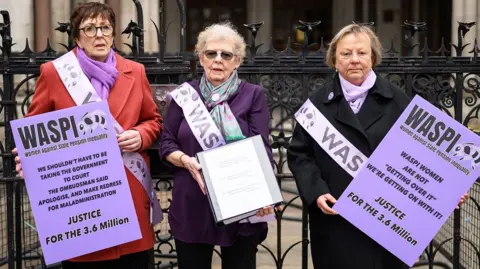
Women affected by changes to the state pension age have reacted with fury after ministers again rejected their claim for compensation.
The government reconsidered the case after a new document came to light, but has again concluded no compensation should be paid.
Campaigners say 3.6 million women born in the 1950s were not properly informed of the rise in their state pension age, which brought it into line with men.
The Women Against State Pension Inequality (Waspi) group said the latest decision demonstrated "utter contempt" for those affected.
 SUPPLIED
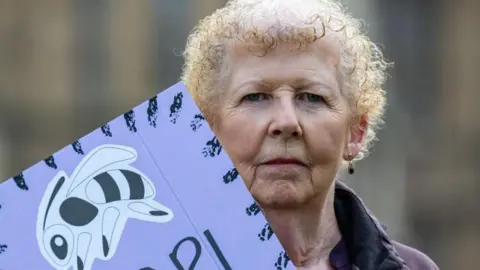
Angela Madden, who chairs the group, told BBC News that the decision was "appalling".
"We know it's a political choice. We know the government could pay us if it wanted to," she said.
The group was seeking legal advice about the decision, she added.
"We're not frightened of the government. We're not frightened of legal action."
The government said the vast majority of 1950s-born women already knew the state pension age was increasing, thanks to a wide range of public information, including through leaflets, education campaigns, in GP surgeries, on TV and radio, in cinemas, and online.
Others, however, said they were unaware of the changes.
In 2024, a parliamentary ombudsman recommended compensation of between £1,000 and £2,950 each for those affected.
While the Parliamentary and Health Service Ombudsman (PHSO) could recommend compensation, it could not enforce it and the government rejected it.
Speaking in the House of Commons, Work and Pensions Secretary Pat McFadden said the government accepted that "individual letters about changes to the state pension age could have been sent earlier".
He repeated the apology given by his predecessor Liz Kendall over when the letters were sent.
But he said the government also agreed with the ombudsman's previous finding that "women did not suffer any direct financial loss from the delay".
The emergence of a 2007 survey, which had not been handed to Kendall, prompted a review of the government's decision, with McFadden promising to check no other documents had been overlooked.
Now, the government has said a flat-rate compensation scheme for those affected would "cost up to £10.3bn and would simply not be right or fair given it would be paid to the vast majority who were aware of the changes".
More individual compensation "would not be practical to set up", it said.
McFadden said on Thursday that overall, the evidence suggests that most of those affected would not have read "an unsolicited pensions letter, even if it had been sent earlier".
He also said that those who knew the least about pensions — "the very women who most needed to engage with a letter" — were the least likely to read it.
 Pat Pollington
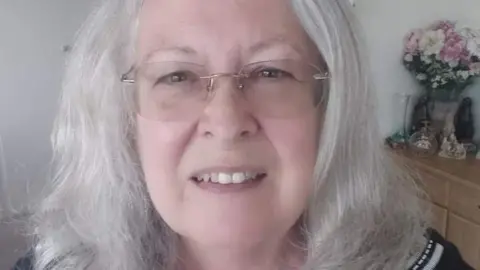
Pat Pollington, 71, said state pension changes meant she worked for years longer than she had expected.
She described the government's handling of the situation as a "fiasco", but said she was "not in the least surprised" by Thursday's decision.
She added that compensation looks expensive, but is only a drop in the ocean for the government, which she said is focused on the wrong priorities.
'Dashed hope'
The Conservatives accused the government of "cynical politics", while Liberal Democrat work and pensions spokesman Steve Darling MP said affected women will feel "utterly betrayed" by the decision.
"False hope was given to them in the autumn, and so that hope has been dashed," he said.
Ann Davies MP, the work and pensions spokesperson for Plaid Cymru, said: "The changes to the state pension age were poorly communicated, rushed through, and fundamentally unfair.
"An apology without compensation is not justice and these women deserve far more than words."
