My isolating desk job led me to hold survival races

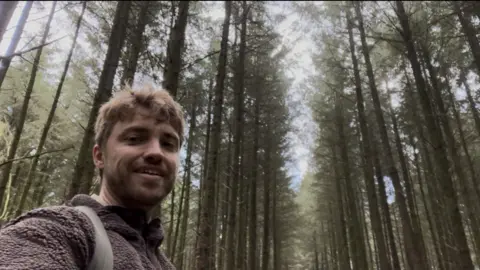 Max Weston
A dad whose mental health suffered due to his desk job has started organising outdoor challenges to help others switch off.
Max Weston, 34, from Bristol, is an investigative journalist looking into environmental crime, working from home. He said he found much of his work lacked personal, face-to-face connections.
But after being inspired by BBC One reality show Race Across The World, he began running team "survival races", which take place over three days and forbid phones.
Mr Weston said that knowing his company Wolf Pack has helped others ditch screens and push themselves out of their comfort zone "makes everything worth it".
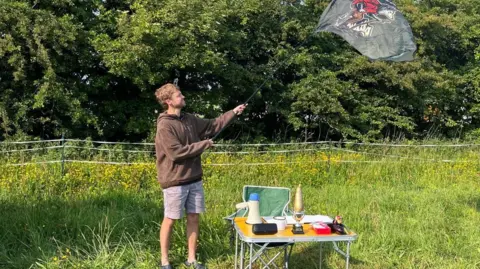 Max Weston
Mr Weston said the races have helped him to cope too.
"Now I go out into the wild in beautiful places and connect with people who are also struggling with the numbness of modern life," he said.
It balances his work for EIA International, an NGO investigating and campaigning against environmental crime and abuse.
He said that investigating topics including the illegal ivory trade in Nigeria, "can leave you feeling quite depressed at the state of the world".
Mr Weston said people can feel quite overwhelmed in their everyday life especially when they are lacking human connections.
"They just want to shut themselves off and it's easy to forget, when we do so much on our phones, how resilient and capable we are without them," he added.
Follow BBC Bristol on Facebook, X and Instagram. Send your story ideas to us on email or via WhatsApp on 0800 313 4630.