Boy is first to trial 'life-changing' exoskeleton

 BBC
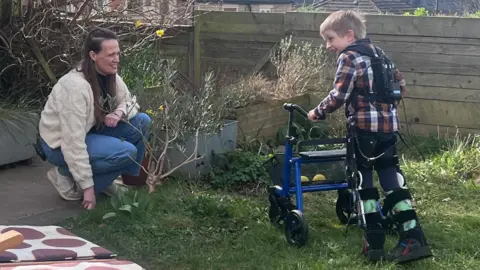
BBCA seven-year-old boy who has cerebral palsy has become the first person in the country to trial a company's bionic exoskeleton at home.
Asger, from Stroud in Gloucestershire, tested the new £72,000 powered exoskeleton to improve his range of mobility.
Parents Holly and Sam said it had been "exciting" to see him walk all the way to school. However, they said if they want to buy the potentially "life-changing" Agilik orthosis made by company Bionic Power, they would have to fundraise for it.
Sam Walmsley, from the London Orthotic Consultancy, which is running the trial, said he was sure the technology would become available to the masses in the future.
Cerebral palsy affects approximately one in 400 children in the UK, according to the NHS.
It is a developmental disability that affects movement and co-ordination.
Asger either uses his wheelchair to get about or a pushchair to walk long distances, but does not need them with the exoskeleton, which was initially developed for military use in Canada.
Sam said it had been "really exciting" to see Asger have more "independence".
However, the £72,000 exoskeleton cost is high – the parents paid £600 just to trial it for a week.
"If it's the right thing for him, we'll make it happen because we have to," Sam said.
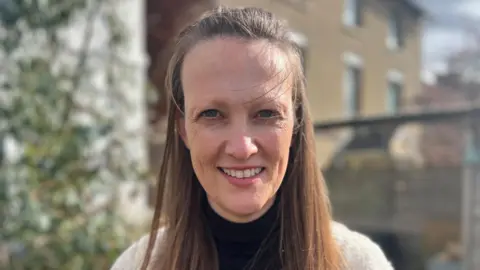
Holly said: "Disability is expensive. We couldn't really ever say no because you do anything for your children.
"If we did buy one it would take something like a really big fundraiser."
She said the technology could be "life-changing" for Asger.
Sam said the constant adjustments of the exoskeleton and servicing would add to the cost.
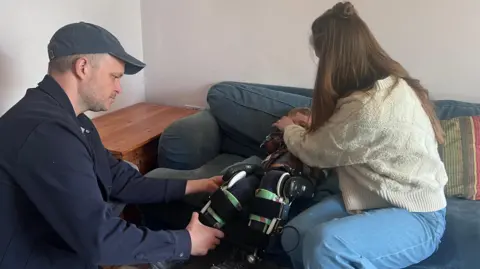
Walmsley said the parents had sought support from other suppliers and the NHS, but found "they couldn't quite get it right".
They then came to him and found out about the new power-assisted exoskeleton, he said.
Walmsley said: "Those few patients who can afford it build a bit of an evidence base so that it can be used by the masses."
Disabled households need £1,000 more than non-disabled households per month to achieve the same standard of living, according to the charity Scope.
Scope says this gap is rising year on year.
'Frustrating and debilitating'
Founder of the charity Action Cerebral Palsy, Amanda Richardson, said barriers to accessing affordable technology and experts can create anxiety for families.
"Children with cerebral palsy are one of the groups that wait the longest for referral and interventions," she said.
"We need to get the basics right... The longer they wait for help, the more frustrating and debilitating it gets."
Follow BBC Gloucestershire on Facebook, X and Instagram. Send your story ideas to us on email or via WhatsApp on 0800 313 4630.
