Invictus Games medals to be designed by students

 BBC
BBCMedals for the 2027 Invictus Games in Birmingham will be designed by university students in the city.
The school of jewellery at Birmingham City University launched a competition for find the students whose designs will adorn the official prizes handed out to athletes at the games.
Spent ammunition casings will be melted down to form the base metal of the medals in a bid to provide them with a "new meaning", organisers said.
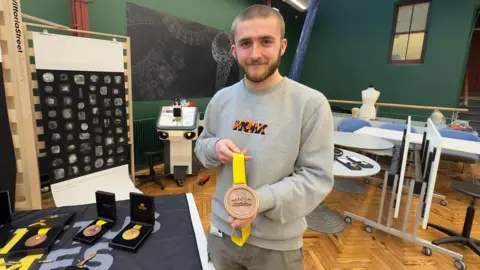
Peter Edwards, one of the students taking part, told BBC Midlands Today: "[The casings are] a lot harder [metal] than what we're used to, so it will be really interesting to see what they're like in comparison."
The games will involve wounded, injured and sick military service personnel, both serving and veterans, competing in events across the city in July 2027.
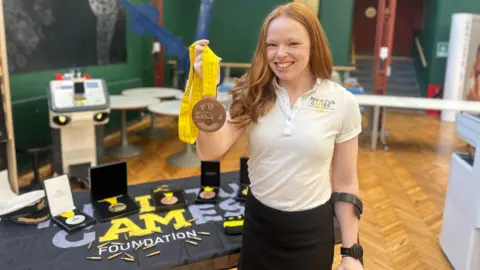
Athlete Samantha May, who won two bronze medals in the 2025 event, said it was all about the recovery of the service personnel and "helping them to be the best versions of themselves" after their experiences.
Asked what she would like to see on the 2027 medal, she said: "I think it would be great to reflect the city of Birmingham and the heritage here, but also the wider Invictus movement and the journey that all of these athletes have been on."
Captain Lee Hazard, deputy director of programmes and impact delivery for the 2027 Invictus Games, said he was "buzzing" about the medals.
Of the process of using the spent shell casings, he said it was a metaphor for following the journey of the athletes' recovery.
"You've got a purpose, a use. You're sent on operations and you're fired, and that empty cage cartridge is exposed and kind of feels lost," he said.
"We're going to take that and give it a new life, a new meaning, and we're going to give it some recovery - we're going to turn that into the metal."
He said anybody who had served in the military would likely be able to "find the synergies" with this process.
A judging panel will select the winning medal designs during April and May 2026.
Follow BBC Birmingham on BBC Sounds, Facebook, X and Instagram.
