Why did the tiger, pelican, toucan and puffin cross the road?
The headline may sound like an elaborate joke, but all the animals listed are names of crossings aimed at making roads safer for pedestrians, cyclists and horse riders.
The expanding menagerie has grown by one after the installation of North Yorkshire's first 'tiger crossing'.
The tiger or parallel crossing combines a zebra crossing with a cycle lane, allowing cyclists to ride across rather than dismounting.
On a zebra crossing, riders should wheel their bikes across and remount once safely on the other side of the road.
The tiger monicker originates from an initial design for the crossing which featured yellow stripes on black tarmac, rather than white stripes.
As with a zebra crossing, on a tiger crossing cars must stop when pedestrians and cyclists want to cross, without the need for a traffic light.
The crossings are complete with Belisha beacons - which are named after Leslie Hore-Belisha, the transport minister who introduced them in the 1930s.
As with tigers in the wild, the new type of crossing, which cost £150,000 and sits between two schools on Oatlands Drive in Harrogate, isn't common - there are fewer than 20 across the whole of Yorkshire.

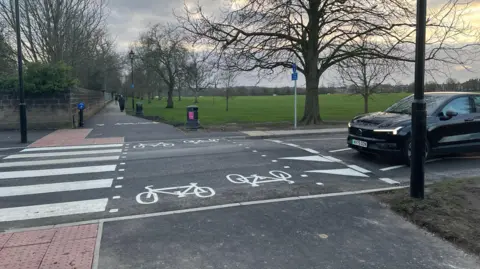
Locals I spoke to at the site were a little confused about the new safety measure.
Lizzie, a teacher, nailed it when she said: "Is it something to do with what it looks like, the stripes on the crossing?"
"I didn't even know it was happening" said Laura, a dog walker who passed by.
Cycling campaigners have been calling for the crossing for more than 10 years, saying it is a "huge step forward" for cycling in the North Yorkshire spa town.
North Yorkshire Council said: "It is hoped the upgrades will help to increase the number of people who use active travel, such as walking and cycling, and improve road safety in the Harrogate area."
How do cyclists benefit?
John Rowe, a campaigner from Harrogate District Cycle Action Group, praised the development, which is sited next to The Stray.
"It's the first piece of joined up infrastructure we've got that serves cyclists," he explained.
"It joins up Slingsby Walk from being separate sections that leave you at the mercy of the cars for every road crossing, to something that joins up and takes you somewhere."
The cyclist said this particular route was one of a small number of cycle paths on The Stray and could be used to access the town centre and the hospital.
"It's a huge step forward for cycling in Harrogate and a huge safety improvement for the two big secondary schools around here because this is the only crossing on this quite busy road."
What other crossings could people see?
 Getty
GettyThere are five other crossings people are likely to come across, which are slightly different from a tiger crossing
Pelican crossings are an abbreviation of pedestrian light controlled crossings. They have a button on each side of the road which pedestrians press when they want to cross, which activates a traffic light sequence
Puffin crossings are an abbreviation of pedestrian user-friendly intelligent. Similar to pelican crossings in that they are traffic-light controlled, puffin crossings have a sensor that detects when the pedestrian has finished crossing the road
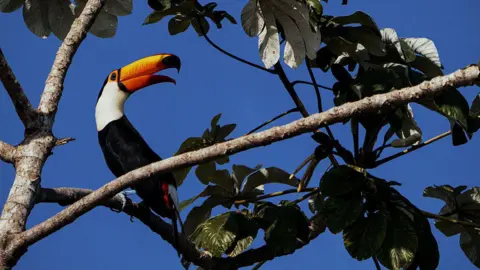
Toucan crossings is a mnemonic, 'two can' cross, i.e. both pedestrians and cyclists. They are just like pelican or puffin crossings but with an extra signal for bikes, often found on the outskirts of parks or cycle lanes and are wider in size
Zebra crossings are instantly recognisable black and white crossings with amber globes on top of black and white posts stood either side. They are designed to allow pedestrians to cross the road, without the need for traffic lights, the right of way is automatically given to pedestrians
Pegasus crossings are the least common crossings in the UK, they have a higher-placed control box for horse riders to press without dismounting
Listen to highlights from North Yorkshire on BBC Sounds, catch up with the latest episode of Look North.
