Author says she 'refuses to let the racists win'

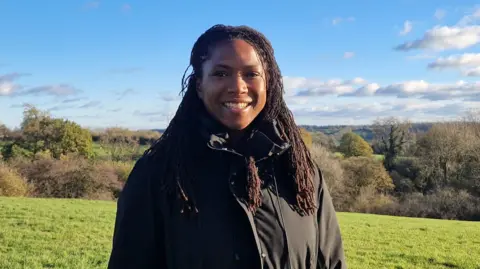 Hector Miles
"Black people shouldn't move to the countryside - or at least that's what I've been told."
Amina Makele, an author who moved to Somerset from London in July, published a reel on Instagram that detailed her fear about living in the countryside.
The video, which has had more than 500,000 views, started with the author stating her family and friends were concerned when she told them about her plans to move.
"Not moving where I want to live in the countryside, in the country I was bloody born in, would just be letting the racists win," she said in the video.
Ms Makele added: "I get it, my friends and family are just concerned - especially when they think about where I'm going to get my hair done, where I can buy my plantain and if I have kids if they'll be the only black people in the school.
"And I can't lie, in the current climate I do get afraid when I walk around my new home."
Ms Makele told the BBC many people have since welcomed her to Somerset, but some comments upset her.
She said: "Some of the more negative comments I've had are - 'why are you forcing diversity on the countryside?', 'Why are you forcing diversity on us?'."
The Bristol University graduate said she would like people to acknowledge the movement of people is a part of life.
"Humans are from everywhere," she said. "We all move for various different reasons and it's about getting to know different people and just getting along with different people."
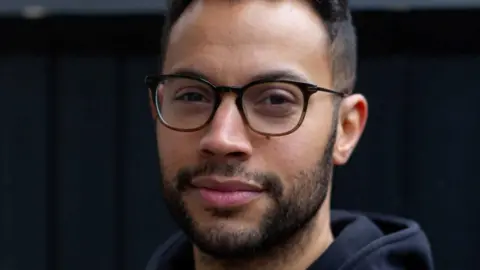 Lanre Bakare
Lanre Bakare, a Guardian columnist and author, said the countryside can be "an incredibly racist place".
In his recent book We Were There, he wrote a chapter titled The Last Fort - the first two pages of which were sent to Ms Makele by a friend after she published her video.
The journalist attributes the term to William Deedes, a former Daily Telegraph editor who died in 2007.
"[It's] this idea of the countryside being this last refuge for a certain type of Britishness - white Britishness - which was away from the the seeming chaos of inner cities in the 1980s," Mr Bakare said.
"That approach to the countryside where it's seen as this perfectly formed haven set against what had gone on in the early-80s in terms of the black presence in cities makes it the place which is referred to as The Last Fort."
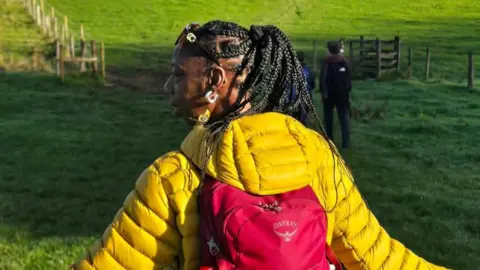 Sophia Brown
In September, Leicester University published a study entitled The Rural Racism Project: Towards an Inclusive Countryside.
Researchers spoke to 115 people and 20 community groups over two years, and their report said most participants felt "racism in rural England is getting worse", pointing to tight-knit communities, isolation and low levels of visible diversity.
Sophia Brown founded Bristol Steppin Sistas, a walking group for women of colour, more than five years ago.
Ms Brown, who is a wellbeing support worker, said the collective had experienced multiple instances of "indirect" racism while walking in groups of about 10 to 30 women.
Ms Brown said one example happened after the group completed the Portishead to Clevedon walk and stopped off at a pub.
She said: "As soon as we come in the bar, [the manager] will give the staff a nudge and say 'Don't serve them yet. Make them wait'.
"We've had about four people lined up by the women's toilets, because there was a queue, and this woman said 'Are you just passing?' Basically - what are you doing here?
"I said - no - we're just waiting to use the toilet and she went 'oh, make sure to wash your hands after'. It's that type of stuff. There's so many witnesses to this."
'Gotta keep walking'
Ms Brownsaid there has been a drop in the number of women attending the walks since there has been an increase of St George's flags being flown.
"It's allowed me to reflect on my childhood when we had the National Front," she said.
"I just think, no more. I'm not going to be scared to walk down that street, because the whole street had got flags flying," she added.
"We gotta keep walking."
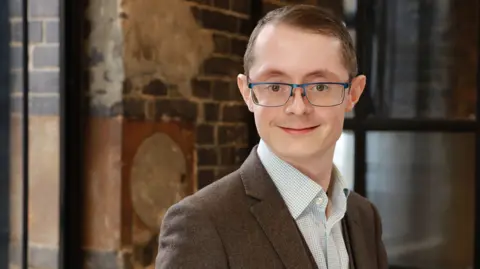 Countryside Alliance
The Countryside Alliance argues levels of racism in cities and rural areas are the same.
David Bean, parliament and government relations manager for the alliance, said: "We're not saying that there is no racism in the countryside - that would be an absurd position.
"What we do take issue with is the suggestion that rural parts of the country are inflicted to such a degree with racism as to merit the continual focus on this idea.
"It's a headline in chase of a story," he said. "When we start to think about what are the likely solutions to this, I think one of them has to be to try to refrain from quite so often giving the the impression that if you are from a minority background, coming to the UK, that you're not going to be welcome in the countryside.
He added: "I just don't think it's true and I don't think the data is there to back up that idea."
 Handout
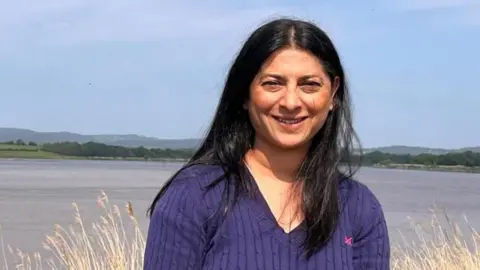
Hena Mannan-Rahman has lived in rural Gloucestershire for more than 14 years and said the racism she and her family have experienced was "hidden".
"In the city, I think it's obvious - they come out, they call you names," she said.
"Whereas in a rural environment I find it's almost hidden. It's okay to talk about me behind my back, but not to my face.
"To my face it's like - yeah, we accept you, it's absolutely fine, but then behind my back I'm referred to as a certain... in a not so nice way. I think that's the difference."
The mother-of-three wanted to emphasise that while her family had experienced racism through name calling and intimidation, many people in their community had welcomed them.
"I stood as a candidate for district council recently," Ms Mannan-Rahman said. "The love that people showed me on the doorstep, that to me was like - wow. I didn't expect it.
"Did I get racism on the doorstep? Yes I did. But I think once they understand what you're about and who you are, they accept you," she added.
Follow BBC Somerset on Facebook and X. Send your story ideas to us on email or via WhatsApp on 0800 313 4630.
