'If you don't have money for food, how can you be alive in Iran?'

 BBC
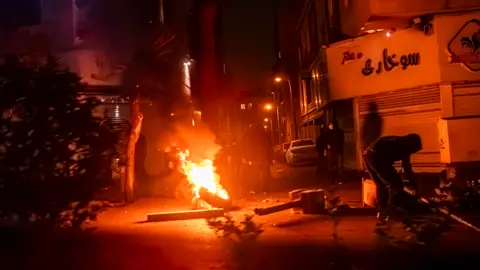
BBCIranians living in Northern Ireland say they are cut-off from their families as anti-government protests continue there.
The US-based Human Rights Activist News Agency (HRANA) said it has verified the deaths of nearly 500 protesters and 48 security personnel in Iran, while sources tell the BBC the death toll could be much higher.
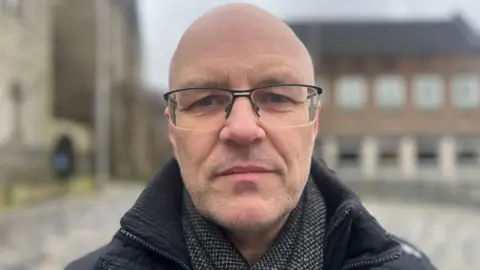
Hamidreza Bahmani, who lives in Belfast, says his parents, brothers and sisters are still in Iran.
"Many parts of my family (are in Iran). I can't just get the news from them... the government shut down the internet... the phones... we don't have news about them," he said.
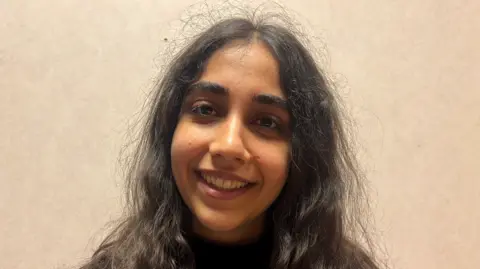
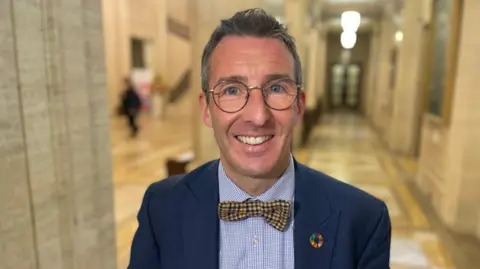
Fatemeh Sadat Mosavi also has grandparents and other family members in Iran.
"I think it was four days ago before they cut the internet and I have a grandma in Iran who was sick and I don't know how she is now," she said.
Anger over the plummeting value of the Iranian currency sparked protests in late December, which have grown into a crisis of legitimacy for Iran's Supreme Leader, Ayatollah Ali Khamenei.
Iranian leaders have described the demonstrators as a "bunch of vandals", and called on their supporters to take part in pro-government marches on Monday.
The government has also announced three days of mourning for what it called "martyrs" killed in a "national battle against the US and Israel" - two countries that Tehran says are fomenting unrest.
Speaking to Good Morning Ulster, Bahmani said what's happening in Iran was"a revolution".
"Today the people just want a change, they really want a change because people are only in the streets for basic rights, the freedom, the life, the normal life that many people in the world have," he said.
He added that he believes the governments was portraying the protests as a "war" and labelling protesters as "terrorists".
"My people are really tired from this system, from this regime... they control everything in this country," he said.
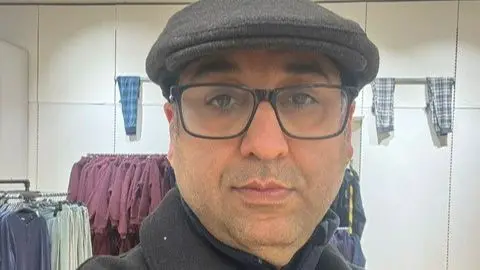 Hamidreza Bahmani
Sadat Mosavi said what was happening was "a very, very, very hard situation".
"Police and guards and security do not have any mercy... they kill everyone. They don't care about the age (of people), nothing," she said.
She said the Israeli and US governments see Iran "as the enemy".
"But the people of Iran do not see them as enemies and I hope they help as soon as possible," she said.
She added that due to the ongoing issues, particularly due to high inflation, people are "unfortunately in the end".
"If you do not have any money to buy something to eat, how can you be alive?" she said.
 Reuters
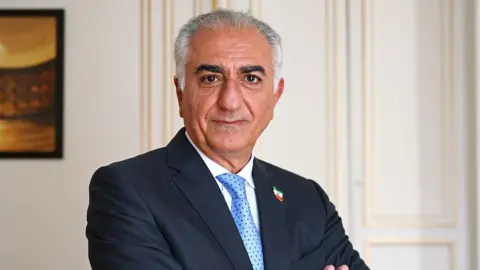
Bahmani said people were looking back at the past in Iran and believed the "only option" would be the former Crown Prince of Iran, Reza Pahlavi, to rule the country.
The 1979 revolution in Iran meant his father Mohammad Reza Shah Pahlavi, Iran's last shah (king) - once backed by Western allies - struggled to find refuge in another country and ultimately died of cancer in Egypt.
Reza Pahlavi now lives in Washington DC.
Bahmani added: "People don't trust the religion and the religious people again. They don't want to trust them because every time they trust, they broke the people's trust."
Sadat Mosavi echoed Bahmani's opinion.
"When we see his (Reza Pahlavi) father, he was a really good man for Iran, we want to see his family come back and build Iran back," she said.
She added that Iran is her home and she would want to go home if possible.
"Everyone likes their home and if Iran will become completely free... yes. Everyone likes to come back home and I wish it will be a safe place," she said.
Bahmani agreed: "If it's possible yes... I find my country free and safe... of course.
'Heartbreaking'
Mehdi, a student who moved to Londonderry from Tehran three months ago to complete a PhD at Ulster University, told BBC Radio Foyle's North West Today programme that watching what was happening was heartbreaking.
"People are not protesting. I think the word protest is not correct, it's a revolution," Mehdi said.
"People came to the street shouting what they wanted, they wanted their freedom, and unfortunately the Islamic regime opened fire."
He said due to hyperinflation in Iran, people had "become 45% poorer in just four months".
"Everyone was trying to do their job, but they couldn't make enough money to feed their family.
The Derry-based student said he had been unable to contact family in Iran for the past few days.
"I feel ashamed. Why? Because I'm here, I'm in a safe place and my brothers, my sisters in Iran are in a heavy threat of death," he said.
He said Iranian people were "counting on" Donald Trump".
"At this time we really need his help," he said.