Transplant success for girl, four, with rare disorder

 HANDOUT
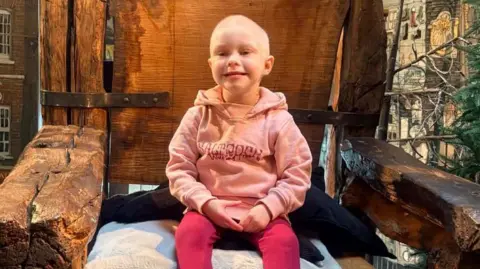
A four-year-old girl who has one of the UK's rarest genetic conditions is set to return home after six months of hospital treatment including a bone marrow transplant.
Autumn, who lives near York, has Hyper-IgE syndrome, which affects her immune system and requires daily antibiotics. She was diagnosed when she was about 18 months old.
She arrived at Great North Children's Hospital in Newcastle in October, and underwent a successful transplant from a donor in Germany in December. She has been isolating with her parents at a nearby hotel since Christmas Eve.
Her mother Louise said: "We are like flies in a jam jar - she has so much energy but we are hopeful we might be home in a few weeks."
"After the elation of coming out of hospital, it became isolation in a hotel room," she said.
But at 99 days post-transplant, Autumn is starting to produce her own T cells, creating her new immune system.
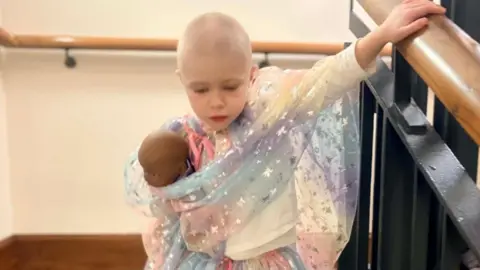
Louise said she was "doing really well with beautiful skin and her hair is growing back".
 HANDOUT
Autumn underwent chemotherapy and had to live in a bubble before going into "purple isolation" at the hospital - a stage with slightly more freedom such as being allowed to have short outdoor breaks.
Louise, Autumn and her father Matt are currently only allowed to leave the hotel for medical appointments until her cells reach a certain level.
Even when they are back home in York, Autumn will have to go into purple isolation again until her immune system has properly developed.
Louise previously said that only 60 people in the UK had Hyper-IgE syndrome and described it as a "spelling mistake in her genes".
"It just means that her immune system - although it produces white blood cells so they can go fight the infection - they don't actually know where they're going.
"So they just run around her body and they might stumble upon it, but she needs extra help to get rid of infections."
According to the charity Immunodeficiency UK, common features of the condition are severe eczema, increased susceptibility to infections and markedly raised levels of immunoglobulin E (IgE).
Listen to highlights from North Yorkshire on BBC Sounds, catch up with the latest episode of Look North.
