Barrier idea explored for pollution hotspot road

 BBC
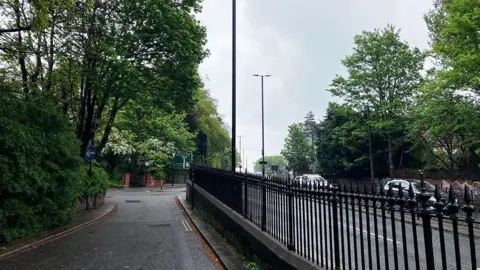
BBCWork to see whether erecting a barrier between a road and the pavement would reduce exposure to pollution at a known hot spot has been commissioned by a council.
Stephenson Road in Heaton, Newcastle, has high levels of nitrogen dioxide (NO2).
Newcastle City Council is exploring whether a barrier, or rerouting the pavement itself, could reduce the amount of pollution pedestrians are exposed to.
Northumbria University air pollution expert Prof Anil Namdeo said a barrier could be effective but would not address the risks faced by those on the road itself, such as drivers and cyclists.
The council said it was only considering options and did not "currently have any plans to install any barriers".
NO2 can exacerbate asthma and impede lung development, as well as increase the risk of lung cancer.
Results from the local authority's study to see whether any of the potential solutions would work are expected later this summer, it said.
If put into place the measures would be expected to cost between £50,000 and £100,000.
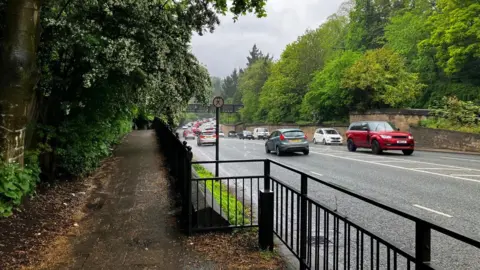
Annual average NO2 levels estimated by a monitor on Stephenson Road, on the entrance to Jesmond Park West, are 1.6 times higher than average UK permitted maximum levels and 6.45 times higher than the World Health Organization's advised amounts.
The council is looking at the potential effects of putting a barrier on a 49-65ft (15-20m) stretch near the monitor.
A spokesperson previously said the road experienced high pollution due to its "topography", as well as being "a main bus route, busy junction and main route connecting North Tyneside into Newcastle".
They also noted nearby residential streets did not exceed legal limits for the pollutant.
The Department for Environment, Food and Rural Affairs previously called the site a "localised hotspot".
Namdeo said a well-designed barrier could protect cyclists and pedestrians using that part of the road's footpath.
"If the geometry is right, barriers can be effective, but they are not a universal fix and the design detail matters enormously," he said.
Namdeo said the barrier would not have an effect on those using the road itself, such as drivers and cyclists.
"The barrier, if it works, will protect some of the people who use that path, but it will not change the concentrations in the road environment itself," he said.
"Reducing diesel traffic on that corridor is the only way to genuinely fix the air quality there."
