'Micro jobs' help people out of poverty - charity

 Zink
ZinkA charity that has won a national award for its "micro jobs" scheme has said it is helping people out of poverty.
Zink, based in Buxton, Derbyshire, set up the project in 2016 to provide small, paid roles within the charity and support people who have been out of work for long periods or have never worked at all.
The charity, formerly known as High Peak Food Bank, said 75% of people moved into mainstream employment within six months of starting the scheme.
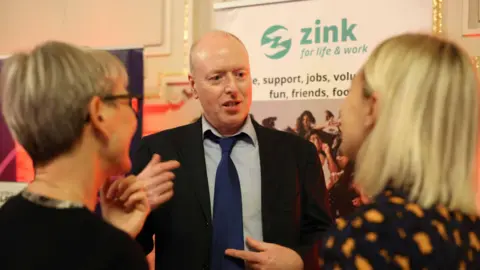
After winning a Centre for Social Justice (CSJ) award, charity CEO Paul Bohan said: "We're proud to have created an approach that makes a real difference and supports people to turn their lives around."
 Zink
ZinkAfter starting out as a food bank in 2014, Zink broadened its scope to tackle "the root causes" of poverty and social problems in the UK in 2020, such as family breakdown, addiction, debt and unemployment.
Mr Bohan said he wanted to support people by helping them manage their money and get them into work, which would "reduce reliance" on the food bank.
The charity CEO said the idea behind the micro jobs scheme came from a meeting with a group of recovering heroin addicts.
"The group said, 'who is going to employ me when I've been on heroin for 20 years?' And I said that I could," Mr Bohan said.
The scheme was then launched in 2016 after it received financial backing from Derbyshire County Council.
 Zink
ZinkZink said someone would usually volunteer in an area of the charity that interested them for a few weeks before "designing" a job title and description they could do at the charity as part of the scheme.
"The job will be something that helps them to develop and demonstrate skills relevant to the sort of work they want to do," said Mr Bohan.
Each person has to officially apply for the job at the charity and then have an interview with a Zink trustee.
'A lifeline'
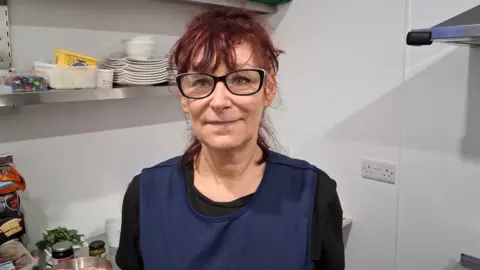
Jo Jo Smith, a chef, said she fell into alcohol addiction after suffering stress while running her own catering business.
"I lost all self-respect and all self-esteem," said Ms Smith.
"I lost my partner, my business. I knew I needed help but I didn't know where to get the help."
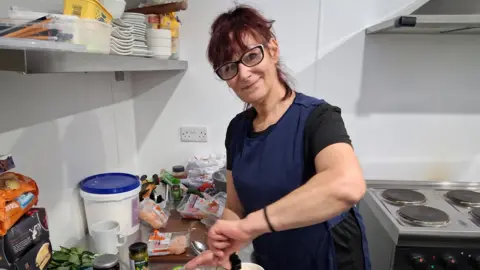
After going into rehab last December, Ms Smith decided to volunteer in Zink's kitchen, which serves food to the general public.
She then applied for a job at the kitchen after completing the "micro jobs" scheme.
"I lost all that chaos in my life and I'm doing a job that I love. It's all from the support here that I'm able to maintain my life.
"I would have probably gone back into addiction if I didn't have a place like this," she said.
 Zink
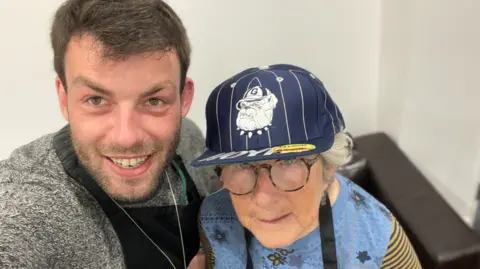
ZinkTurrum Mellor-Hughes said he was "completely broken" when he was struggling with drug addiction.
"I was unfixable at the time. I was injecting drugs before heading into work," he said.
Mr Mellor-Hughes said he started volunteering to "fill time" whilst waiting for his rehab to start and took part in the charity's scheme.
"Zink were a lifeline and they cared.
"If this [Zink] wasn't here, I would have picked up the phone to a dealer again. I think I would be dead," he said.
Mr Mellor-Hughes has now left Zink for a full-time job in residential childcare.
The charity is now asking the government to back similar schemes across the UK.
"We would like to share our learnings with the government. Against a backdrop of rising unemployment, micro jobs are needed more than ever," Mr Bohan said.
A Department for Work and Pensions spokesperson said: "We recognise the power of a localised approach which is why our trailblazers and local Get Britain Working Plans are empowering local leaders to tackle the root causes of economic inactivity in their areas.
"On top of this, we are delivering the biggest reforms to Jobcentres since the early 2000s to end the tick box culture, giving staff the flexibility to offer a more personalised service to jobseekers and help them into good, secure jobs."
- If you have been affected by the contents of this article, support can be found via theBBC Action Line
Follow BBC Derby on Facebook, on X, or on Instagram. Send your story ideas to eastmidsnews@bbc.co.uk or via WhatsApp on 0808 100 2210.
