Lights, camera, algorithm: Why Indian cinema is awash with AI

 MG Srinivas
The world's biggest film industry has a new breakout star – artificial intelligence. While Indian cinema is embracing AI far more readily than Hollywood, the use of the technology isn't pleasing everyone.
When screenwriter-director Vivek Anchalia set out to pitch his next movie, producers weren't biting. However, he brought in a new kind of collaborator, and his project began to gain traction.
With the help of AI tools such as ChatGPT and Midjourney, Anchalia found a way to make a film on his own. Midjourney rendered the visuals. ChatGPT was a sounding board. It took little more than one year but he found he was able to fine-tune the AI-enhanced pipeline – one shot at a time. "I think Midjourney knows me pretty intimately by now," he jokes.
Anchalia, who is also a lyricist, had been sitting on a collection of unreleased romantic songs. They were begging for a Bollywood-style canvas. "Soon, a story started to emerge," he says. The result was Naisha, a romantic film. "Why wait for a studio's approval if AI can allow me to make the movie on my own terms?" says Anchalia.
Across India's diverse movie industry, AI is not just a curiosity harnessed by emerging filmmakers. It has penetrated the daily workflow of big budget film production. From de-ageing veteran actors to voice cloning and visualising scenes before they are shot, AI is seeping into every pore of filmmaking in India. Some studios have quickly fallen in love with the technology – but it brings with it new risks and ethical quandaries.
The way Indian cinema has embraced AI in the creative and production process of filmmaking couldn't be more at odds with the situation unfolding at its American cousin in Hollywood. There actors and writers have staunchly resisted the use of AI, launching widespread strikes two years ago that brought TV shows and big name productions to a standstill. (Read more about how dead film stars are being brought back from the dead by AI companies that own rights to their images.)
For Anchalia, however, AI was an enabler. His film's budget was less than 15% of a traditional Bollywood production, with 95% of the 75-minute long movie generated by AI. After the trailer dropped, the computer-generated titular heroine Naisha even landed an endorsement deal with a Hyderabad-based jewellery brand.
 Vivek Anchalia
Anchalia says that while it may have taken a thousand iterations to find the desired visuals, it was still less stressful than mounting a big production: "AI has democratised filmmaking," he says. "Today, any young, aspiring filmmaker with no resources whatsoever can make a movie using AI."
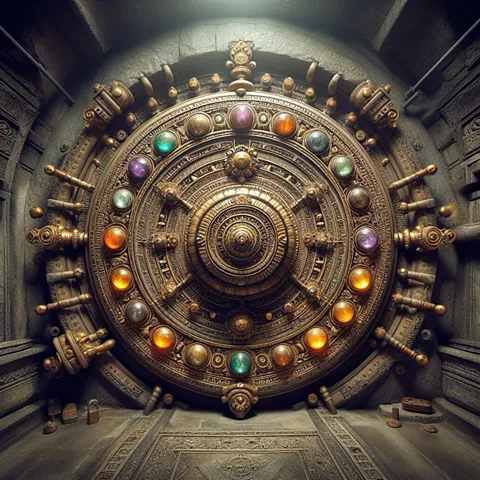
Established directors have also adopted AI. Jithin Laal used it during the early creative stages of Malayalam blockbuster Ajayante Randam Moshanam (ARM) to visualise a complex lock system he struggled to explain to his visual effects team. AI-driven pre-visualisation is now embedded into Laal's storytelling process. "For my next film, we are testing scenes before committing financial resources to full-scale production," he says.
And filmmaker Arun Chandu made a sci-fi satire on a shoestring budget of 20 million Indian rupees (around $240,000). "That's less than the cost of an Indian wedding," Chandu laughs. He used Photoshop, graphics programs and a deep learning tool called Stable Diffusion to create a military sequence in his post-apocalyptic Malayalam film, Gaganachari.
Meanwhile, sound designers Sankaran AS and KC Sidharthan have turned to AI-powered tools including Soundly (a cloud-hosted sound library), and Krotos Studio's Reformer, an AI-powered sound design tool that allows artists to playfully edit sound effects using cues including their own voice. "Back in the day, if a filmmaker had a radical, last-minute idea, we would have to book a studio. Today, our approach is: 'we can do it ASAP'," says Sankaran.
However, while Indian cinema has largely embraced AI without restriction, one question looms large: are Indian filmmakers damaging human creativity and introducing unnecessary risk to their projects?
Filmmakers such as Laal argue that, unlike human artists, AI lacks the emotional depth, cultural nuances, and human intuition that are key to great screenwriting. A Tamil-language version of the 2013 film Raanjhanaa was re-released in August 2025 – with its tragic ending rewritten as a happy one by AI. The new version was made by the film's production company without the consent of the original director.
 Jithin Laal
Meanwhile, some filmmakers in India have expressed scepticism that AI really will help low-budget movies and others have criticised the technology's lack of emotional depth. "It cannot create mystery, feel fear or love," director Shekhar Kapur told the BBC in 2023.
In Western cinema, digital de-ageing of actors has caused controversy at times – for example, when a de-aged version of Tom Hanks appeared in the 2024 drama film Here. However, when filmmakers in India used AI to insert a de-aged version of veteran Indian actor Mammootty into the 2025 Malayalam thriller Rekhachithram, social media was full of praise with some fans calling it "the best AI recreation in Indian cinema". The film went on to become one of the highest-grossing Malayalam movies of the year.
In Rekhachithram, a 73-year-old Mammootty appears as a 30-something. Andrew Jacob D'Crus, co-founder and visual effects supervisor at Mindstein Studios led the process. He and his team initially fed AI models with visual data of Mammootty from the 1985 film Kathodu Kathoram. However, the resulting footage appeared grainy. "It was not good AI fodder," D'Crus says. The team tried using scenes from Mammootty's 1988 film, Manu Uncle that was remastered in 4k.
Veteran actor Sathyaraj, known worldwide for the Baahubali franchise, weighs in. "If AI can extend my shelf-life by allowing me to play leading parts in action films, in an ageist industry such as ours, why not use it," he says, referring to his de-aged scene in 2024 Tamil-language superhero film Weapon, where the technology turned back the clock on his appearance from a 70-year-old into a 30-year-old.
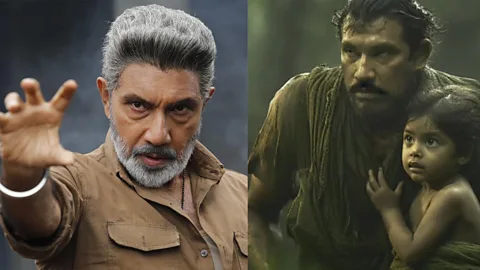
Director Guhan Senniappan had envisioned a stylised sequence akin to those in Kill Bill. "But we did not have the budget or the time. Had it not been for AI, the release would have been delayed," he says.
Despite the efficiency that AI brought to the project, Senniappan also noticed quirks with the technology. "Try throwing prompts such as 'demigod' and it would [return] unrecognisable results. AI is entirely unaware of hyperlocal references rooted in Indian mythology," Senniappan says.
For culturally-rich scenes, he continues to hire traditional storyboard artists. Frustrated and, he says, almost offended, Senniappan points out that AI tools are derived from western datasets, making them tone-deaf to Indian aesthetics. "You could create a sequel to a regional Indian movie using ChatGPT, but you would need to feed it the cultural memory of the original script. That script would have to be written by a human screenwriter," he says.
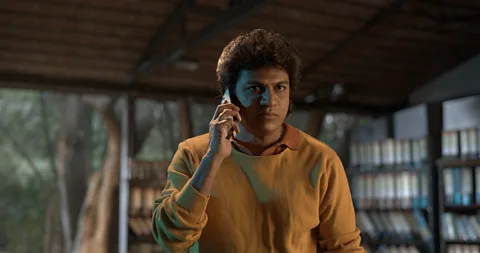
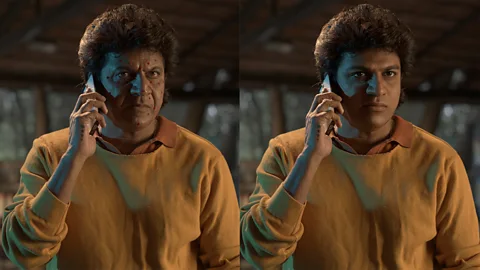
Filmmaker MG Srinivas was surprised by AI's cultural ignorance when he used the technology to clone the voice of his lead actor Shiva Rajkumar in Ghost, his 2023 Kannada-language action film. Srinivas needed human engineers to rewrite the regional phonetic models and rectify speech inconsistencies such as lisps. "When the trailer dropped in multiple languages, it worked. The audience did not realise that Shiva Rajkumar's voice in the Hindi, Telugu and Malayalam versions weren't his," he adds.
Both Senniappan and Srininvas feel that for a film industry such as India's, which is linguistically diverse, AI currently fails to grasp cultural and emotional nuance, making human intervention critical.
 MG Srinivas
To help navigate these issues, filmmaker Arun Chandu is training AI models to mirror his own creativity. "I am creating a clone of myself," he says. A former photographer, Chandu is feeding his body of work, including his signature composition, colours, visual style, into an AI model that he hopes will emulate his artistic persona.
One of the risks with all this is that people will begin to unfairly harvest intellectual property and actors' likenesses – because there is no specific law in the country that safeguards people from AI misuse. "There is no single comprehensive statute in this vein," says Anamika Jha, a media entertainment lawyer and founder of Attorney for Creators.
For living persons there are legal protections in India regarding use of their likenesses and voices, for instance, she says. Such protections are currently confined to live or recorded performances, however, and do not clearly extend to AI-generated imitations. "The absence of explicit legislative reforms to address such uses proves that the law is not moving at the same speed as AI," says Jha.
There is also an apparent lack of protections for film industry workers whose jobs are threatened by AI. "In India, the current labour laws do not account for AI use that bypasses or replicates human work," says Jha.
Some filmmakers are considering the ethical implications of adopting AI. Director and screenwriter Srijit Mukherji used AI to recreate the voices of two deceased Bengali artists: Oscar-winning Satyajit Ray in Padatik and Uttam Kumar in Oti Uttam. "I think it's not really an ethical dilemma if you go about it the right way. We brought the families on-board," says Mukherji.
However, Jha emphasises that "posthumous personality rights are not formally recognised" in India, which means "an actor's voice or likeness could be used after their death without consent".
"Families may offer informal permissions, but there is no statutory framework," she says.
 Guhan Senniappan
There are other issues to consider, such as the uncanny valley. Image-generating AI can produce images that look weirdly "off" to human eyes. The technology can also hallucinate or muddle details in its output. "There is always a concern of something seeming 'off' – a smile not curling right, or a stiff strand of hair. And audiences do notice such lazy storytelling," says D'Crus.
Aniket Bera, director of the Ideas Lab at Purdue University, has worked on two very different projects in the AI space – the restoration of a fragment of film from 1899, believed to be the oldest surviving footage of India, and an earlier AI-based experiment with Satyajit Ray's Pather Panchali.
"The AI softens the shadows and contrast that were so central to the film's mood. AI doesn't understand symbolism, it only guesses patterns," he says. Bera says that every step required human review to ensure the result was faithful to the original. "AI often hallucinated details, 'improving' things by changing the visual language. With that, we risk rewriting history."
For Mukherji, AI allowed him to realise his filmmaking vision. How else could he have cast two deceased actors? AI recreated the voice of Uttam Kumar throughout Oti Uttam. However, he emphasises that the project was heavily dependent on human input, all the same: for script-writing, collating archival footage, seeking legal permissions and vetting the AI's output.
AI tools are evolving rapidly, creating a host of regulatory and ethical questions. Mukherji urges optimism. "Instead of panicking, humans should get comfortable with AI," he says. "Tame it, master it and harness it. It isn't an android-like monster trying to gobble up your creativity. It is aiding creativity, not replacing it."
And yet, for others, AI's limitations remain evident. Chandu is now sharing his on-set learnings in the classroom – he teaches a university course on AI in cinema. In one module, he urges students to make two films – one using ChatGPT and AI video tools, and the other entirely with traditional techniques.
"We then compare which version feels more authentic. The goal is to understand if both could co-exist." The AI movies are generally faster and easier to make, he says. "But the version that is more nuanced, is always human."
--
For more technology news and insights, sign up to our Tech Decoded newsletter, while The Essential List delivers a handpicked selection of features and insights to your inbox twice a week.
