‘John Henryism’: The hidden health impact of race inequality


 John Mueller/Flickr/CC BY 2.0
The stress of racial inequality can be deadly. In the latest in our series Wise Words, we explore how a black American folk hero gave a name to the unfair health consequences among those without privilege.
It was a story of man against machine. In the 1800s, the black American railroad worker John Henry faced a contest that would tax his strength enough to kill him.
According to the legend, Henry’s job was to hammer metal rods into rock, ready for explosives. One day, he was pitted in a race against a steam-powered drill, which required much less toil, and threatened the workers’ livelihoods. Against the odds, Henry beat the machine, but died from the stress. Henry’s story inspired songs, books, and films – and a scientific hypothesis.
In the 1970s, the epidemiologist Sherman James, now at Duke University in North Carolina, noticed a troubling thing about the health of black Americans. It began when he came across a man whose life had remarkable echoes of John Henry’s tale – in fact, the man even shared the railroad worker’s name.
John Henry Martin, a black farmer, was also involved in an unequal fight against a “machine”: the inequalities of the rural US south in the 20th Century. Born into poverty, he left school after second grade. He taught himself to read and write, and by the age of 40 owned 75 acres of land in North Carolina. Determined to clear the loan for his farm, he worked night and day to settle the debt in only five years.
But all that effort came with a cost. By his 50s, Martin suffered from hypertension, arthritis, and peptic ulcer disease so severe that 40% of his stomach had to be removed.
 Getty Images
“Not only did his story echo the story of the folk hero John Henry, the steel-driver, it also echoed the life experiences of so many working class African Americans that I knew,” James told the Social Science Bites podcast recently.
James would go on to study larger populations, coining the term “John Henryism”. The hypothesis predicts that when people face prolonged adversity – against inequality, financial hardship and racial discrimination – the “high-effort coping” required to thrive will damage their health through stress. What follows is a greater likelihood of cardiovascular disease, heart attacks and other problems.
Since then, John Henryism has been observed in various black American communities, and globally in Finland, Holland, and Brazil. Evidence among other minorities is mixed. One 2006 study failed to find the effect among relatively wealthy Indian and Chinese immigrants to the US, but more recent research did observe it in low-income Latino communities in Detroit.
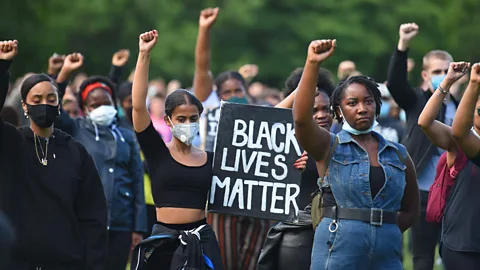
John Henryism may have particular relevance to the Covid-19 pandemic, which has killed a disproportionate number of black individuals in Western countries. While it’s not the whole story, the heart conditions and high blood pressure that the hypothesis predicts also increase risk for people who are infected with the virus.
As James once wrote, the victory of John Henry the railroad worker and the success of John Henry Martin the farmer suggest that it’s possible for individuals to overcome the odds, but “not without struggle, and not without a price”.
--
Welcome to Wise Words, a BBC Future series that aims to boost the vocabulary we use to describe a rapidly evolving world. We’ll uncover lesser-known words and phrases that label previously hidden phenomena, guided by the belief that novel language can unlock novel understanding.
Want to expand your vocabulary even more? Discover more:
If you liked this story, sign up for the weekly bbc.com features newsletter, called “The Essential List”. A handpicked selection of stories from BBC Future, Culture, Worklife, and Travel, delivered to your inbox every Friday.
