Hijacking an icon

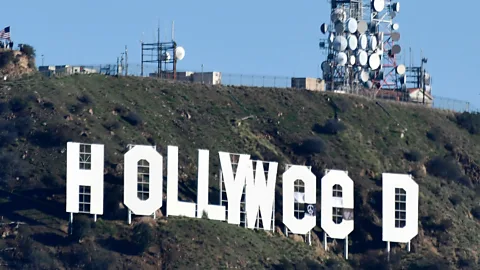 Gene Blevins/AFP/Getty Images
The cheeky vandals who defaced the Hollywood sign have something in common with the great art critic John Berger who died this week, writes Kelly Grovier.
In art, as in life, sometimes it is hard to see the wood for the weed. Such was the case on New Year’s day, when a team of still-unapprehended vandals forced southern Californians to do a double-take as they glanced up to the Santa Monica mountains. Eluding security and using nothing more than a few white sheets and black banners, the mischief-makers managed deftly to alter the famous hillside sign that looms iconically over Los Angeles into a momentary celebration of a new law that makes recreational use of marijuana legal.
Gene Blevins/AFP/Getty ImagesSuddenly, the high life being trumpeted from the Hollywood Hills was no longer the glitz of Tinseltown, but the spliffs of “Hollyweed”. More a playful prank than an act of enduring defacement, the sly sleight of eye that innocently nudged the Os into Es reminds us, nevertheless, just how easy it is to hijack a cultural symbol and commandeer its meaning. As it happens, that reminder was eerily timed. The following day, on 2 January, the writer responsible for helping make audiences aware of how vulnerable cultural icons are to manipulation – the British art critic and Booker-prize winning novelist John Berger – died in Paris at the age of 90.
Berger became a household name in 1972 when, in the opening scene of his now legendary BBC mini-series on Western art, Ways of Seeing, he forced viewers watching at home to do a double-take. Sporting a 70’s shirt and a disco hairdo, Berger strode confidently up to a masterpiece by the Italian Renaissance artist Sandro Botticelli, pulled out a box cutter, and began tearing violently into the 15th-Century masterpiece until he’d prised the head of Venus from the canvas. That Berger was attacking a copy and not the original hardly made a difference to the aghast viewers, who were accustomed to watching posh historians relate to works of art as if they were sacred relics.
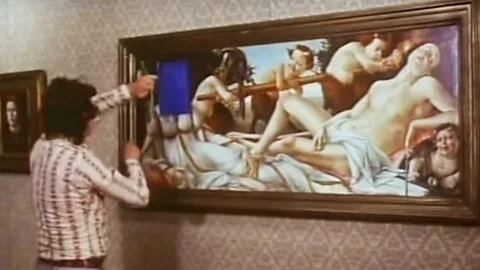 YouTube
Berger’s irreverent assault was intended to illustrate how those who control the images that we consume in books and films, magazines and ads, invariably destroy the meaning of those works for their own political and economic ends (ideas he’d adopted from the German philosopher Walter Benjamin’s seminal 1935 essay The Work of Art in the Age of Mechanical Reproduction). By changing the way popular audiences responded to the use of works of art by those with the power to reproduce them, Berger changed the way we see – leaving the eyes of his audience as wide open as a pair of unadulterated Os in the Hollywood sign.
If you would like to comment on this story or anything else you have seen on BBC Culture, head over to our Facebook page or message us onTwitter.
And if you liked this story, sign up for the weekly bbc.com features newsletter, called “If You Only Read 6 Things This Week”. A handpicked selection of stories from BBC Future, Earth, Culture, Capital, Travel and Autos, delivered to your inbox every Friday.
