The ‘camp trash’ that became a classic

 Shutterstock
Is Valley of the Dolls a dark, transgressive satire on the patriarchy – or just a fabulous melodrama? As the novel turns 50, Lindsay Baker goes in search of answers.
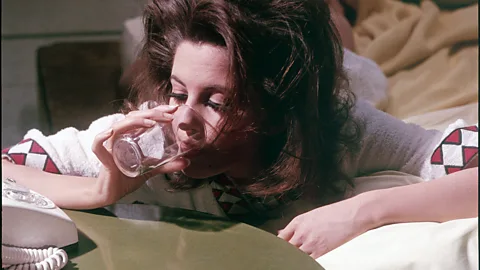
Fame, pill-popping, sex, ambition, fashion, all served up with a generous helping of glitz and melodrama – no wonder Jacqueline Susann’s novel Valley of the Dolls has become a cult read. So contemporary are its themes that it’s hard to believe that this year the book celebrates its 50-year anniversary and has been reissued for a new generation of readers. It was an instant hit on publication, spawned a film, and since then has sold 31 million copies, making it one of the bestselling books of all time. But what is it about the ostensibly trashy Valley of the Dolls that has made it so enduring? And does it qualify as a ‘camp classic’?
 LIFE Images /Getty Images
Paving the way for blockbuster authors such as Jackie Collins and Danielle Steele, as well as later hit TV series such as Sex and the City and Girls, Susann’s novel is shockingly frank not only about sex but also about prescription drugs (uppers and downers or ‘dolls’), and is told from an uncompromising female point of view. It tells the brutal tale of three young women – reserved, privileged Anne Welles; pragmatic, glamorous Jennifer North; and bold, gifted Neely O’Hara –– as they struggle to scale the career heights of showbiz on Broadway, and plumb its depths.
So is Valley of the Dolls a dark, transgressive satire on the patriarchy – or just a fabulous melodrama? “I think it’s both,”says British author and cultural commentator Paul Burston, whose fiction has been “heavily influenced” by the novel. “Susann was far sharper than many critics gave her credit for. The book delivers as melodrama. It has all the elements you expect – larger-than-life characters, emotional conflict, twisted love, thwarted ambition, sexual and professional rivalry. But it also deals candidly with subjects that were still considered taboo at the time – sexuality, drugs, the dark side of fame. It’s as much a critique of gender norms as the trashy, guilty pleasure some see it as.”
Camping trip
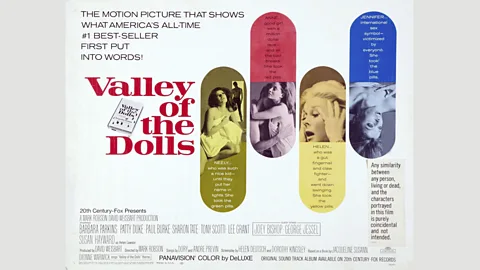
Burston, who is also chair of the Polari First Book Prize and founder of the Polari Literary Salon, once introduced a screening of the film of Valley of the Dolls as part of a gay film season. “It was startling how many people present knew every word of dialogue,” he tells BBC Culture. Both the book and film have become part of the LGBT cultural canon. Why is that? “Larger-than-life female characters have often struck a chord with gay audiences,” says Burston. “And ‘Valley’ has several female archetypes we all recognise. There’s the fading star, the ambitious young rival and the doomed beauty. There are shades of Judy Garland, Marilyn Monroe and Bette Davis in All About Eve – all of whom have traditionally struck a chord with gay men. The film version [released in 1967], though flawed, has added to the cult appeal.”
 Shutterstock
And are the themes of the book still current today? Without doubt yes, in Burston’s view. “It’s the original blockbuster novel and still the best by far. The themes are as relevant now as ever. Our obsession with celebrity shows no signs of abating. If anything, it’s become more pronounced. . . Talent doesn’t seem to come into it. It was Warhol who said that in the future everyone would be famous for 15 minutes, but I think Susann saw it coming too. She was a contemporary of Warhol’s, an industry insider, someone who’d tried and failed to make it as an actress, and who then channeled everything she’d learned about the fame game into her books. ‘Valley’ is incredibly knowing about the nature of celebrity. In some ways it’s quite prophetic. There are many ‘celebrities’ around now who could be characters from a Jacqueline Susann novel.”
Claws out
Valley of the Dolls makes for brutal reading, and its candid, unflinching depiction of the female experience was certainly ahead of its time in 1966, before the Women’s Liberation Movement had taken off. Playwright and author Samantha Ellis writes about the novel in her book How to be a Heroine: Or What I’ve Learned from Reading Too Much, and joins a panel at the Cheltenham Literature Festival to discuss the book. So which character of the novel is her heroine? “When I was a teenager it was Anne Welles, and the book is structured with her as the heroine,” says Ellis. “But then when I re-read it in my thirties Anne seemed so obsessed with being classy and didn’t have much fun, and for me Neely came out as the heroine. She is ruthless but she knows how to have a good time, she is a brazen ‘take me as I am’ woman, she has talent and wants to explore and nurture that, she is bolder and tougher, and not afraid to make a noise. She has purpose.” Or, as Neely herself puts it in the book: “I didn’t have dough handed to me because of my good cheekbones, I had to work for it.”
She is also a “man stealer,” says Ellis, which makes her not quite the proto-feminist heroine. “If you look at Shirley Conran’s Lace [published 16 years later], it’s an absolute revelation because the women in it are supportive emotionally and in their careers.” But then none of the characters in Valley of the Dolls, male or female, are without serious flaws – and arguably it is this that makes them believable. The fading, older star Helen Lawson (said to be based on Judy Garland) is monstrous, but also vivid. It is Helen who gets some of the book’s most melodramatic and frequently quoted lines. “The only hit that comes out of a Helen Lawson show is Helen Lawson, and that’s ME, baby, remember?” is one. Then there’s the put-down to her young rival: “They drummed you out of Hollywood, so you come crawling back to Broadway. But Broadway doesn’t go for booze and dope. Now get out of my way, I’ve got a man waiting for me.”
 Globe Photos/Zumapress.com
The women may not all be sisterly, but the book tackles plenty of feminist themes before their time. “It has a lot to say about how women are objectified and sidelined in theatre, film and TV,” says Ellis. “And about the pressure to look a certain way. She’s also good on the shocking way you see women in theatre and film treated when they get to a certain age – something that [Actors’] Equity are currently campaigning about.”
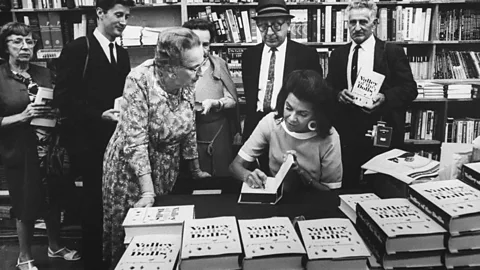
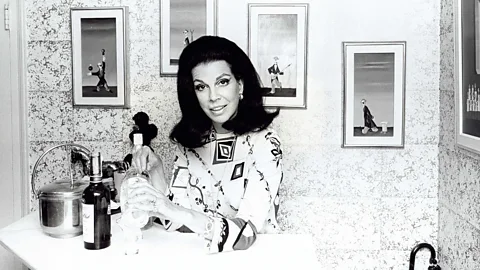
Jacqueline Susann herself was a glamorous, larger-than-life character, a skilled self publicist who sported a jet-black, bouffant waterfall hairdo, exaggerated lashes and vivid, psychedelic Pucci prints. And it’s perhaps no surprise that the author experienced her own fair share of misogyny when the book became a hit. Gore Vidal said dismissively of the author “she doesn’t write, she types,” and Truman Capote remarked on a TV chat show that she looked like a “truck driver in drag”.
Dolls and lolz
Whitney Robinson is the grand-stepson of Susann and manages her estate and branding, including a variety of glamorous collaborations, from Red Cherry false eyelashes to Jonathan Adler ceramic ‘Dolls’ pill boxes. “Valley of the Dolls modernised the publishing industry, turning what was a predominately male profession where books were meant to be studied into something much more democratic,” he says. “Jackie once said that she wanted people to read it on their work commute on the subway. For her, writing was another form of entertainment, and that sent shockwaves through the system. Despite selling over 30 million copies of Valley of the Dollsduring her lifetime – she died in 1974 – spawning a genre that paved the way for Jennifer Weiner, Candace Bushnell, Jackie Collins, Lena Dunham, and Emma Cline (who references Valley of the Dolls in The Girls), Jackie remained a pariah in the book world until after her death.”
 Shutterstock
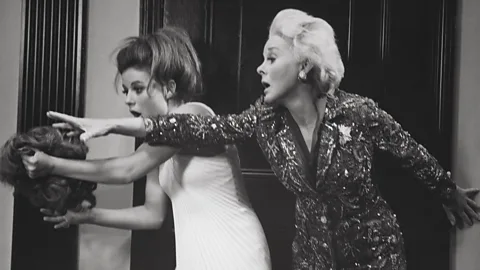
Arguably, it is the film rather than the book that has gained camp-classic status because of its unintentional comedy, much like Mommie Dearest. Robinson says “I always think ‘camp classic’ refers more to the movie version of Valley of the Dolls than the book due to the film’s saturated Technicolor, over-the-top costumes, the way the plot plays up some of the novel’s more melodramatic moments.” Likewise, in Samantha Ellis’s view, the comedy in the book is completely intentional, and masterfully done. “It’s a lot of fun,” she says. “As a comic novelist I think Susann is underrated.” The famous scene in which Neely grabs Helen Lawson’s wig in the ladies’ powder room and pulls it off is “very funny and very believable, it’s the kind of incident you might read about in the gossip pages.”
So is the book a camp classic, and if so is that a bad thing? Susan Sontag writes in her essay Notes on Camp: “Many examples of Camp are things which, from a ‘serious’ point of view, are either bad art or kitsch.” But she also writes “some art which can be approached as Camp merits the most serious admiration and study. The hallmark of Camp is the spirit of extravagance. . . Camp taste is, above all, a mode of enjoyment, of appreciation – not judgment. Camp is generous. It relishes, rather than judges, the little triumphs and awkward intensities of ‘character’. Camp taste identifies with what it is enjoying.” Or, to put it another way, as Paul Burston says: “Susann typed the manuscript of Valley of the Dolls on pink paper. I still think this alone makes it a camp classic.”
Watch a panel discussion of Valley of the Dolls from the Cheltenham Literature Festival live on BBC Culture’s Facebook page at 15.15 BST on Saturday 15 October 2016.
And if you liked this story, sign up for the weekly bbc.com features newsletter, called “If You Only Read 6 Things This Week”. A handpicked selection of stories from BBC Future, Earth, Culture, Capital, Travel and Autos, delivered to your inbox every Friday.
