'Fabled knights of old': The true story of Japan's mysterious samurai

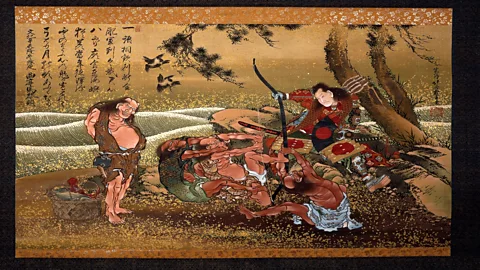 The Trustees of the British Museum
From medieval beginnings, the samurai have inspired art, fiction and films, from Shōgun to Star Wars. But their true story is more complex and surprising than we might realise.
The enduring legacy of the samurai is a singular phenomenon in cultural history. No other medieval social group has been as celebrated or mythologised so relentlessly in popular culture – from ukiyo-e prints of the 18th Century to contemporary video games, TV shows and films.
The arc of fame always bends to falsification, and so it is with the samurai: were these fabled knights of old really as fearless, loyal, self-sacrificial, disciplined, and uniquely Japanese as we thought? Not according to the British Museum's new Samurai exhibition, which wants to lift the smokescreen of fantasy around these mysterious and much misunderstood warriors – and reveal their true, and far more compelling, history.
So who were the samurai and how did their story begin? "They were not a unitary group of people, the same throughout history," the exhibition's curator Rosina Buckland tells the BBC. "I think the perception in the West is that samurai are warriors – and they certainly were. That's how they emerged and rose to positions of power in the Middle Ages. But that's not everything."
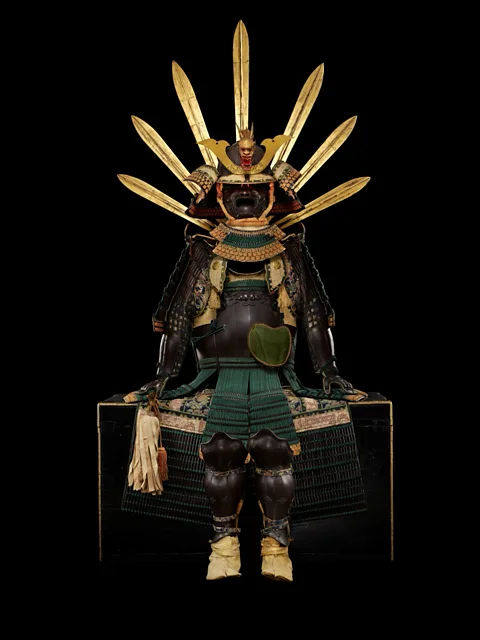 The Trustees of the British Museum
The origins of the samurai lie in the 10th Century, when they were first recruited as mercenaries for the imperial courts. They gradually evolved into rural gentry, but they were not, as people tended to think of them later, gallant crusaders following time-honoured chivalric codes. In battle they tended to use opportunistic tactics like ambush and deception, and they were often motivated more by rewards of land and status than a sense of honour or selfless duty.
Their adaptive outlook meant that they also embraced multicultural influences and foreign technology – another surprising facet of samurai identity. The cuirass of a magnificent samurai suit of armour on display at the exhibition was based on a Portuguese design. It has a pointed front and angled sides to deflect musket bullets, features which only became necessary after the importation of European firearms into Japan in 1543.
'Culture is power'
The samurai attained political power by exploiting the chaos caused by disputes over imperial succession. Eventually, one controlling clan – the Minamoto – took over and established a new government in 1185, parallel to the imperial court. Over the years, there was a rise and fall in these warlord dynasties involving various battles between clan leaders. But, as Buckland points out, "even in these early stages, culture is hugely important. Culture is power".
The military leaders – called Shōguns – realised that they couldn't wield authority successfully with the outlook and mentality of tribal warlords. So, they found ways to supplement their military strength with the more subtle and sophisticated modes of power brokerage within courtly society.
Their playbook for statecraft was based on Chinese philosophy, principally the ideas of Confucius. "In Neo-Confucian thought," says Buckland, "you have to have a balance between military power and cultural skill." The ramification was increasing investment in soft power in the incense-infused chambers of the court.
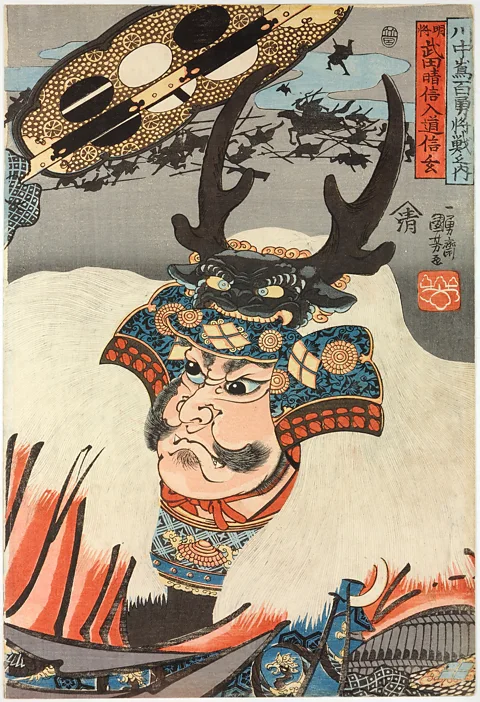 The Trustees of the British Museum
Alongside being adept in the art of war, the samurai became conversant with the refined arts of painting, poetry, music performance, theatre and tea ceremonies. A fan depicting orchids, painted in the 19th Century by a samurai artist, is one of the more beautiful and unexpected items in the exhibition.
Shōgun, the Disney/FX series whose second season is currently in production, provides a fictionalised account of one of the turning points in samurai history. In the 1500s, one clan leader, Tokugawa Ieyasu (represented by the fictional Yoshii Toranaga in the series), established a government that was so successful it lasted for 250 years.
This meant that there were no more major battles within Japan, and the samurai took on new roles. Rather than marshalling the battlefield, they now managed the state. "They're the ministers, the lawmakers, the tax collectors," says Buckland. They took on jobs that percolated throughout the court, "right down to being the guards in the castle gates".
Women samurai
During this new regime, known as the Tokugawa Shogunate, the families of the Daimyos (the regional lords of Japan) were made to live in his powerbase, the city of Edo (Tokyo). "They are kind of hostages, close to the Shōgun so he could keep his thumb on them," Buckland says. It was a means of enforcing the samurai's obedience and loyalty. "You can't be plotting out in the regions if your wife and your heir are in Edo, because you might lose access to them, or they might be executed."
The upshot was an increased importance of the role of women in samurai circles, according to Buckland. "The women are running the households while their husbands are often absent. And if you're a high-ranking samurai, you could have 40 or 50 people in your household. It's like running a small business."
As well as overseeing staff and tradespeople, they also managed their children's education and hosted guests with the required rituals and procedures. Various objects in the British Museum's exhibition, such as robes, etiquette manuals, and accessories, tell the life stories of these samurai women.
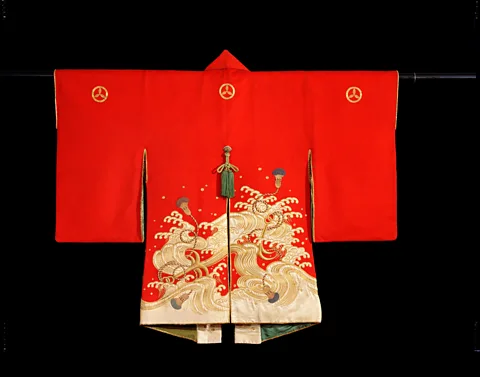 John C Weber collection/ Photo: John Bigelow Taylor
During the Tokugawa Shogunate, plays, poems and artworks increasingly played up the legendary samurai of the past, emphasising their heroism, valour and loyalty. Most proclaimed the virtues of men, but some told of female samurai warriors too.
A Ukiyo-e print from 1852 shows one of these women – Tomoe Gozen, wife of a general of the Minamoto clan. It shows her at the Battle of Awazu in 1184, where she was said to have tracked down the fearsome warrior Hachirō Morishige, knocked him off his horse, and twisted off his head with her bare hands.
Demise and rebirth
During the Meiji era (1868-1912), Japan opened its borders to international trade and began to modernise its industry, military and social institutions. Among the changes was the official abolition of the samurai class in 1869. It was another pivotal moment in the story of the samurai. "At this point, the samurai image becomes pure fiction," Buckland says. "It's rejected for about 25 years, but then nostalgia comes into play, their image is revisited."
Outside Japan, a newfound fascination with the samurai led to the popularity of such books as Bushido: The Soul of Japan (1899) written by Nitobe Inazō, a Japanese Quaker living in California. "The book was widely read," says Buckland. "Theodore Roosevelt bought multiple copies to give to his friends. It was used to explain Japan's success because it had recently won the Sino-Japanese War and then defeated Russia." Within Japan over the course of the 20th Century a distorted image of the samurai was manipulated for different ends, as propaganda for the military and a symbol of the nation.
More like this:
After World War Two, tales of the samurai were reborn once again – this time as the subject of films. Most famous of the directors behind these movies was Akira Kurosawa, whose flair for visual storytelling and handling of action sequences had a decisive impact on US cinema. Kurosawa's Seven Samurai (1954) was reinvented as The Magnificent Seven (1960) and Yojimbo (1961) inspired A Fistful of Dollars (1964).
Subsequently, Hollywood has even produced samurai films of its own, like The Last Samurai (2003) and 47 Ronin (2013) – and the popularity of all things samurai was affirmed most recently by the success of the aforementioned Shōgun, which is based on a 1975 novel by the English writer James Clavell.
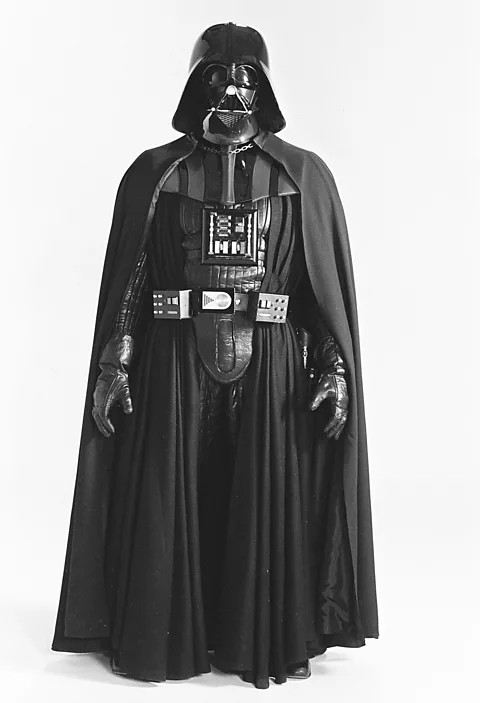 Courtesy of Lucasfilm
As the exhibition demonstrates, the original Star Wars film, A New Hope (1977) was inspired by Kurosawa's The Hidden Fortress (1958), and many of the costumes were influenced by samurai armour – Darth Vader's, which is on display in the final room of the exhibition, being the most iconic.
The true story of the samurai is one of evolution and adaption, from their beginning as medieval mercenaries to their later status as gentrified bureaucrats and patrons of the arts. But their legend has proved to be an evergreen source of intrigue and enthralment, kept alive over the decades in art, film, video games and fiction. "And we're hoping," says Buckland about the British Museum's exhibition, "that people will be inspired to create new representations of the samurai."
Samurai is at the British Museum in London until 4 May.
--
If you liked this story, sign up for the Essential List newsletter – a handpicked selection of features, videos and can't-miss news, delivered to your inbox twice a week.
