Gwyneth Paltrow verdict: Why she divides, and fascinates

 Getty Images
Having now ended in her victory, the star's trial over a ski crash has had the world rapt. It's all to do with her particular brand of unworldly celebrity, writes Christina Newland.
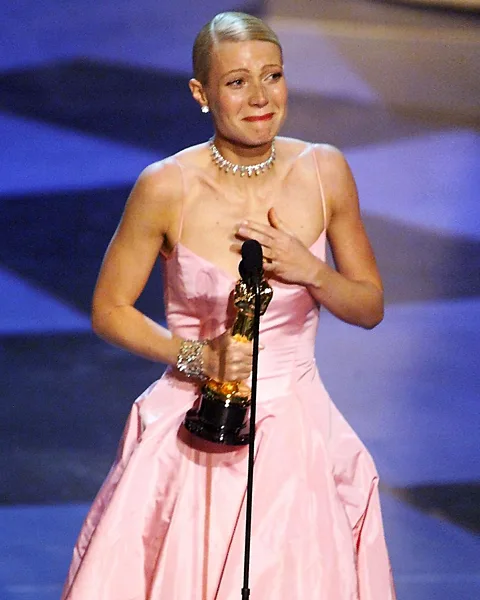
Before conscious uncoupling, her wellness brand Goop, or a child named Apple – never mind the public hoopla of a court case which naturally had to involve the most privileged of rich-person-accidents, a skiing collision – Gwyneth Paltrow was just a plain old movie star. There was a time in which Paltrow was simply an Academy Award winner for Shakespeare in Love, a willowy blonde of the 90s A-list, who cultivated an image off and on-screen, via characters like the heroine in 1996's Jane Austen adaptation Emma and Amalfi coast ex-pat Marge in 1999's The Talented Mr Ripley, as a chic social butterfly with charm to spare.
More like this:
– Hollywood's most extreme actors
– The Oscar outfits once mocked, now iconic
– A perfect film of the Instagram age
But back here in 2023, Paltrow has morphed far beyond the frankly-quaint designation of mere "movie star": over the last couple of weeks, somehow, she's also been the star of her own mini-theatre of celebrity ridiculousness via an avidly-watched, sensation-causing trial.
 Getty Images
Retired optometrist Terry Sanderson's lawsuit, which alleged that Paltrow failed to be diligent while on the slopes at a lush Utah skiing resort in 2016 and crashed into him, knocking him unconscious and leaving him with serious ongoing neurological issues, was met with a countersuit of Paltrow's own. Where he sued the star for $300,000, she demanded a $1 settlement in her favour, saying that it was, in fact, Sanderson who ran into her. What followed were eight frankly bizarre days of proceedings, featuring a phalanx of doctors, physicists (yes, really), and a defence attorney who repeatedly complimented Paltrow on her fashion sense and questioned her about her friendship with Taylor Swift. And yesterday afternoon in the courtroom in Park City, Utah, the verdict came through: the jury had unanimously found Mr Sanderson "100%" at fault for the incident, and awarded Ms Paltrow that symbolic $1 amount of damages.
How to explain the sheer level of interest in the case? The rush of media attention around the trial was understandable in and of itself, but Paltrow's particular style of celebrity, and the way it seemed perfectly attuned to the rarefied case in hand, undoubtedly added its draw.
An avatar of privilege
Perhaps it's that she has effectively turned into a one-woman brand name: when she launched Goop, for many it became a kind of byword for a particular brand of questionable wellness guru, seemingly aimed at lithe white women with spare time and cash to worry about infrared sauna blankets and "vagina candles".
As she has evangelised about chakra healing and $75-per-month vitamin supplements, Paltrow's high-end "yoga mom" spirit has overshadowed her film career. Even her exceptionally trim body, at 50, is another part of the brand: recently, she has spoken about a bone-broth diet which has been widely criticised as "dangerous". (She subsequently insisted that she has many days of eating "whatever" and "french fries".)
There is something so absurd about Paltrow's image that it seems almost to transcend the disdain you might expect to be levelled at her for such flagrant unworldliness. To many, she's such a caricature of privilege, doing things that are so glossily removed from ordinary life, that she seems to have become a source of amused, even affectionate fascination, hence the amount of memes of her testimony in the witness box that spread around the internet and platforms such as TikTok.
 Getty Images
Then there were the fashion choices, that led The New York Times to declare her a pioneer of "courtcore", and gave off what can only be called an "I'm expensive" vibe: designer knits in fashionable neutral shades, a $65,000 gold chain, a nondescript Celine handbag that only ever implies that it's even more expensive than something with a visible logo, and some gold aviator glasses from Gucci that were compared to those of serial killer Jeffrey Dahmer. These accessories all added to the drama, and as Twitter took serious delight in pointing out, she looked like nothing more or less than a woman on trial for ski-related crimes.
Her avatar of privileged white womanhood – inconceivably wealthy, hyper-fixated on things that most have never thought about (vaginal steamers, anyone?) – is a curious mixture of generational influence. That is to say: in the 90s, her embodiment of thinness, diet culture, and sunny lack of self-awareness, placed her smack in the middle of an entertainment business that would have expected little else. And in today's relentlessly critical social media discourse, many find her schtick so over-the-top that they can't help but find it entertaining.
Love film and TV? Join BBC Culture Film and TV Club on Facebook, a community for cinephiles all over the world.
If you would like to comment on this story or anything else you have seen on BBC Culture, head over to our Facebook page or message us onTwitter.
And if you liked this story, sign up for the weekly bbc.com features newsletter, called The Essential List. A handpicked selection of stories from BBC Future, Culture, Worklife and Travel, delivered to your inbox every Friday.
