Home workouts as essential viewing: Jane Fonda to Joe Wicks

 Alamy
AlamyAs screen workouts around the world play a more important role, Arwa Haider explores the cultural history of TV exercise – from bicep-rippling bodybuilders to George Orwell.
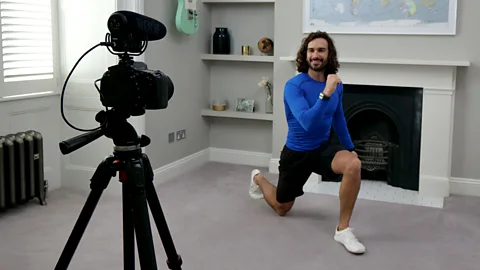
At 9am British Summer Time, a familiar daily scene emerges on screen: a living room in neutral tones, bare aside from a few family effects; a smiley, springy fitness instructor with rock star hair and his left hand in a colourful cast. This is London-based Joe Wicks, aka The Body Coach, who was recently hailed on CNN as ‘PE teacher to the world’; Wicks’s PE lessons, broadcast live every Monday to Friday on his YouTube channel (and freely available any time beyond that) have become a positive focal point during lockdown life. As Wicks told CNN: “I’m bringing children, teenagers and parents together… for that 30 minutes, they feel calm, they feel safe, and it elevates their mood… I want people to feel optimistic at this time when we need it the most.”
More like this:
- The film that changed how we see sport
- The power of reality TV in a pandemic
- The most treasured TV show ever
During his ‘Home HIIT Workout’ sessions (based on the contemporary trend for high-intensity interval training), Wicks delivers shout-outs to participants around the world; a flurry of viewers’ interactions (and infinite heart and rainbow emojis) also appears on screen, via YouTube’s live chat platform. The whole experience feels unifying and galvanising (and often delightfully silly, including ‘Fancy Dress Fridays’), in an age of physical distancing; PE With Joe shows can amass 23 million views in a single week. While I’d previously resisted The Body Coach’s charms, I now actively enjoy doing these upbeat PE lessons with my young son; they set us up for the day at home. The feel-good factor is boosted by Wicks’s decision to donate all money generated from this series to Britain’s heroic National Health Service.
 Getty Images
Wicks is both an amiable 21st-Century guru (“I want to be the person who completely transformed the health of the nation,” he recently told The Guardian newspaper) and part of a cultural legacy of fitness/entertainment, which stretches back many decades. The world’s first gymnasiums really are an ancient phenomenon (including sites in Persia, more than 3000 years ago); TV fitness shows embody a modern history.
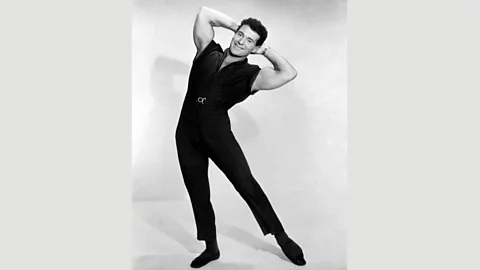
San Francisco-born gym owner and bodybuilder Jack LaLanne began his self-titled hit US fitness show in 1951, and boasted impressive longevity. The Jack LaLanne Show ran until 1985, but he continued to make prime-time sports and entertainment appearances (including cameos in shows from The Addams Family to The Simpsons) until his death in 2011, aged 96, and his ‘Godfather of Fitness’ status was celebrated in a 2015 documentary.
 Alamy
AlamyPossessed of bulging biceps and a lustrous quiff, LaLanne would demonstrate astounding feats of strength, yet also present a personable, accessible approach to fitness that felt emphatically pitched at viewers at home, particularly the women and children sidelined in mainstream sports messaging. The sense of intimacy and encouragement would create a template for generations of on-screen fitness; LaLanne would pull up a chair and congenially chat to his ‘students’ about happiness and anxiety, in a tone that still feels distinctly progressive. “If you don’t get enough exercise, it affects your mind… you get these tensions and frustrations,” he explained in one 1950s broadcast. “I am gonna help you help yourself – c’mon!”
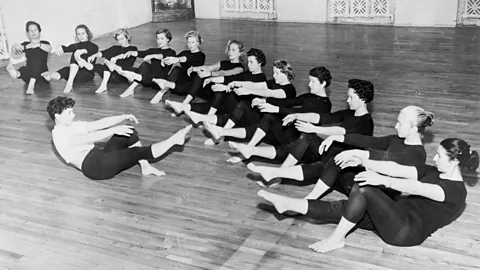
Credit is also due to another US fitness pioneer, Bonnie Prudden: an expert mountaineer and youth fitness advocate, who founded multi-gym/dance studio the Institute of Physical Fitness in New York in 1954. Prudden co-authored a 1955 report highlighting that US kids’ fitness lagged behind their European peers, which inspired President Eisenhower to create his Council on Youth Fitness; by the end of that decade, Prudden was a fixture on prime-time US shows including Today, and a collaborator with other on-screen fitness presenters including Debbie Drake.
 Alamy
AlamyThe notion that TV was just a medium for couch potatoes was rigorously turned on its head; Prudden also enjoyed a long and healthy media career until her death in 2011, aged 97 – and if video recording had existed around the launch of her career (and that of 1960s fitness stars such as Canada’s Ed and Barbie Allen), these workouts would have felt genuinely global.
Even George Orwell’s iconic dystopian novel Nineteen Eighty-Four (published in 1949) is weirdly prescient on the theme of TV fitness presenters. In one early scene, its protagonist Winston Smith undertakes the grim mandatory ‘Physical Jerks’ session, with the PE teacher rebuking him through the telescreen: “Winston sprang to attention in front of the telescreen, upon which the image of a youngish woman, scrawny but muscular, dressed in tunic and gym-shoes, had already appeared. ‘Arms bending and stretching!’ she rapped out. ‘Take your time by me. One, two, three, four! One, two, three, four! Come on, comrades, put a bit of life into it! One, two, three, four! One, two, three, four! ...’”
The gym in your lounge
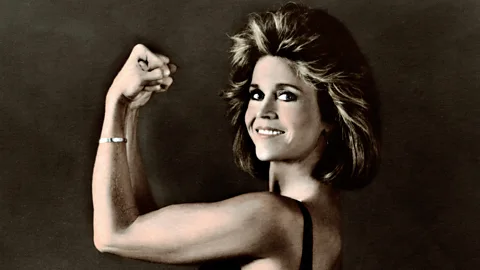
The real-life 1980s brought a jollier, transformative phase in TV fitness; this was partly because VCR tech brought the gym to your lounge at any convenient time, but in the UK, it was also because the advent of breakfast television spurred a new trend for ‘get up and go’ fitness routines. Britain’s first national breakfast programme, BBC Breakfast Time, launched in 1983, and also introduced the serene Green Goddess (aka leotard-clad Diana Moran); rival channel ITV’s TV-AM would present hyperactive pop workouts from ‘Mad’ Lizzie Webb – high-energy and high-camp. British Ghanaian dancer Tony Britts presented a slinky ‘Twice As Fit’ segment for BBC breakfast audiences – recently revived through the digital archives, and proving to be a quarantine home workout hit. The vogue for rhythmic aerobics exercise – brought to mainstream attention in Dr Kenneth H Cooper’s 1979 book The New Aerobics, and made fabulously glamorous by Oscar-winning actress Jane Fonda’s smash hit fitness vids – had an influence on music and fashion, including Olivia Newton-John’s much-mimicked 1981 anthem Physical.
 Getty Images
TV fitness personalities – and branding – seemed considerably pumped from that point. With Jane Fonda’s Workout (1982) becoming the biggest-selling VHS tape of all time, a surge of music and film stars released their own fitness routines. Into the ‘90s, US gurus such as Richard Simmons and Australian-born Susan Powter (with her “Stop the insanity!” mantra) brought a lifestyle/reality TV edge to their workouts; fitness instructors became more relatable through sharing their own health challenges (even ‘50s hunk LaLanne claimed that his youthful sugar addiction nearly destroyed him). Back in the UK, much-loved fitness coach Mr Motivator (Jamaica-born Derrick Evans) first found on-screen fame in 1993 – sneaking in a PE lesson before matinee screenings of kids’ show Power Rangers. Mr Motivator has also returned to present TV lockdown workouts: he’s an irrepressibly reassuring presence, still rocking fluoro-spandex and power moves in his 60s.
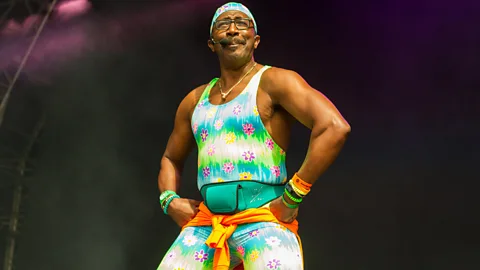 Alamy
AlamyYoung audiences often had their own fitness superheroes: Mad Lizzie’s most successful venture turned out to be her giant teddy sidekick Joggy Bear (who must have been sweltering in that suit); brilliantly surreal Icelandic kids’ show LazyTown featured dashing ‘slightly above average hero’ Sportacus (played by show creator Marcus Scheving, who also contributed to US fitness campaigns in character, with Michelle Obama); the smash hit cartoon Peppa Pig features its own fitness instructor character, the wonderfully chipper Mr Potato.
Global trends have often followed the transatlantic model, whether it’s glossy MTV Lebanon show Get Fit, with influencer-presenters including Maya Nassar, or Indian fitness instructor Suchita Pal hosting a Zoom TV series based on popular Zumba routines – although regional traditions also endure (such as Japan’s long-standing love of radio calisthenics). Global music stars, including K-pop idols tending towards the wholesome rather than hedonistic, now use social media to demonstrate gym workouts and yoga flows. The key to TV exercise, however, is its universality: its aspirations embrace all generations and levels of fitness, without making anyone feel excluded. Which is why Joe Wicks feels like such a vital collective adrenalin rush right now; whether it’s star jumps, squats or sprinting on the spot, there is a sense that we will get through this together.
Love film and TV? Join BBC Culture Film and TV Club on Facebook, a community for cinephiles all over the world.
If you would like to comment on this story or anything else you have seen on BBC Culture, head over to our Facebook page or message us onTwitter.
And if you liked this story, sign up for the weekly bbc.com features newsletter, called The Essential List. A handpicked selection of stories from BBC Future, Culture, Worklife and Travel, delivered to your inbox every Friday.