How do you cure homesickness?

 iStock
One BBC Culture reader is pining for home and resident textual healer Hephzibah Anderson has the books – from Laurie Lee to Jhumpha Lahiri – to help.
Dear Textual Healing,
About a month ago, I moved to another country for love. I am glad I took this decision, because it means my boyfriend and I can spend more time together and we can go forward with our relationship.
But at the same time I've been homesick. Sometimes the feeling is strong, and sometimes I barely notice it, but it's still there. I miss my cats, I miss the familiarity of my home town and the shops, I miss the customs, I miss my family, I miss the woods, I miss our local library... I've even stopped reading, although I used to read at least one book a week.
Can you please suggest some books that will help me feel less homesick and more at home?
Dear Pining for home,
We tend to think of homesickness as a juvenile malaise, adorable in the child on her first overnight school trip and endearing, even, in the teen calling home from university with a wobble in his voice. But by the time we edge into adulthood, we’re supposed to have grown out of such whimsy.
It wasn’t always so. During the 19th Century, homesickness among new immigrants to America, for instance, was considered suggestive of a virtuous or sensitive nature. As Susan J Matt explains in her 2011 book, Homesickness: An American History, the word didn’t become widely used until around 1750. Before then, such feelings were termed ‘nostalgia’, which was actually deemed a medical condition.
Kenneth Grahame’s Mole would certainly agree with that diagnosis. Just think of the scene in The Wind in the Willows when, lost in the woods on a dark December evening, he catches a whiff of Mole End, the home he’s abandoned in order to live with Rat on the river bank. Its effect is instantaneous and quite overwhelming.
These days, homesickness is seen as being less about missing a physical place and more about the stress caused by a break in routine. Still, it can be a serious matter – especially when it stops you from reading. Studies have shown that one good way of curing such feelings is to participate in the things you loved doing before you moved. Hopefully, our literary prescription will return you to your former bookish ways.
 Vintage
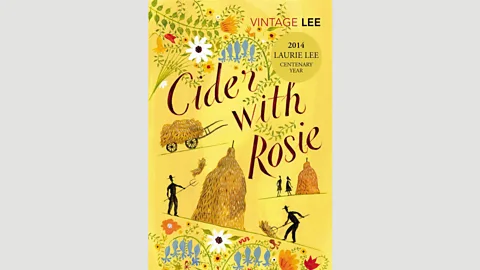
You don’t mention where it is exactly that you’ve moved from, so I can’t recommend any titles that will take you back there specifically. I’m not sure quite where it is that you’ve moved to, either, but that’s not going to stop me from suggesting you start with Laurie Lee’s Cider With Rosie. A vivid memoir of the author’s childhood in a Cotswold village, it depicts a moment on the cusp of the modern era – there’s no electricity or cars just yet, and kids are left to find their own fun. It’s a narrative so vivid, so redolent with nostalgia that to read it feels like going home, even if both the home you’ve left behind and the one you’ve newly arrived in are a million miles away.
Creature comforts
Sometimes, it’s comforting just to feel close to something you’ve left behind. You mention that you miss, among other things, your cats. For feline-centred literature, try Kafka on the Shore by Haruki Murakami. Kafka is the chosen name of a 15-year-old runaway, but the novel belongs equally to Nakata, an elderly man with an uncanny ability to talk to cats. How he came about his gift is a whole other story, but he’s put it to good use and become a professional finder of lost cats, of whom plenty prowl through this metaphysical mind-bender of a contemporary classic. Note that it’s not only Kafka who is far from home. Nakata, too, will find himself on a road trip – his first. You couldn’t ask for more beguiling companions as you muddle through these first few months of your own new adventure.
 Vintage
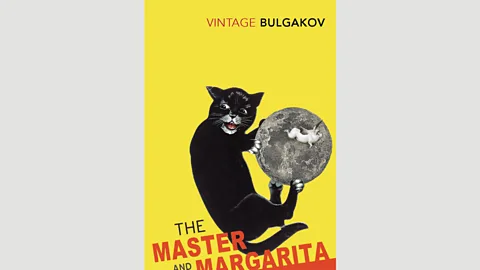
A black cat aptly named Behemoth features in another cult novel, The Master and the Margarita by Mikhail Bulgakov. This lethal satire of Soviet rule braids two narrative strands, one set in biblical Jerusalem, the other 2,000 years later in Moscow. That’s where Behemoth comes in. The size of a hog, he’s fond of vodka, chess and caustic philosophical utterances, at the same time retaining some undeniably cat-like traits. While making you feel a little closer to your former home, it’s a novel plenty wacky enough to distract you from any lingering melancholy.
Food for thought
But how to feel more settled in your adoptive country? One of literature’s greatest strengths as a remedy is its ability to offer up relatable characters and remind you that you’re not alone in pining for home. Novelist Isabel Allende knows plenty about living and loving in one place while feeling tugged back to another by roots. Having fled her native Chile and lived in America – and in English – for over 30 years, she still dreams and writes in Spanish.
Her new novel, The Japanese Lover, is set in San Francisco and centres on two women who form an unlikely alliance. Unlikely because there’s so much that separates them – age and culture, class and money. Yet both women are originally from someplace else: Alma from pre-World War Two Poland, and 20-something Irina from an altogether more modern Romania. The descriptions of Alma’s first days and weeks with her California cousins, separated from her parents and brother by geography and, more ominously, history, are the very definition of homesickness. Every night, hiding in a wardrobe to muffle the sound, she sobs herself to sleep. But read on, and you’ll learn how both she and Irina grow to feel like they belong.
 Mariner Books
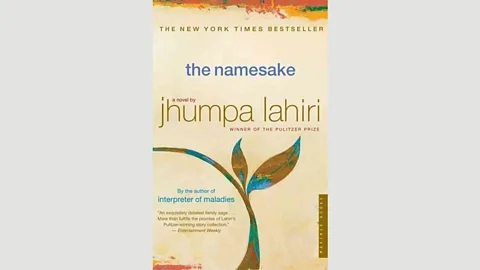
You’ll find another memorable story of displacement in The Namesake by Jhumpha Lahiri. Marriage has brought Ashima from her native India to Cambridge, Massachusetts, and the novel opens as she attempts to recreate a favourite snack from her former life, substituting Rice Crispies for a key ingredient. Food from home becomes a motif in this poignant novel whose pages are fragrant with samosas, aloo gobi and pink lassi.
Given the profound link between food and identity, it’s no wonder that memoirs with recipes – think of them as ‘foodoirs’ – have evolved into a mini genre over the past decade or so. Among the first was Apricots on the Nile by Colette Rossant, and it remains one of the most charming. As a small child, the French-born author was sent to spend World War Two in Cairo. In her grandparents’ belle époque mansion on the Nile, she gravitates to other outsiders like the cook in the kitchen, who lets her sample food as it’s prepared. It’s through her taste buds that she begins to fall in love with her adopted home, and years later, it’s those same dishes that she’ll cook when she finds herself missing not only Cairo, but an era that’s faded away forever. This is a book that will make you want to savour each day in your new home, reminding you that much as you need memories of all that’s familiar, you’re also in the process of making new ones that will one day mean just as much. And what better way to start than by printing this off and setting off in search of your local library?
Send an email to textualhealing@bbc.com describing a problem in your life that you need some help with. Hephzibah Anderson will prescribe the books that offer the best advice for your situation. Submissions should be 200 words or fewer and may be edited prior to publication.
