How a storm revealed a Welsh kingdom

 Chris Griffiths
According to medieval legend, an ancient forest and kingdom once flourished in Wales. Now, as the result of a recent storm, the myth has been brought back to life.
 Chris Griffiths
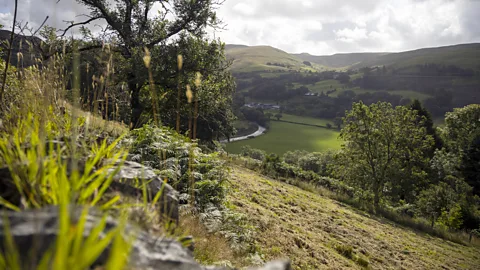
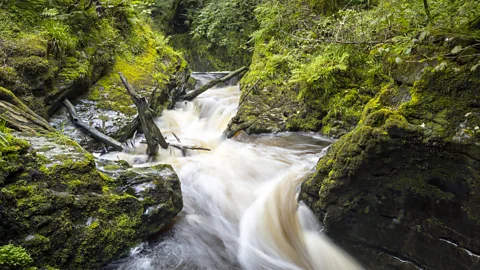
Bordered by the stunning landscapes of the Cambrian Mountains on one side and Cardigan Bay’s wild coastline on the other, it’s surprising that Mid Wales is often overlooked as a UK travel destination. However, a lack of infrastructure – and industry – within its rugged, barren plains and stark, craggy peaks has allowed it to remain relatively under the radar for visitors.
The county of Ceredigion, located in the heart of Mid Wales, is arguably Wales at its most rural. Dotted with nature reserves and country lanes that are crisscrossed by cycling and walking routes, it’s as off-the-beaten-track for travellers as the tiny country gets. Perhaps even lesser known to visitors, though, is that it is believed to have once been home to a sunken ancient forest and mythical kingdom – one that has recently returned to the limelight.
 Chris Griffiths
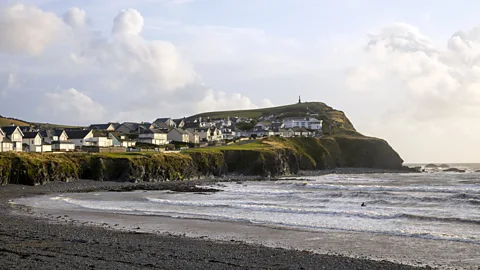
In the county of Ceredigion, Welsh legends dating to the Middle Ages tell of an ancient forest near the seaside villages of Borth and Ynyslas that once surrounded a kingdom. The forest stood on fertile ground and extended to around 20 miles west of the current shoreline between Ramsey Island and Bardsey Island into what is now Cardigan Bay.
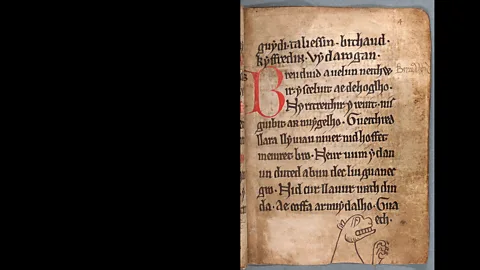
One myth mentioned in the Black Book of Carmarthen, the earliest surviving complete manuscript written in Welsh, dating back to at least the 13th Century – tells how the forest was part of an ancient kingdom known as Cantre'r Gwaelod, or the “Lowland Hundred”. Thought to be between 4,500 and 5,000 years old, the kingdom was said to be ruled by an affluent king named Gwyddno Garanhir who governed over at least 16 towns filled with bustling markets that served as commerce hubs for merchants and traders.
 Chris Griffiths
According to legend, the land was fortified against the sea by a dyke that was looked after by two princes; however, one of them, named Seithenyn, got drunk and allowed water to enter the floodgates, drowning the forest and kingdom. Another legend tells of Mererid, a maiden in charge of the floodgates, who was amorously distracted by Seithenyn and thus unable to shut the gates when she needed to, allowing the water to pour in.
While these stories have remained part of Wales' collective imagination for millennia, a violent storm in 2019 has brought them back to life.
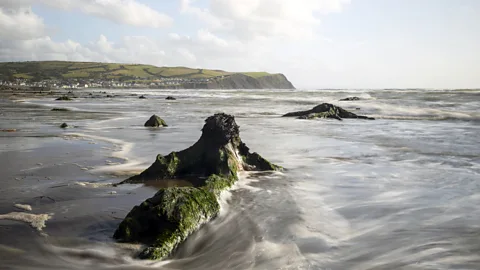
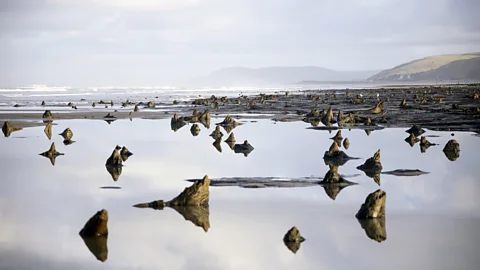
Chris GriffithsIn late April 2019, Storm Hannah battered Britain with wind gusts that reached more than 80mph, causing power cuts and travel disruptions across Wales. As the storm lashed the shores of Borth and Ynyslas, peat-covered tree remains that had been buried under the saltwater and sand for thousands of years re-surfaced. Some linked these ancient stumps to the forest of mythical Cantre'r Gwaelod.
Petrified stumps like these have been surfacing here and there in the area for a number of years, particularly in 2010 and 2014 when previous storms stripped away pebbles and sand from the coastline. However, Hannah caused a much larger stretch of the forest to be revealed, and each day since, during low tide, the sea reveals hundreds of eerie-looking stumps that appear like jagged jaws along the two-mile-long, black-sand beach.
 Chris Griffiths
Scientists have found that the submerged forest contains pine, alder, oak and birch tree stumps, which have all been preserved due to the lack of oxygen and high alkaline levels found in the bog. The living trees became gradually waterlogged with peat growth when the area was inundated by rising sea levels some 4,000-5,000 years ago. As the water level rose and a thick blanket of peat formed from natural sedimentation, the trees stopped growing and eventually died.
Old animal bones and a pair of deer antlers have been discovered here, too, suggesting that this stretch of land once flourished when the sea level was lower and before the area had completely succumbed to the ocean. Whether or not the forest is actually the one mentioned in the myth of Cantre’r Gwaelod, archaeologists believe there was life here dating back to at least the Bronze Age (3000 to 1200BC), in part because of the discovery of a timber walkway made of coppiced branches and upright posts (designed to cope with rising water levels) that’s thought to be between 3,100 and 4,000 years old.
Various other archaeological discoveries have been made here, including fossilised human and animal footprints preserved in the hardened top layer of peat, along with scatterings of burnt stones thought to be from ancient hearths. Due to this evidence of human settlement, the area is often referred to as “the Atlantis of Wales” in the media.
 Chris Griffiths
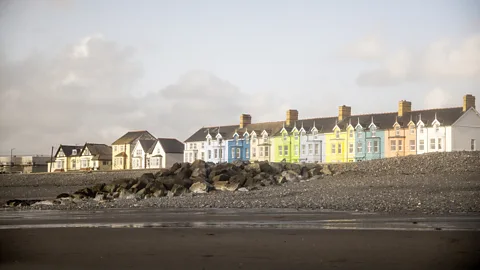
Archaeologists believe that extreme weather due to climate change is exposing more ancient artefacts like those in Borth and Ynyslas. According to Wales Online, Alun Hubbard, professor at Aberystwyth University’s department of geography and earth sciences, believes that the uncovering of the stumps might also be partly due to sea defences installed in Borth in 2012. While they have protected the village from crashing waves, they have also changed the continuous movement and of sand, pebbles and stones that have previously hidden the stumps from view.
Other submerged forests unearthed by recent storms have appeared at Newgale beach in Pembrokeshire and Mount’s Bay in Cornwall, both in 2014. In that same year, according to the Guardian, 850,000-year-old footprints considered to be the earliest evidence of humans outside of Africa were revealed by storms in Norfolk, England, and a fossil of an ichthyosaur (a marine reptile, meaning “fish lizard” in Greek) was unearthed – and narrowly avoided total destruction – after a storm crumbled cliffs and rocks along the Jurassic Coast of Dorset and East Devon in southern England.
Nevertheless, the uncovering of the hundreds of petrified tree stumps by Storm Hannah has become perhaps the most talked about discovery locally, as historians and archaeologists now have more reason to think that the revealed forest may be linked to the myth of the Lowland Hundred as mentioned in The Black Book of Carmarthen.
 Chris Griffiths
The precious medieval manuscript is housed at the National Library of Wales in Aberystwyth (pictured), while a facsimile copy can be viewed online. Along with the famous Welsh folk song, The Bells of Aberdovey, which is also thought to refer to the story of Cantre’r Gwaelod, the references mentioned in the book have helped keep the legend alive. (The myth is so compelling to locals that some insist they can still hear the bells of a drowned church from Cantre’r Gwaelod on a quiet day.) Similarly, one of the stories in The Mabinogion – a book of Welsh stories compiled from oral traditions from the 11th Century and earlier – refers to the drowning of the kingdom that once lay between Wales and Ireland.
While there are no historical records documenting an entire kingdom being swept away, scientists believe that land was lost to the sea when oceans gradually rose to their present levels, starting around 8,000 years ago, after ice cover from the most recent Ice Age diminished. Boulder clays and gravelly sands deposited by melting ice sheets then started to form beaches and shingle ridges, which shifted over wooded areas along the coast.
 Chris Griffiths
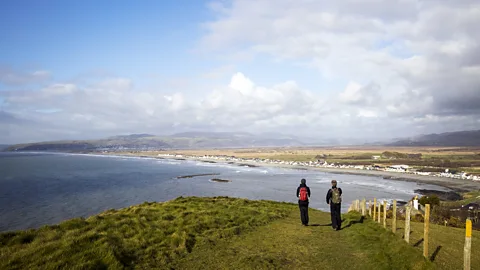
The petrified forest is located 7km north of the town of Aberystwyth along Borth and Ynyslas beaches, and visitors can find the most stumps just north of YHA Borth. They’re most visible at low tide (The Met Office is a good resource for tidal timing).
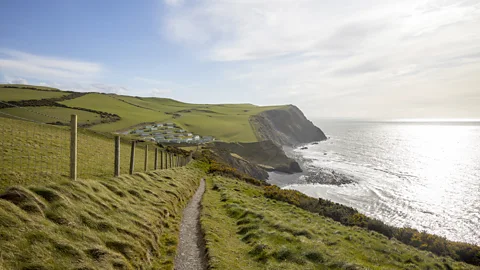
The numerous caravan parks surrounding Borth and Ynyslas beaches make a good base from which to explore the region’s jaw-dropping coastline. The Wales Coast Path, the first footpath in the world to follow a country’s coastline in its entirety, is a breathtaking 870-mile-stretch of some of the best walks in Wales.
Nearby, midway between Aberystwyth and Machynlleth, the 2,000-hectare Dyfi National Nature Reserve is the only Unesco biosphere reserve in Wales and is home to the Dyfi Estuary and Ynyslas sand dunes.
 Chris Griffiths
While Cantre’r Gwaelod still undoubtedly lives on through myths, legends and fantasy, the petrified trees uncovered at Borth and Ynslas point to some truths. After all, the ancient trees show proof of a previous life existing under the sea. But perhaps more importantly, they are also connecting a new generation to the tales of their ancestors.
Sunken Civilisation is a BBC Travel series that explores mythical underwater worlds that seem too fantastical to exist today but are astonishingly real.
