Ukraine round-up: Russia's tech weakness and latest fighting

 Getty Images
Russia is running low on key Western-made components for its hi-tech weapons and military communications, defence experts say, advocating tighter export controls.
The Russian military is exhausting those weapons stocks in Ukraine and tighter controls would leave it permanently short, the Royal United Services Institute argues in a new report.
The study says Moscow has been using shipments through third-party hubs such as Hong Kong to secure the supplies it needs - which it calls Russia's "silicon lifeline".
It examines modern military systems used by Russia, including cruise missiles and electronic warfare technology. It says Russian intelligence officers are trying to build new routes to access Western microelectronics.
BBC Security Correspondent Frank Gardner examines the findings here.

Ukraine's push towards Kherson
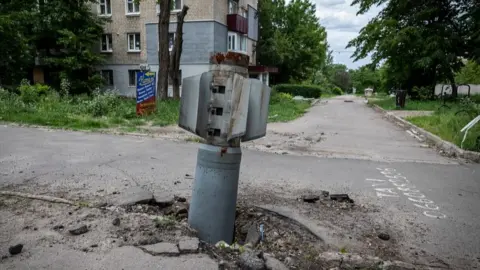
On the ground, fighting grinds on at several fronts.
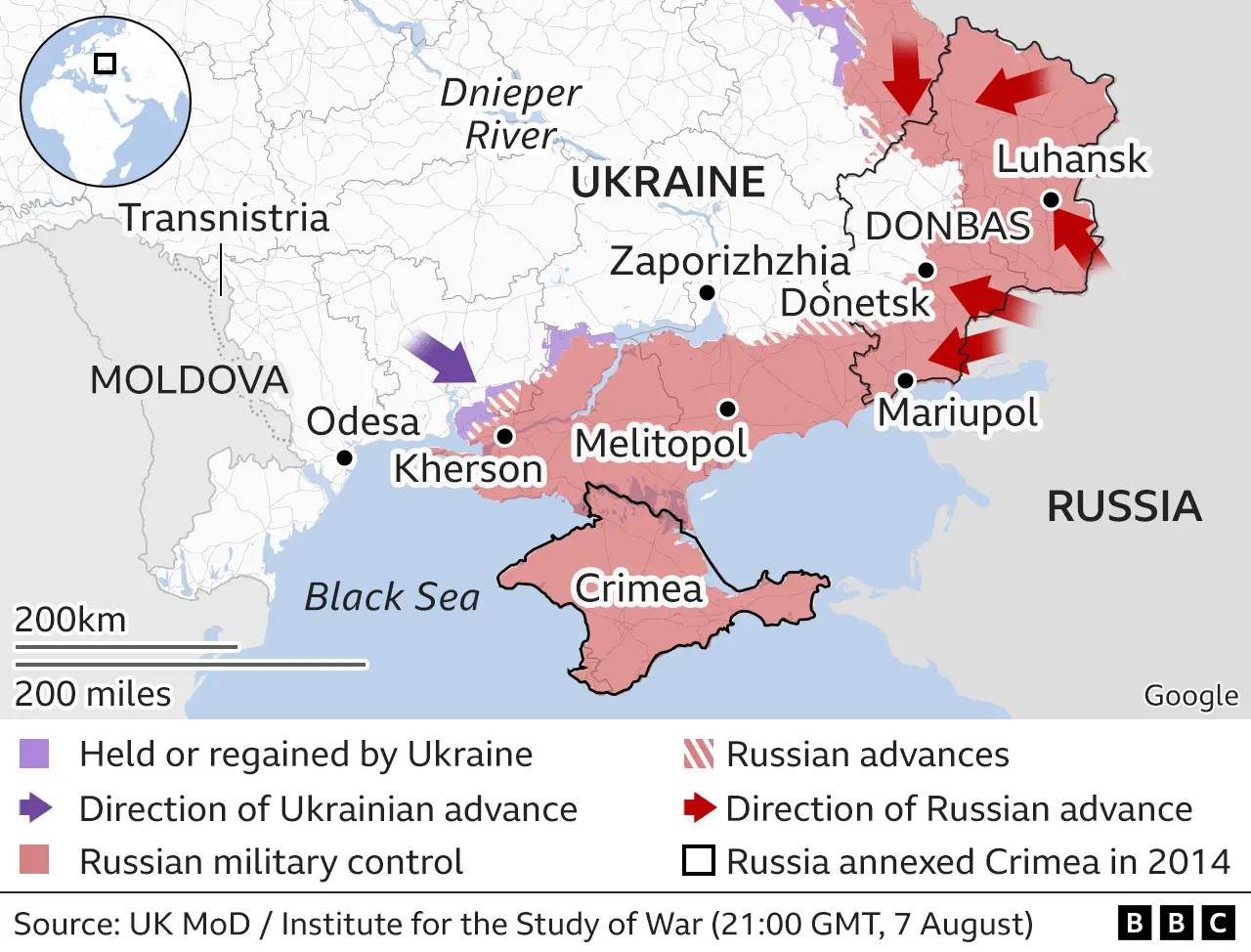
Ukraine says it is planning a counter-offensive in the Russian-occupied south of the country, and its forces have been shelling a key bridge in the occupied city of Kherson.
The Antonivskiy crossing is one of only two points where Russian troops can gain access to territory they hold west of the Dnieper (Dnipro) river.
Russian forces meanwhile are still trying to gain full control of Ukraine's eastern Donbas region.
Russians 'using nuclear plant as base'
 Reuters
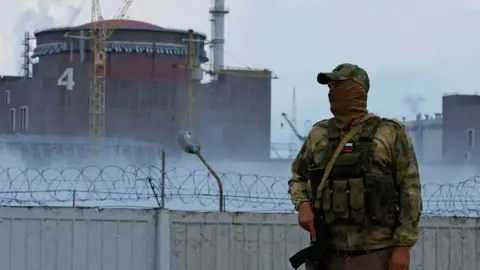
North-east of Kherson, the shelling of Europe's biggest nuclear power plant at Zaporizhzhia has caused international alarm.
Russia and Ukraine have accused each other of shelling the plant and the International Atomic Energy Agency has warned the fighting risks a "nuclear disaster".
The head of Ukraine's nuclear power company, Petro Kotin, told the BBC the Russians had turned the Zaporizhzhia plant into a military base, using it to launch attacks against Ukrainian positions.
The complex has been under Russian occupation since early March, although Ukrainian technicians still operate it.
Meanwhile, the Moscow-installed head of Zaporizhzhia region, Yevgeny Balitsky, says he has signed a decree to hold a referendum there on "reunification" with Russia.
It was through such a referendum - declared illegal by Western governments - that Russia annexed Crimea in 2014. The Russian occupation authorities in Kherson have similar plans.
Ukraine's President Volodymyr Zelensky has said there can be no peace talks with Russia if it holds such referendums in occupied territory.
More US weapons for Ukraine
The US has stepped up its military aid for Ukraine with a new $1bn (£828m) package including munitions for long-range artillery.
US high mobility rocket systems (Himars) have helped Ukrainian forces to hit Russian military targets behind front lines.
The package also includes other weapons and armoured medical transport vehicles.
The US has now given Ukraine security assistance worth more than $9bn since Russia invaded in February.

Russia suspends nuclear treaty inspections
 AFP
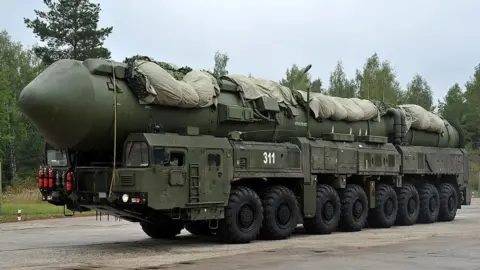
AFPIn another sign of deteriorating relations with the West, Russia has told the US it has "temporarily" suspended on-site inspections of its strategic nuclear weapons.
It said sanctions imposed by the US had changed conditions between the two countries, depriving Russia of the right to carry out inspections on US territory.
The New START treaty, which came into force in 2011 after years of negotiations, is the last remaining arms reduction treaty between the two rivals.
It caps at 1,550 the number of long-range nuclear warheads that each country can deploy.
