In pictures: Russia marks end of Leningrad WW2 siege

Ceremonies have taken place in St Petersburg to mark the 75th anniversary of the end of the deadly and gruelling World War Two siege of Leningrad, as the Russian city was then known.

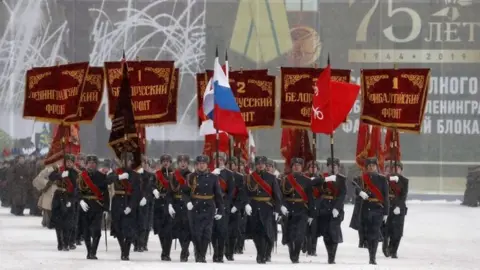
News imageEPA Honour guards carry the banners of the Soviet Fronts that fought for Leningrad during World War Two. Photo: 27 January 2019EPA
Honour guards began a military parade, carrying the banners of the Soviet Fronts that fought for the city against Nazi Germany
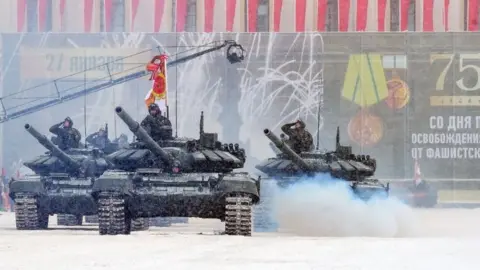
News imageAFP/Getty Images Russian tanks during a military parade in St PetersburgAFP/Getty Images
Modern tanks rolled through the heart of St Petersburg - Russia's second-largest city and a former capital
News imageAFP/Getty Images A Soviet WW2-era T-34 tank during a military parade in St Petersburg. Photo: 27 January 2019AFP/Getty Images
Famed WW2-era T-34 battle tanks also participated in the ceremonies
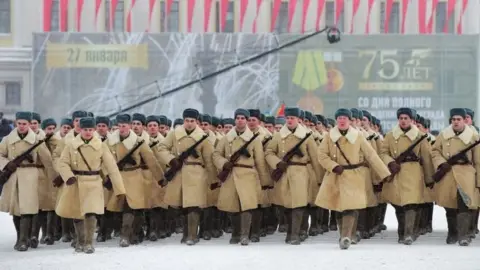
News imageAFP/Getty Images Soldiers dressed in Soviet WW2 uniforms march in St Petersburg. Photo: 27 January 2019AFP/Getty Images
Soldiers dressed in WW2 Soviet uniforms were part of the parade
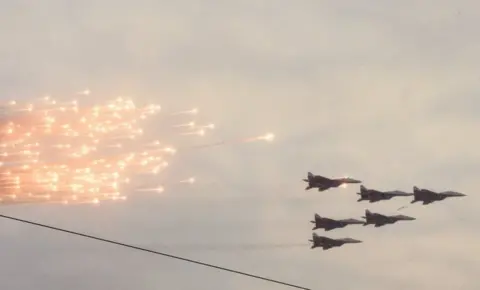
News imageAFP/Getty Images Military jets fly over St Petersburg. Photo: 27 January 2019AFP/Getty Images
Military jets made an overfly over the northern city
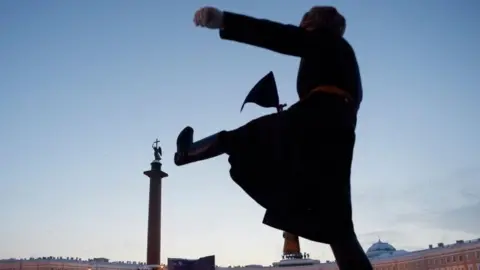
News imageAFP/Getty Images A Russian honour guard marches during a military parade in St Petersburg. Photo: 27 January 2019AFP/Getty Images
The siege lasted 872 days - from 8 September 1941 to 27 January 1944
News imageAFP/Getty Images Russian President lays flowers at the Piskaryovskoye cemetery in St Petersburg. Photo: 27 January 2019AFP/Getty Images
Russian President Vladimir Putin described the siege as "872 days of terrible, inhumane suffering"
News imageEPA A woman takes part in a flowers laying ceremony in St Petersburg. Photo: 26 January 2019EPA
War veterans were among those paying respects to the victims of the siege
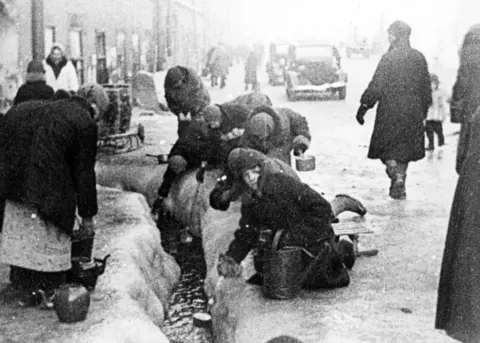
News imageSovfoto/UIG via Getty Images Woman take water from broken water mains in Leningrad (now St Petersburg) during the siegeSovfoto/UIG via Getty Images
About 800,000 people died from hunger, cold and shelling by Nazi troops during the two-and-a-half-year blockade

All photographs subject to copyright as marked.