Lagos Third Mainland Bridge: Six months of traffic woe in Nigeria

 BBC/Ayo Bello
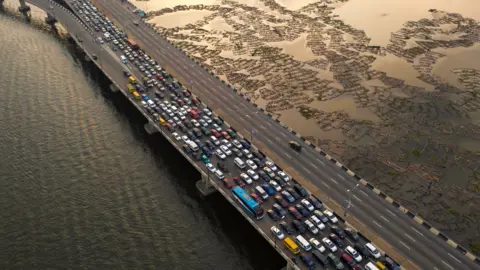
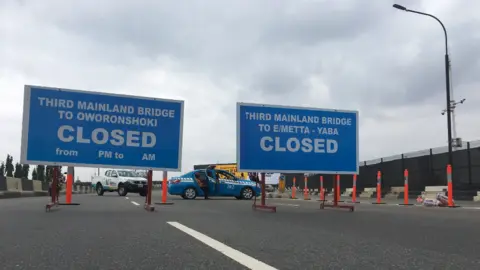
Residents of Lagos, the most populous city in Nigeria - and Africa - have been dealing with even more traffic problems than usual because of the partial closure of the crucial Third Mainland Bridge.
 BBC/Ayo Bello
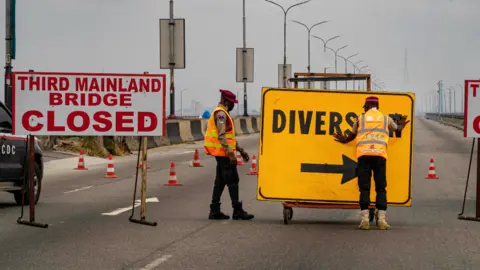
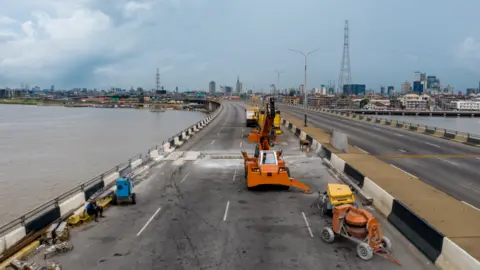
From 25 July last year, only one side of the bridge has been open to vehicles while essential maintenance work was carried out.
 BBC/Ayo Bello
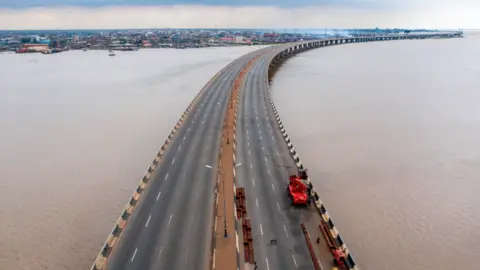
Lagos is a congested city, notorious for its traffic jams. It sprawls over several islands and extends across to the mainland, where it tends to be cheaper to live.
 BBC/Ayo Bello
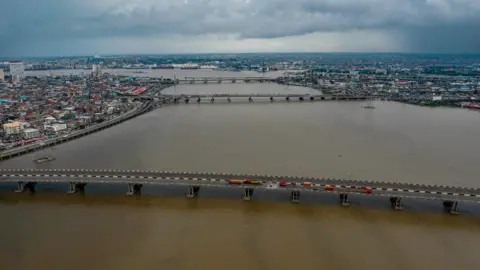
The Third Mainland Bridge was constructed in the 1980s and spans more than 11km (6.8 miles).
It is the longest and busiest of the three bridges connecting the mainland to the islands, which form the commercial heart of the city and where some of the wealthier neighbourhoods are located.
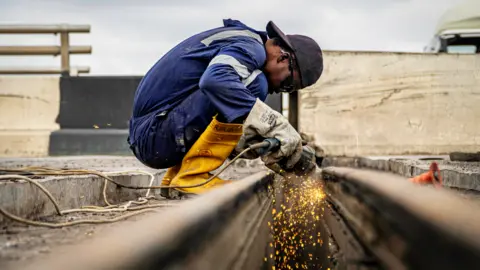 BBC/Ayo Bello
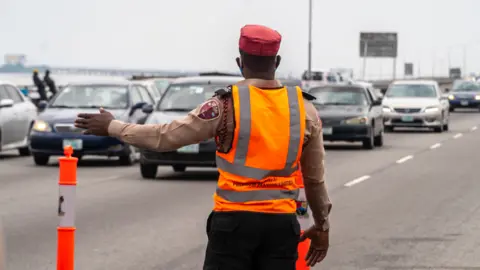
During the repair work, traffic has been allowed to flow, using one side of the bridge, from the mainland to the islands from midnight until noon.
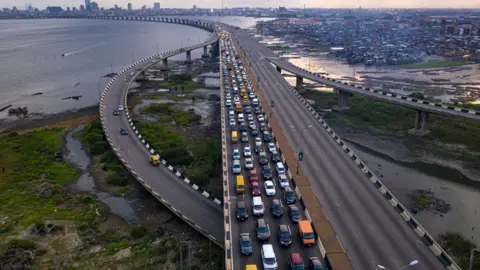 BBC/Ayo Bello
In the following 12 hours vehicles can travel in the opposite direction, back to the mainland. This pattern reflects the journeys of many lower-paid workers, who tend to head to the islands for their jobs.
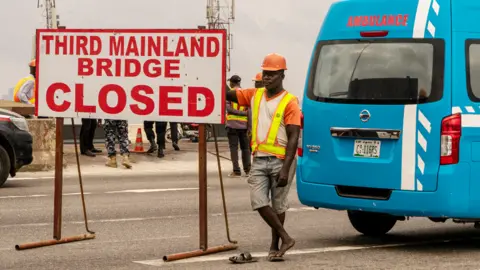 BBC/Ayo Bello
Commuters have been complaining that the disruption has made their journeys take considerably longer.
"We leave home very early and still get late to work which is not good," Bolaji, a trader who lives on the mainland, told the BBC while waiting for a bus.
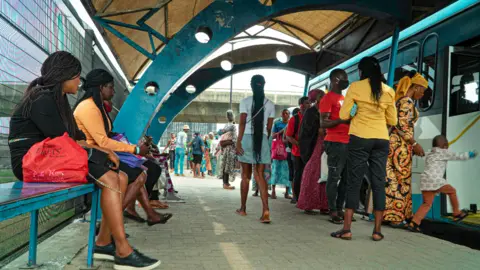 BBC/Ayo Bello
Like many, she uses public transport to get to work, but Bolaji says there have been fewer buses running and those that do are more expensive.
"Before the closure we waited not more than 30 minutes for a bus, but we've been waiting here for more than an hour now which is not good…. [and] they keep increasing the price of the buses."
 BBC/Ayo Bello
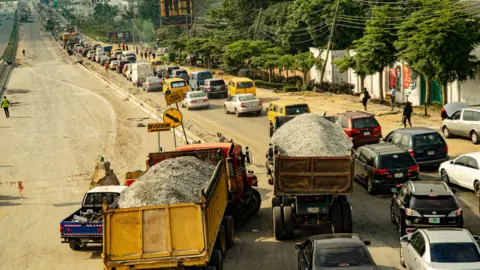
George, another trader, agrees that buses were much more frequent and less costly before the partial closure of the bridge, and says the evening rush hour is the worst time.
 BBC/Ayo Bello
"Going to the island, it doesn't take as long but coming back… always takes at least two hours," he told the BBC.
 BBC/Ayo Bello
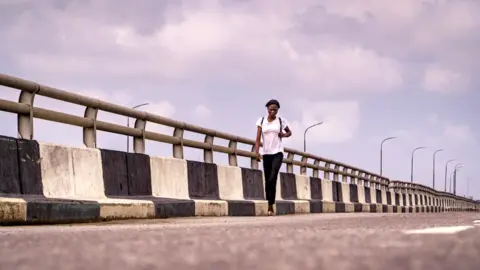
Walking across the bridge is not really an option because of its length and many fear being robbed by local gangs, known as area boys.
This woman was just going a short distance along the bridge to get to a bus stop.
 BBC/Ayo Bello
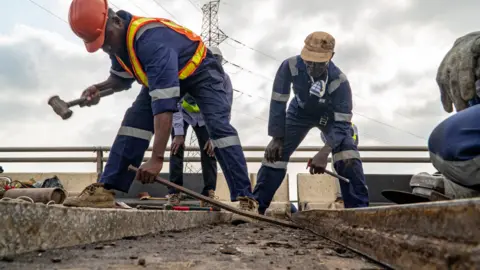
The bridge was completely closed for several days over the Christmas holiday so that some concrete could be laid as officials said the vibrations caused by vehicles would have stopped it from setting properly.
 BBC/Ayo Bello
The bridge was due to re-open at the end of January, but this has now been put back by a month. The delay was blamed on the protests against police brutality, organised under the EndSars hashtag, which swept the country in October.
 BBC/Ayo Bello
All images subject to copyright
