Cardiff church collapse accused denies cutting corners to save costs

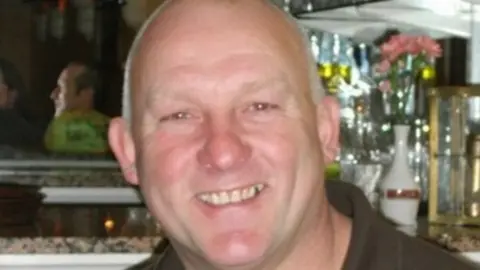 Family photo
The owner of a Cardiff church that collapsed and killed a man told a jury he was "sickened" by what happened.
Mark Gulley, a director of Amos Projects Limited, said he did "not cut corners" to save money.
Dad-of-two Jeff Plevey, 56, of Cardiff, was crushed to death at Splott's Citadel Church as he worked on its demolition in July 2017.
Mr Gulley, of Penarth, is one of four men on trial at Swansea Crown Court in relation to Mr Plevey's death.
The 59-year-old and Richard Lyons, of Bristol, a partner of Optima Scaffold Design Solutions, are charged with health and safety offences.
Keith Young, 72, director of Young Contractors, the firm hired to carry out the demolition, and Stewart Swain, 54, director of Swain Scaffolding, are accused of gross negligence manslaughter.
All four men have denied the charges made against them.
 @SPIRITismywolf
Mr Gulley told the jury that he contracted out the work because he "wasn't qualified" but made sure he forwarded emails on to the relevant parties.
"I didn't know the first thing about demolition to be honest," he said.
He said he was being put under pressure to press ahead with the demolition by Network Rail, which was working to complete the electrification of the railway between Paddington and Swansea.
Splott Bridge, adjacent to the Citadel, needed to be raised to accommodate the upgrade.
Gary Cunningham, a former Network Rail project manager, previously told the court he had told Mr Gulley erecting scaffolding to demolish the church was "incorrect" and "inadvisable".
Mr Cunningham said Mr Young "more or less immediately" dismissed his concerns.
The rear wall was described as being "in danger of imminent collapse" in a Network Rail survey.
The prosecution argued that, despite knowing of the dangers posed by this wall, sufficient works were not carried out to stabilise it and when scaffolding was erected it was tied to the wall.
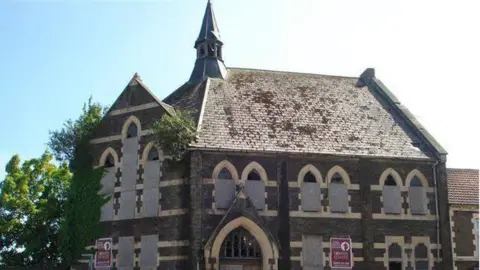 Cardiff council report
When asked by defence counsel David Elias QC if he had ever tried to save money or cut corners during the project, Mr Gulley said: "No."
Mr Gulley said he went straight to the sight after Mr Swain rang him "in distress" about the collapse and felt "sickened" when he arrived.
Defending Mr Swain, barrister Peter Rouch QC told the court at Swansea Civic Centre, being used as a Nightingale Court, his client would not be giving evidence in his defence.
Character references were read to the jury in which friends described him as "loyal, funny, caring and generous to a fault".
The jury heard how Mr Swain provided the "bulk" of his wife's 24-hour care after she became ill, which had "hit Stewart very hard indeed".
Two other men, Phil Thomas, of Cardiff, who was Mr Young's health and safety advisor from South Wales Safety Consultancy Ltd, and Richard Dean, of Abertillery, from NJP Consultant Engineers Ltd, have already pleaded guilty to health and safety offences.
The prosecution was brought following a joint investigation by South Wales Police and the Health and Safety Executive.
The trial continues.
