Heatwave unveils ancient settlements in Wales

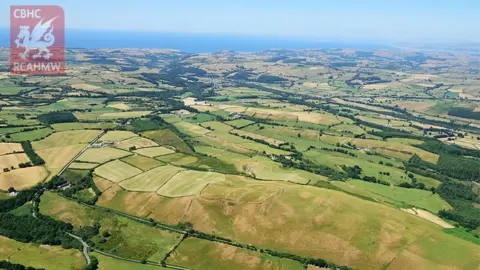
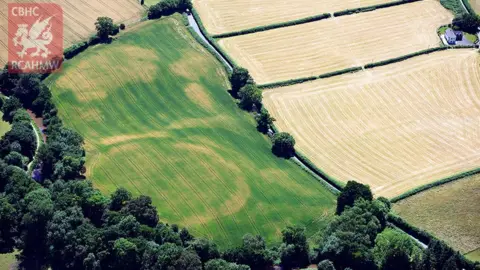
News imageRCAHMW The Iron Age hillfort of Gaer Fawr near Lledrod, Ceredigion, looking across the parched landscapeRCAHMW
The Iron Age hillfort of Gaer Fawr near Lledrod, Ceredigion, looking across the parched landscape

Ancient hillforts and Roman settlements have been revealed by the heatwave.

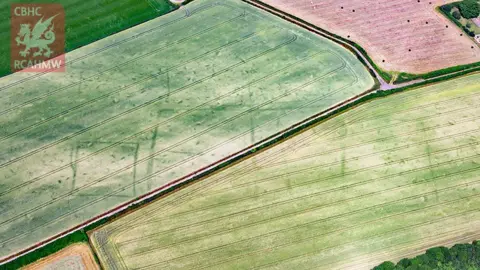
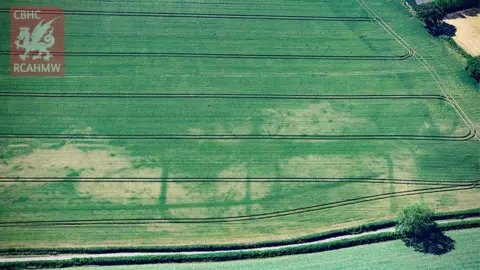
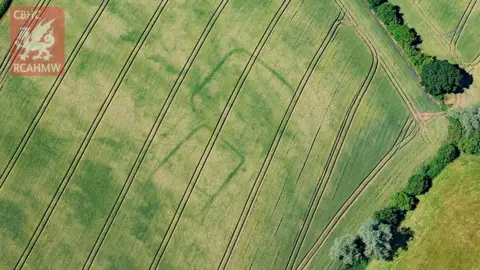
The dry spell has left parched fields with unmistakable "crop marks" painted into the landscape.

The Royal Commission on the Ancient and Historical Monuments of Wales (RCAHMW) has been busy recording the details - before they disappear when it next rains.

Sites across Wales have been captured from the air.

The crop marks are made by vegetation drawing on better nutrients and water supplies trapped in long-gone fortification ditches - leading to lush green growth that stands out.

HOW IT WORKS:
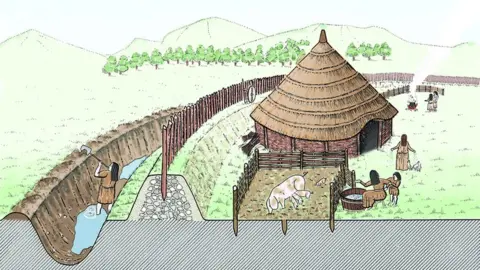
News imageRCAHMW An artists representation of a Iron Age settlementRCAHMW
Ancient settlements are scattered across Wales - such as Iron Age hillforts and Roman fortifications

Most ancient settlements added fortification or drainage ditches around them.
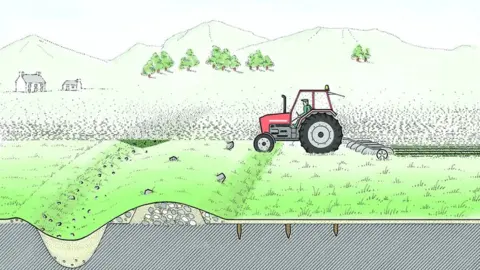
News imageRCAHMW Farming takes place thousands of years laterRCAHMW
Over the centuries, the settlements disappear and farming takes place

When the settlements disappeared, those ditches became filled in - but it also meant that soil was deeper in those areas.
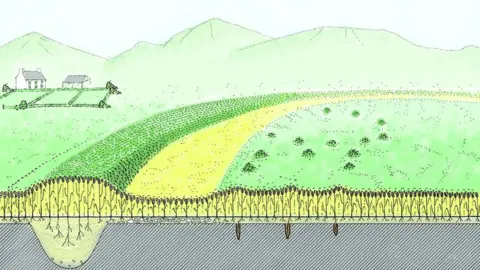
News imageRCAHMW Finally crop marks appear in dry weatherRCAHMW
When the land dries out in the prolonged heat, the old fortifications retain moisture, so crops are more visible

Deeper top soil sections covering the old settlement ditches means those areas hold onto more water and nutrients during intense dry spells - and crops are very quick to take advantage of it - growing thicker, taller, and greener.

It is easy to spot from the air:
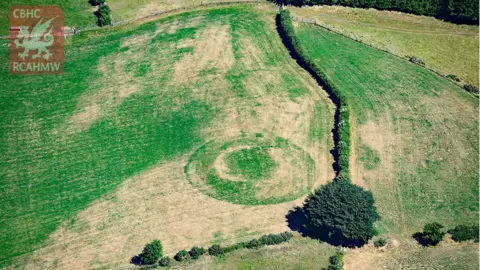
News imageRCAHMW The almost ploughed-down medieval castle mound at Castell Llwyn Gwinau in Tregaron, Ceredigion, showing clearly under parched conditionsRCAHMW
The almost ploughed-down medieval castle mound at Castell Llwyn Gwinau in Tregaron, Ceredigion, showing clearly under parched conditions
News imageRCAHMW The buried ramparts of Cross Oak Hillfort, Talybont-on-Usk, showing as crop marks in Powys.RCAHMW
The buried ramparts of Cross Oak Hillfort, Talybont-on-Usk, showing as crop marks in Powys.
News imageRCAHMW Extensive crop marks of Trewen Roman farmstead or villa, Caerwent, MonmouthshireRCAHMW
Extensive crop marks of Trewen Roman farmstead or villa, Caerwent, Monmouthshire
News imageRCAHMW A newly discovered Roman fortlet near Magor, Monmouthshire, emerging in ripening cropsRCAHMW
A newly discovered Roman fortlet near Magor, Monmouthshire, emerging in ripening crops
News imageRCAHMW Newly discovered crop marks of a prehistoric or Roman farm near Langstone, NewportRCAHMW
Newly discovered crop marks of a prehistoric or Roman farm near Langstone, Newport