In pictures: Scotland's tributes to Sarah Everard

People in Scotland have paid tribute to Sarah Everard, lighting candles at home and tying ribbons to park fences.

After planned vigils by Reclaim These Streets were moved online, event organisers in Glasgow asked people to leave their tributes at locations around the city and go home safely.

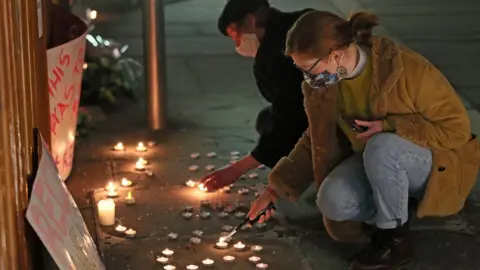
A small number of people gathered to light candles at the Scottish Parliament in Edinburgh, but Police Scotland said they left shortly afterwards.

The Scottish government had warned that any vigil in a public place would go against coronavirus restrictions.

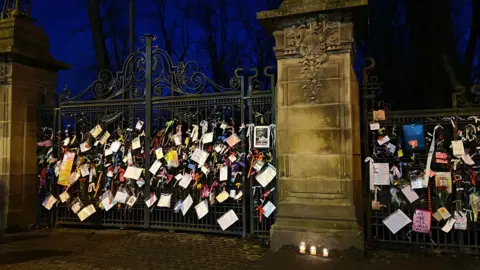
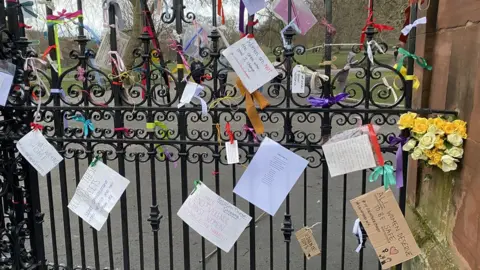
News image@lauzmur Gates to Queen's Park@lauzmur
Notes and ribbons were tied to the gates of Queen's Park in Glasgow's southside
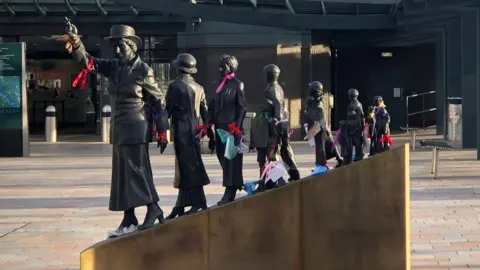
News imageMhairi Mackenzie Mary Barbour statue in the Govan area of GlasgowMhairi Mackenzie
Red ribbons were tied to the Mary Barbour statue in Govan. She was a key player in fighting rent increases imposed by Glasgow landlords during World War One.
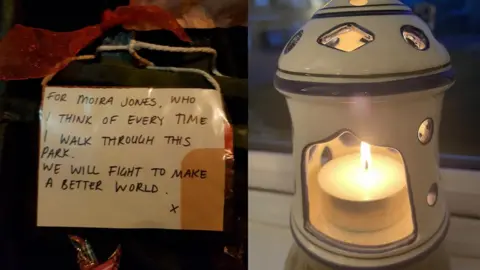
News image@NicolaSturgeon/Twitter candle@NicolaSturgeon/Twitter
First Minister Nicola Sturgeon said she was "struck" by this tribute left in Glasgow's Queen's Park to Moira Jones, who was murdered in 2008. She also tweeted a picture of a candle lit to remember "Sarah, and all the others"
News imagePA Media candlesPA Media
Candles are lit outside the Scottish Parliament in Edinburgh, where a small number of people gathered.
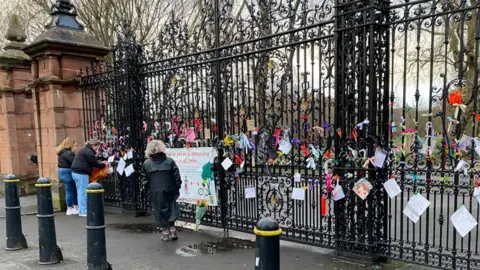
News imageAlice Black Kelvingrove Park gatesAlice Black
Alice Black captured this image of notes in Kelvingrove Park paying tribute to Sarah Everard
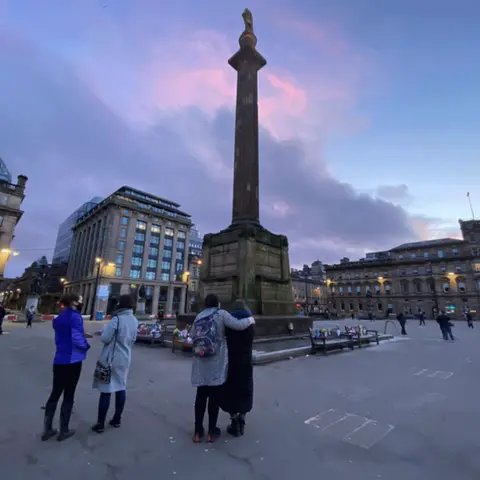
News imageAlice Black George Square in GlasgowAlice Black
A poignant image from George Square in Glasgow, where floral tributes were left on benches
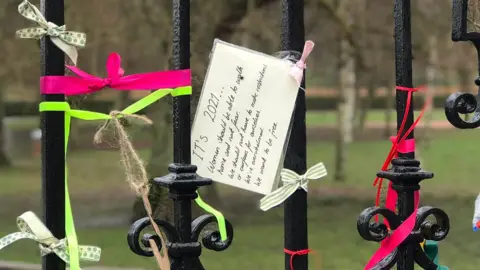
News imageDayna Miller A note tied to a gate in Kelvingrove ParkDayna Miller
Dayna Miller visited Kelvingrove Park on Saturday and said it was "important and moving" to see so many tributes
News imageAlice Black Kelvingrove Park gatesAlice Black
People attach notes to the gates of Glasgow's Kelvingrove Park

All images are subject to copyright

More from the BBC