Sutton Hoo replica boat build needs last three oak trees

 BBC
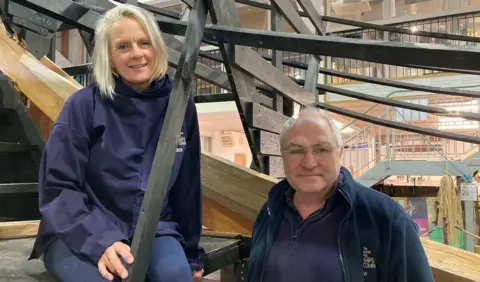
BBCA team of volunteers recreating the Anglo-Saxon burial ship found at Sutton Hoo are appealing for help sourcing the three oak trees needed to complete it.
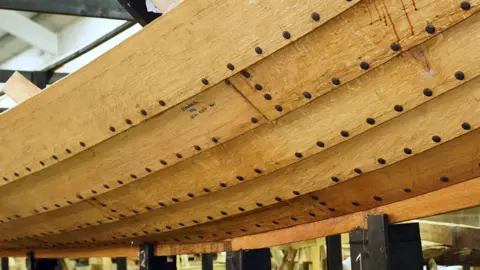
The 88ft (27m) reconstruction of the ship, excavated in 1939, is being built in neighbouring Woodbridge in Suffolk.
It has used "about a dozen" oak trees so far, but the project is struggling to get hold of the last few it needs.
Project manager Jacq Barnard said: "If we can get these trees, we will be finished and afloat by summer 2025."
 national trust/Getty Images
 The Sutton Hoo Ship's Company
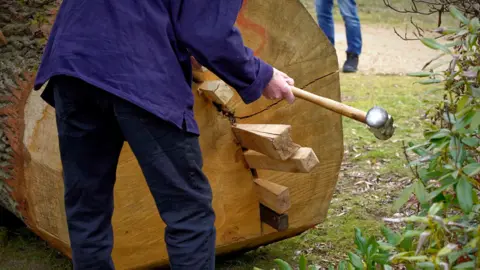
The ship's "backbone" - including the keel, stem and sternpost - has been built and its carpenters have been attaching planks with rivets, using traditional methods.
Ms Barnard said "another three good large trees" should be enough to complete its planking.
"About a dozen" oak trees, mostly from East Anglia, have been donated to the £1.5m project, she said, while it paid felling and delivery costs.
The story of the ship's discovery was told in the Netflix film The Dig, starring Carey Mulligan and Ralph Fiennes.
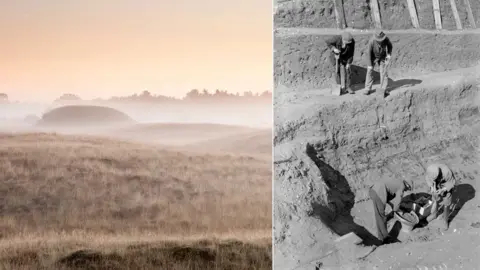
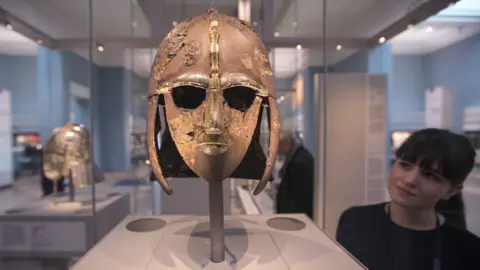
It was believed to be the burial ship and grave of King Rædwald - the 7th Century Anglo-Saxon ruler of East Anglia.
 The Sutton Hoo Ship's Company
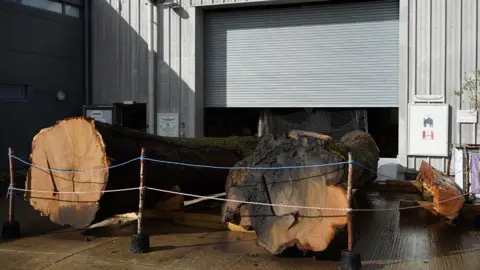
"Anglo-Saxons had access to much larger trees than us and we're really having to search to find the trees needed to replicate what they did," Ms Barnard explained.
"They need to be 1.2m (4ft) at chest height and be 6m-10m (19ft-32m) long.
"They also need to be clear of branches and free from knots or other defects."
Ms Barnard hopes they will get hold of the last three trees needed before the end of this year's felling season, so within the next few weeks.
 Oli Scarff/British Museum
 The Sutton Hoo Ship's Company
In the meantime, the project has fulfilled one of its key commitments.
"We pledged we'd replace the oak trees used in a 20-to-one ratio and we've just planted 400 saplings at Grundisburgh," she said.
They have been planted on five acres (2.02ha) donated by Bill Mayne and underplanted with 1,600 shrub and tree species by the Woodland Trust.
The project is supported by 142 volunteers with a range of skills from carpentry to photography.

Follow East of England news on Facebook, Instagram and X. Got a story? Email eastofenglandnews@bbc.co.uk or WhatsApp 0800 169 1830