Ipswich garden display removed due to theft of two ornaments

 Luke Deal/BBC
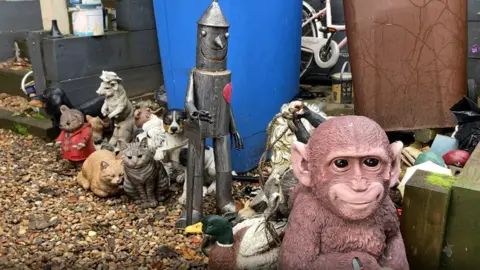
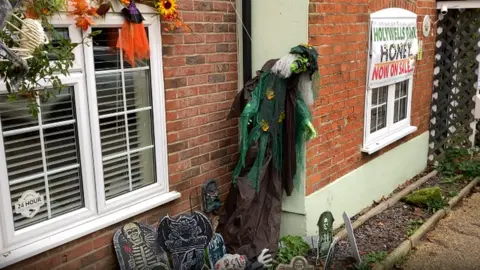
A man has taken down his popular garden display after two of his items were recently stolen.
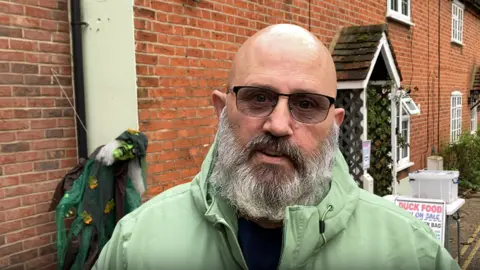
Simon Hodding, who lives at the entrance to Holywells Park in Ipswich, has been entertaining passers-by for more than three years.
Mr Hodding said he and his wife were "disappointed" and their garden "doesn't look the same".
"We would love them back. It's not about the money, it's the disappointed to the children," he said.
 Luke Deal/BBC
What started as a bit of fun during the Covid-19 lockdowns, quickly turned into a habit for Mr Hodding.
"I started with a couple of ducks and I just couldn't stop, so I decided to carry on," he recalled.
The display has grown over the last three and a half years and has contained a variety of ornaments, including meerkats, other animals and gnomes.
 Luke Deal/BBC
Last week, the couple realised that two ornaments - skulls of a dinosaur and sabretooth tiger - were missing.
Their CCTV cameras were not working at the time and the couple took the decision not to report the theft to police.
Mr Hodding has already invested in displays for upcoming events, such as Halloween, Remembrance Day and Christmas, but the long-term fate of the ornaments is undecided.
"We were thinking of selling them off and giving the money to the park, but it will be a shame not to continue doing it," he said.
"We'll see where we go and maybe put them back out again with a bit of CCTV."

Follow East of England news on Facebook, Instagram and Twitter. Got a story? Email eastofenglandnews@bbc.co.uk or WhatsApp 0800 169 1830