Barnsley Museum revives factory worker's 1933 Christmas carol

 Barnsley Museums
A Christmas carol written by a Barnsley factory worker 90 years ago has been brought back to life after being uncovered by museum archivists.
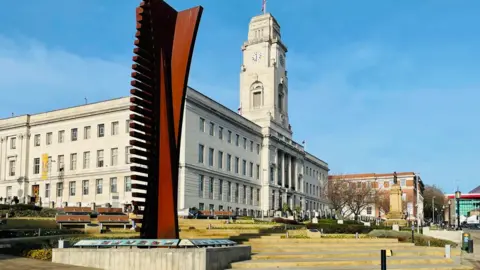
It was found during research for the anniversary of the opening of Barnsley's Town Hall in 1933.
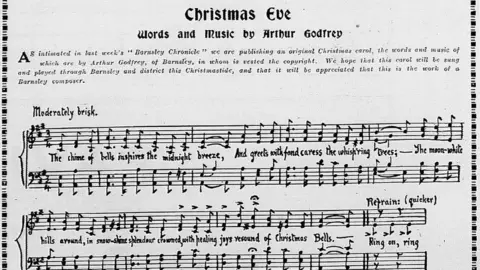
Written by bottle-maker Arthur Godfrey, Christmas Eve is inspired by the Christmas bell chimes rung by some churches at midnight on 24 December.
Barnsley Museum recorded it to mark the Town Hall's anniversary on 14 December.
The then Prince of Wales, the future Edward VIII, opened the building to the public on that date in 1933 and was also served with a Barnsley chop by a local butcher.
 Geograph/ Dave Pickersgill
Barnsley Museums' Heritage Action Zone officer Dr Tegwen Roberts said the words and music for the carol were found in a copy of the Barnsley Chronicle published on 23 December 1933.
She said the museum had decided to revive the piece and record it in the Town Hall sung by a member of their team as part of their Christmas celebrations.
Dr Roberts said the popular carols we know today became standardised in the Victorian period but there was a strong tradition of carols being created locally dating back centuries.
"We are lucky in South Yorkshire that many of these earlier carols have survived and are still sung, often in village pubs, in the run-up to Christmas," she said.
 Barnsley Archives
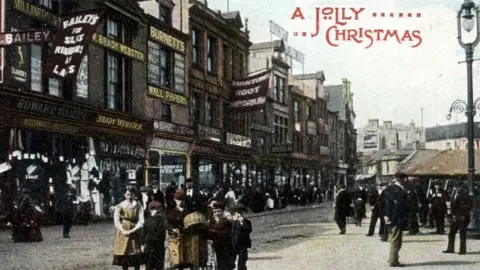
Arthur Godfrey followed in this tradition, not being a professional musician.
Barnsley Museums researchers have found he was born in the town in about 1873 and by the 1921 census he was married with seven children and worked at Dobson and Nall Ltd as a glass bottle finisher.
His composition is arranged in four parts and the chorus is split into a top and bottom line, each with their own words, working partly as a round and partly as call and response.

Follow BBC Yorkshire on Facebook, X (formerly Twitter) and Instagram. Send your story ideas to yorkslincs.news@bbc.co.uk.
