Nottingham measles cases linked to QMC's emergency department

 BBC
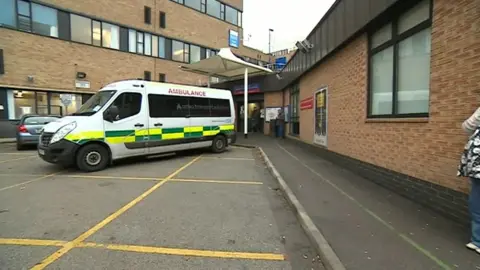
BBCA rise in measles cases has been linked to infections at Nottingham's QMC hospital's emergency department.
Nottingham University Hospitals NHS Trust said this had led to seven people being admitted for treatment after catching the disease.
Patients who fear they have the highly infectious condition have been asked to avoid hospital and contact their GP.
The trust said "relevant precautions and isolation of patients" had been used to minimise risk.
Officials said the increase in cases, both at the Queen's Medical Centre, and in the wider community, had taken place over "recent weeks".

 Science Photo Library
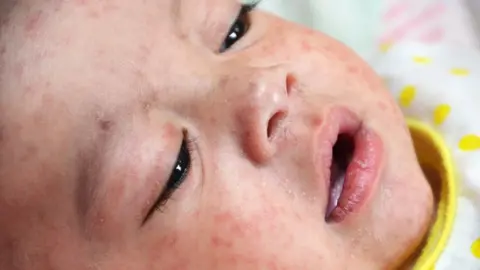
Measles
- Cold-like symptoms, such as a runny nose, sneezing and a cough, along with sore red eyes
- High temperature, also small greyish-white spots on the inside of the cheeks
- Red-brown blotchy rash, usually starting on the head or upper neck
- Measles will usually pass in about 7 to 10 days
- However, it can lead to potentially life-threatening complications including infections of the lungs (pneumonia) and brain (encephalitis)
Mandie Sunderland, director of infection prevention and control at the trust, said: "We are taking all necessary steps to prevent further spread of the infection, including ensuring our staff are immunised against the virus.
"We advise the people of Nottingham to avoid attending [the emergency department] and to contact their GP by telephone in the first instance if they suspect they have measles."
Public Health England East Midlands confirmed it was aware of a cluster of suspected measles cases linked to Nottingham University Hospitals Trust and was working closely with the trust to ensure anyone exposed was receiving "appropriate follow-up".
The NHS advises the best way to protect against measles is to get two doses of the MMR vaccine.
Follow BBC East Midlands on Facebook, Twitter, or Instagram. Send your story ideas to eastmidsnews@bbc.co.uk.
