UEA students get new accommodation after Raac is found

 Getty Images
About 750 university students have been provided with alternate accommodation after potentially dangerous concrete material was identified.
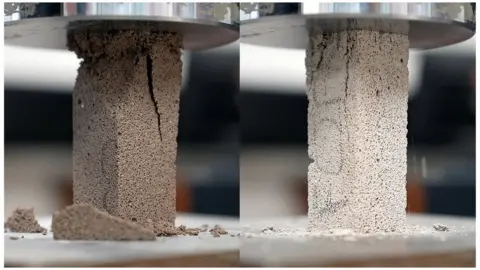
A survey at the University of East Anglia (UEA) in Norwich found reinforced autoclave aerated concrete in some building and informed students.
Following government guidelines, a number of its buildings were closed.
Vice-chancellor David Maguire said finding new rooms for students had been "a huge logistical challenge".
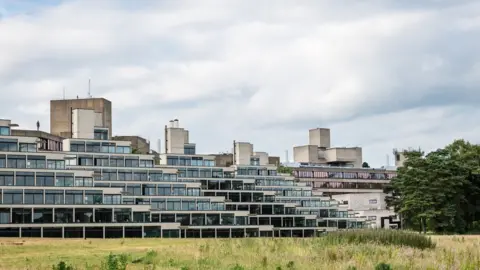
On Friday, the university announced that the Norfolk and Suffolk Terraces (also known as the Ziggurats) and the top floors of Nelson Court and Constable Terrace would be closed until further notice.
All students affected were emailed by the UEA's accommodation office on Tuesday and provided with a new location and room number.
 BBC News
Mr Maguire said: "I would like to thank our students for their patience while we've dealt with this change.
"We're very much looking forward to welcoming our new students over the coming days and weeks as they settle into their new life at UEA."
Just under 600 students would remain on campus, with a further 170 students in private accommodation in St Crispin's House, Duke Street in Norwich.
All relocated students in St Crispin's would receive the offer of a free bus pass or a voucher to buy a bicycle.
The arrival date for all students remained unchanged.

Follow East of England news on Facebook, Instagram and X. Got a story? Email eastofenglandnews@bbc.co.uk or WhatsApp us on 0800 169 1830.