First new Merseyrail train joins network

 BBC
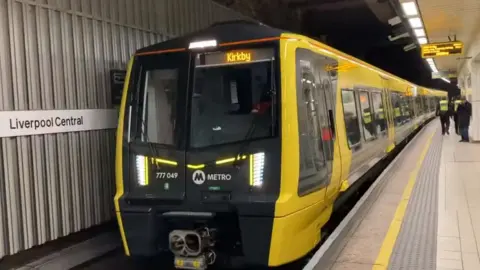
BBCThe first of Merseyrail's new trains has started running on the network, six years after the fleet was ordered.
The £500m fleet, which is publicly owned, includes several battery-operated trains and replaces the 40-year-old rolling stock.
The project has faced a series of delays including the Covid pandemic and staffing disputes.
Steve Rotheram said the move was "a massive step on the journey to building a London-style transport system".
The first passengers boarded at Liverpool Central for the 10:50 GMT service running to Kirby.
In a tweet Liverpool City Region Mayor Steve Rotheram said the more modern trains were something "local people deserve".
Allow X content?
The trains have space for up to 50% more passengers, feature Wi-Fi and plugs and have step-free access for wheelchair users and passengers with bikes or buggies.
The 52-strong fleet was ordered in 2016 from manufacturer Stadler, but their delivery has been delayed by issues including a factory flood and Covid.
Merseyrail had planned the first of the fleet to be on the tracks by the end of 2022 but Mr Rotheram said challenges including bad weather, Brexit and industrial action by rail staff had meant that was not possible.
An agreement has now been reached with unions on terms and conditions for the drivers of the new trains.
The mayor said following its introduction Merseyrail will announce a schedule for a phased introduction of more trains across the rest of the network.

Why not follow BBC North West on Facebook, Twitter and Instagram? You can also send story ideas to northwest.newsonline@bbc.co.uk
