Elizabeth Gaskell's Manchester explored in new exhibition

 EGH
EGHAn exhibition investigating how a 19th Century novelist depicted her native city has opened at her former home.
Elizabeth Gaskell, who became one of the most popular writers of her era, arrived in Manchester in 1832 and set her first novel in the burgeoning city.
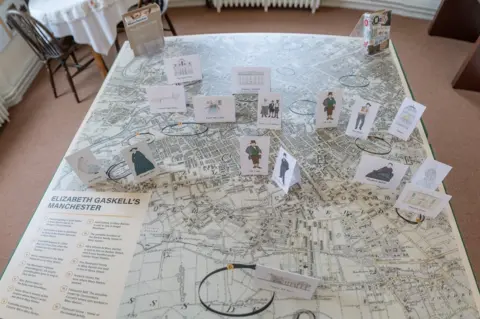
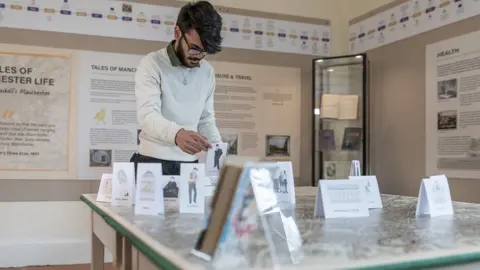
The show at Elizabeth Gaskell's House includes artefacts from Gaskell's life and a map of sites that inspired her.
Site director Sally Jastrzebski-Lloyd said it would give "a fascinating insight" into Gaskell's mind.
 EGH
EGHA representative for the museum said Gaskell "reflected the world around her" and witnessed both the thriving growth of Manchester "as the world's first industrial city" and the plight of the working class, who were then "living in overcrowded and unsanitary conditions".
"Her work had a startling effect in its own time and was so painstakingly accurate that it was said to have pricked the conscience of the nation," they said.
However, they said that as a woman, the "influence and importance" of Gaskell's writing had "not been recognised by history in the way that it has for her contemporaries such as Charles Dickens".
They said she went into "meticulous detail" in her work, which included "using Lancashire dialect in the dialogue", and it was possible to see how some of the events she witnessed in Victorian Manchester inspired "subjects that appeared in her novels".
 EGH
EGH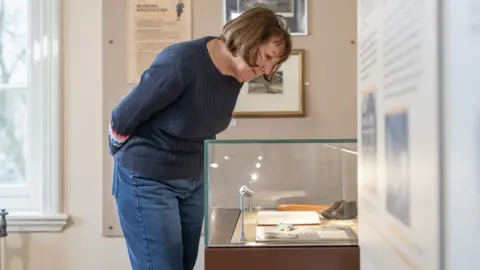 EGH
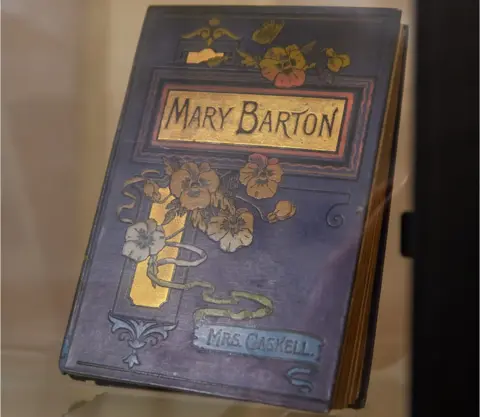
EGHBoth the 1830 opening of the world's first inter-city rail line, which linked Manchester and Liverpool, and the city's cholera epidemic in 1832 feature in her first novel Mary Barton, while her radical campaigning and role in the foundations of the trade union movement inspired parts of her later work, North and South.
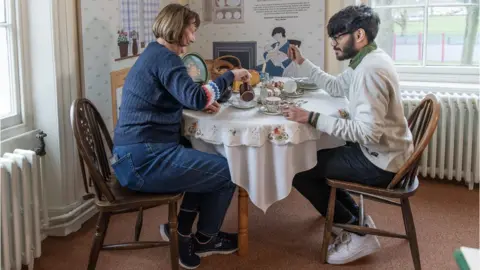
The representative said the exhibition included "interactive features" to bring Gaskell's story to life.
"There is a map that highlights some of the locations... that inspired some of the settings and storylines that Elizabeth pursued; places like the Mechanics' Institute, Angel Meadows and Hulme Barracks," they said.
They added that a "cosy, bright and inviting tea party corner" had also been included as "an important reminder from Mary Barton that working class life during the industrial revolution was not one-dimensional".
 EGH
EGH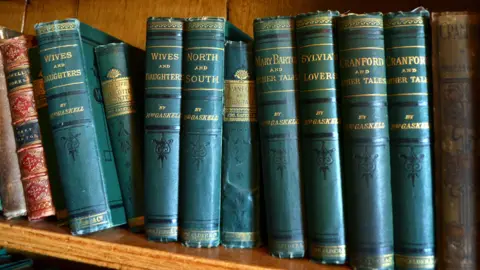
Ms Jastrzebski-Lloyd said visitors would "enjoy a fascinating insight into the mind of Elizabeth Gaskell, the world of Victorian Manchester and why her novels continue to make sure a powerful contribution".
"She had the skill not only to entertain the reader, but through fascinating detail and incredible observations, she has given us a unique window through to the past," she added.
The exhibition is on at Elizabeth Gaskell's House until 2 April 2024.

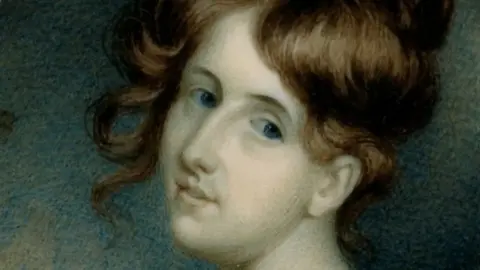
Elizabeth Gaskell (1810-1865)
 Univerity of Manchester
- Born in London in 1810, she moved to Cheshire after her mother's death and lived with her aunt in Knutsford - the inspiration for Cranford
- Following the death of her baby son, she was encouraged to take up novel writing by her husband Reverend William Gaskell
- They spent most of their married life in Manchester, then a centre of industry and radical politics
- She wrote eight novels - Mary Barton, Cranford, Ruth, North and South, My Lady Ludlow, A Dark Night's Work, Sylvia's Lovers and Wives and Daughters - along with dozens of shorter works and a biography of her friend and fellow writer Charlotte Bronte after the author's death
- Gaskell died in 1865, leaving her final work incomplete

Why not follow BBC North West on Facebook, Twitter and Instagram? You can also send story ideas to [email protected]
