Donna Nook Nature Reserve: Bumper year for seal births

 Lincolnshire Wildlife Trust
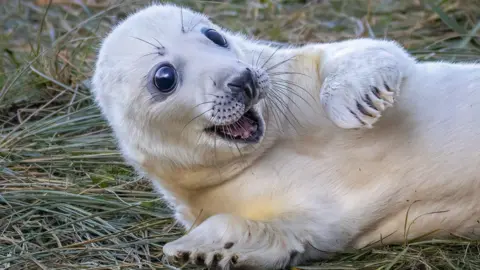
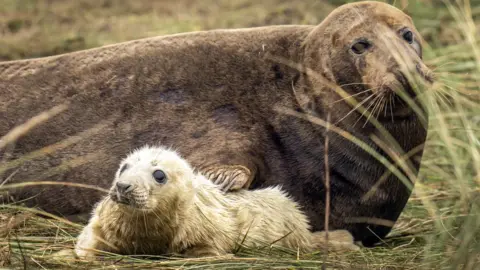
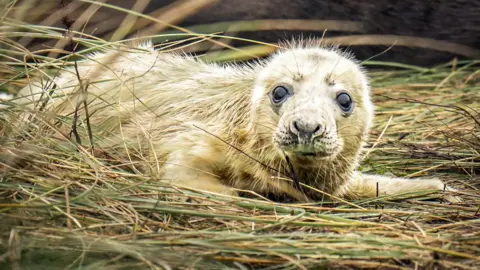
A Lincolnshire nature reserve has enjoyed a near-record year for the number of seal pups born.
Lincolnshire Wildlife Trust, which manages the Donna Nook reserve, said 2,208 pups had been born this season so far compared to a best of 2,213.
In 2011 and 2013, dozens of youngsters died when tidal surges hit the coast but the colony has otherwise enjoyed growth most years.
The reserve recorded this season's first birth on 27 October.
A spokesperson for the trust said they would usually see a 1-5% increase in the number of pups each year.
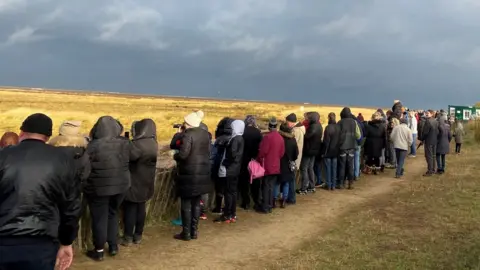
This is helped by the reserve having an very low mortality rate due to the seals being fenced off from the viewing area and being able to get a long way from the incoming tide, they added.
 PA Media
 PA Media
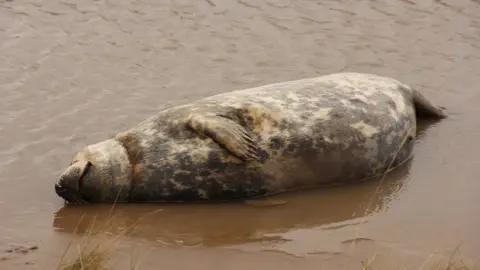
One seal, who has proved to be a star attraction over the years, also returned to give birth.
 Richard Croft/Geograph
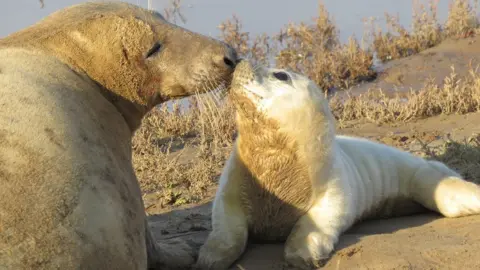
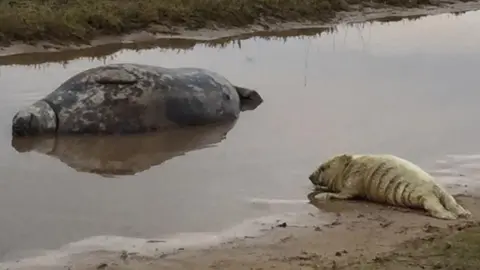
The mother, dubbed Ropeneck due to a scar left by a rope, was rescued by wardens in 2000.
Since being entangled, she has returned to the reserve at almost the same time every year to give birth.
 Lincolnshire Wildlife Trust
According to visitors, Ropeneck left on 15 December, having fed her "enormous" pup for 16 days.
 Lincolnshire Wildlife Trust
The seals spend most of the year at sea or on sandbanks but come ashore to give birth in November and December.
After suckling their pups for two to three weeks, the seals abandon the young, mate again ready for the following year and then head back out to sea.
Eventually, hunger drives the young seals into the water in the hunt for food.

Follow BBC East Yorkshire and Lincolnshire on Facebook, Twitter, and Instagram. Send your story ideas to yorkslincs.news@bbc.co.uk.