'Flesh-eating' magpies attack Huttoft donkeys

 Radcliffe Donkey Sanctuary
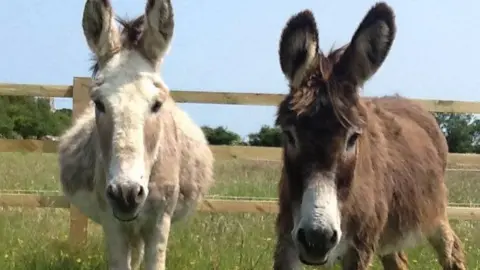
Elderly donkeys at a sanctuary are being attacked and "picked on" by "flesh-eating" magpies, in what is becoming a "critical" problem.
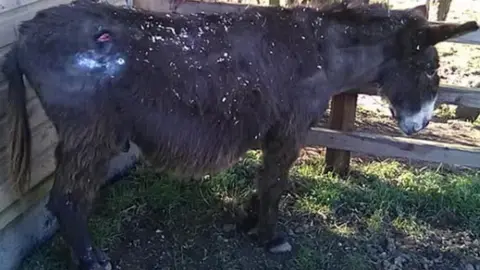
Radcliffe Donkey Sanctuary in Huttoft said staff had found wounds the size of £2 coins on four of their animals.
Volunteer Ross Clarke said one particular donkey was being made "a meal of" by birds pecking through a dressing on one of the wounds.
Experts in magpie behaviour said it was a relatively rare occurrence.
 Radcliffe Donkey Sanctuary
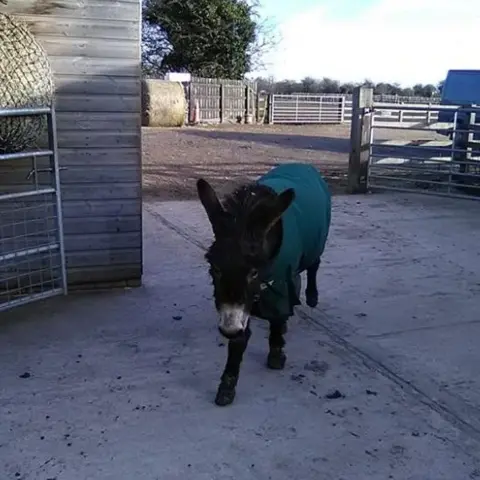
"We've got a few old residents and Jack... is too old to run about like some of the others, and every time he lies down in the sun they just seem to land on him," said Mr Clarke.
"They've pecked through his fur and made him bleed and keep going back for the same patch.
"We've seen crows and jackdaws taking a bit of fur for their nests, but we've never seen this before."
 Radcliffe Donkey Sanctuary
The sanctuary has 55 animals and is keeping the affected donkeys - Jack, Martin, Harriott and Buster - closer to the shelter so staff can shoo the birds away.
In a post on Facebook, they described the problem as "critical".
Allow Facebook content?

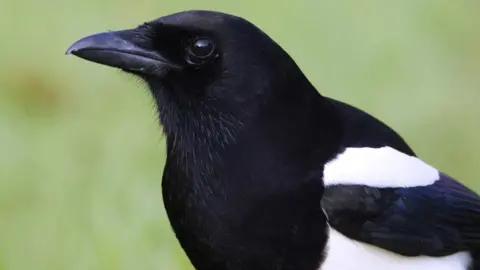
What do magpies eat?
 JOHN DEVRIES/SCIENCE PHOTO LIBRARY
- Main diet in summer is grassland invertebrates, such as beetles, flies, caterpillars, spiders, worms and leatherjackets
- In winter, they eat wild fruits, berries and grains, with household scraps and food scavenged from bird tables or chicken runs
- They will eat carrion at all times and catch small mammals and birds
- Occasionally, magpies prey on larger animals such as young rabbits
Source: RSPB
Carl Soulsbury, senior lecturer in life sciences at the University of Lincoln, said while rare, such magpie behaviour is not unheard of.
"The reasons are unclear but it seems to occur in winter more often [with] magpies pecking at existing small wounds or galls.
"Since magpies will also perch on livestock to groom [and] take parasites, it may be that is escalates from there."
