Future of northern mills subject of Saltaire exhibition

 Tim Smith
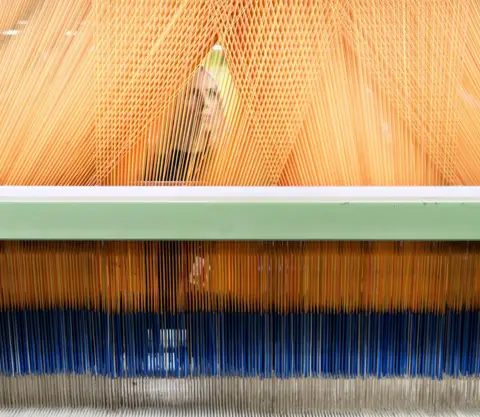
Textile mills in northern England which fuelled the Industrial Revolution are being reinvented to produce high-tech materials for the 21st Century.
A photography exhibition is highlighting some of the innovative products, which include heart valves, knee cartilage and engine components.
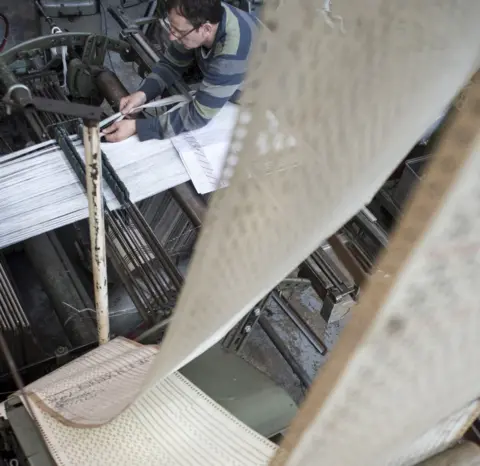
Weaving the Future by Tim Smith explores how the industry is using its traditional expertise in new ways.
The exhibition is part of the annual Saltaire Festival.
"For centuries, the textiles industry has shaped the people and places of northern England," Mr Smith said.
"This is a show about how textiles are being adapted for the 21st Century."
 Tim Smith
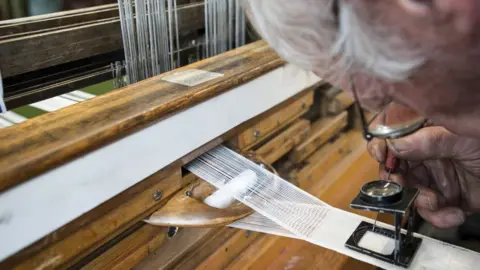
One firm, Wyedean Weaving, based in Haworth, has provided decorative braids and accoutrements since Victorian times.
"These are now mainly used for uniforms the world over, and are often seen being worn by the Royal Family," Mr Smith said.
"They are now also supplying silk weaves to a biomedical research company to test their use as replacement knee cartilage."
 Tim Smith
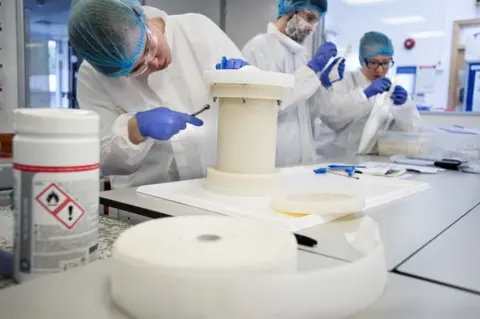
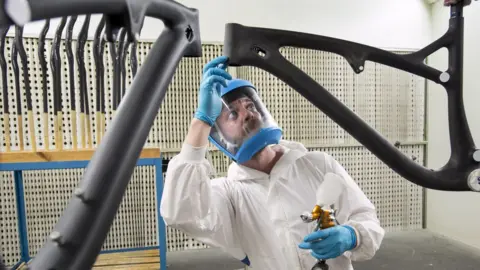
The exhibition also features mills which provide heat-retardant material for firefighters, and firms which turn glass fibre into belts for jet engines, and produce carbon fibre parts for bikes.
 Tim Smith
It also looks at the history and influence of the traditional mills, including how the invention of punch cards for looms led to the development of early computers.
"The first step on a journey from woven cloth to the digital programming that drives our modern world," Mr Smith said.
 Tim Smith
The festival runs until 22 September.

Follow BBC Yorkshire on Facebook, Twitter and Instagram. Send your story ideas to yorkslincs.news@bbc.co.uk.
