Ryde Pier becomes Portsmouth University biodiversity project

 Wightlink
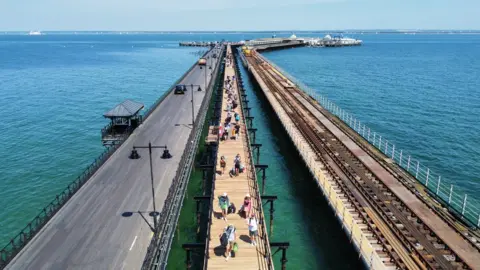
A historic pier has become part of a two-year biodiversity project.
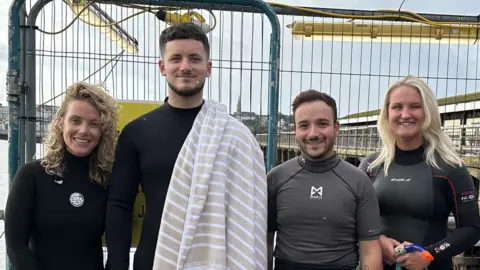
Marine scientists from the University of Portsmouth have swum beneath Ryde Pier on the Isle of Wight to attach large metal cages to the structure.
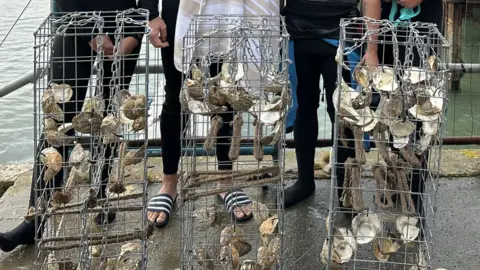
Also known as BioHuts, the cages contain oyster shells and hessian rope and will be monitored for signs of marine life inside.
It is hoped the scheme will encourage juvenile fish to set up home inside them, so populations can increase.
 University of Portsmouth
Similar projects elsewhere in the Solent have seen several species of fish, and even endangered European eels, swimming in and around the BioHuts.
Project leader Georgios Georgiou said: "We expect the cages will quickly become colonised by marine flora, then marine creatures are likely to follow."
The research assistant from the University's School of Biological Sciences has also been carrying out assessments of the rich seagrass meadows under the pier.
"We need to help the environment as much as possible," he added.
 University of Portsmouth
Three of the university's marine biology undergraduate students helped install the so-called cuttlefish nurseries beneath the 200-year-old pier.
The area will be observed for the next two years to see if sea creatures will make the cages into their habitat.

