Leamington Spa man backs defibrillator list after cardiac arrest

 Ripon Danis
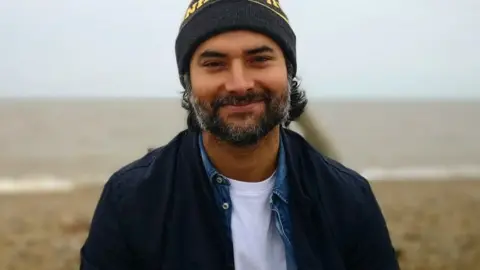
A father-of-two has supported calls for a national database of defibrillator locations.
Ripon Danis, from Leamington Spa, said passers-by used a defibrillator to resuscitate him when he had a cardiac arrest.
Emergency services, helped by Ordnance Survey and the British Heart Foundation, want to map the whereabouts of such devices in the UK.
Mr Danis said knowing where defibrillators were would "save lives".
 Ripon Danis
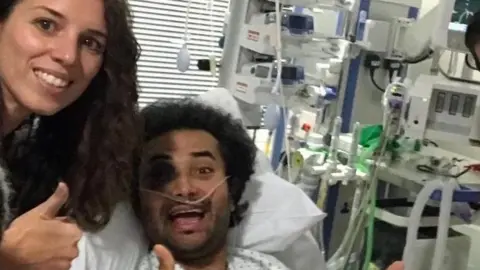
He explained he was 37 when "my heart stopped" after leaving a gym class in November 2018, collapsing outside a London Underground station.
"Two passers-by saw to me; started administering CPR," he said.
"One of them realised I had no heartbeat and ran back to Highbury and Islington tube station, grabbed the defibrillator, came back, used the defibrillator on me and essentially brought me back to life."
He added: "I have no family history, no genetic issue and I was in the height of fitness at the time but I still had a cardiac arrest so it could literally happen to anybody."
 Getty Images
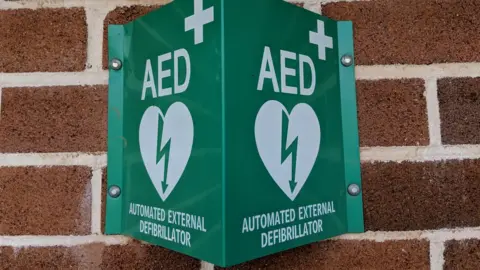
Defibrillators deliver an electric shock to get the heart pumping properly.
The location of 30,000 community defibrillators is known, but an estimated 70,000 devices are not registered.
Anyone who is in charge of an organisation that has one has been asked to log their device with a database called The Circuit.
 Ripon Danis
Backers say registration will allow Ordnance Survey to give devices a Unique Property Reference Number to identify their precise location and would mean 999 call operators could direct people to the nearest defibrillator to use before an ambulance can arrive.
Mr Danis said: "Knowing where the closest [defibrillator] is, is essential for your survival.
"I just hope everybody registers their defibrillator... you will save lives by doing so."

Follow BBC West Midlands on Facebook, Twitter and Instagram. Send your story ideas to: newsonline.westmidlands@bbc.co.uk
