UK Antarctic base celebrates 80 years of research

 BAS
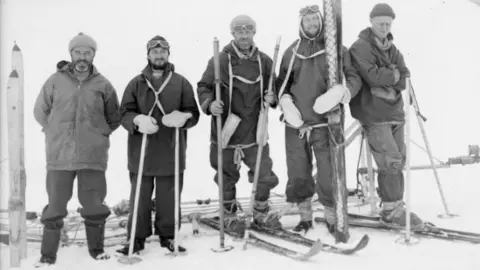
BASThe UK's first scientific base in Antarctica, established during a secret World War Two mission, is celebrating its 80th anniversary.
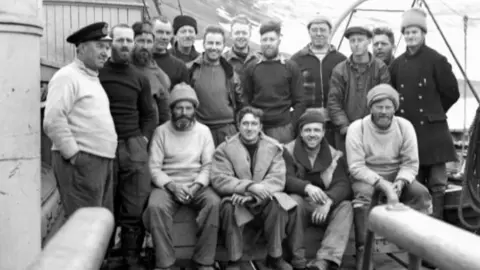
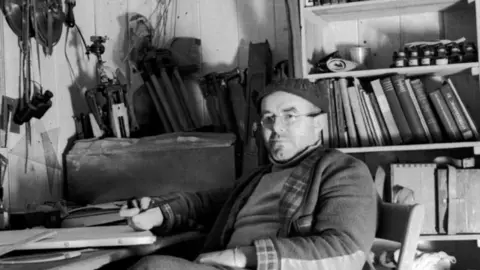
A team of 14 men set up "Base A" at Port Lockroy in February 1944.
The Goudier Island station was initially intended to "assert Britain's sovereignty over the Antarctic Peninsula", the Cambridge-based UK Antarctic Heritage Trust said.
These days it is home to the world's most remote Post Office.
The wartime covert mission was code-named Operation Tabarin.
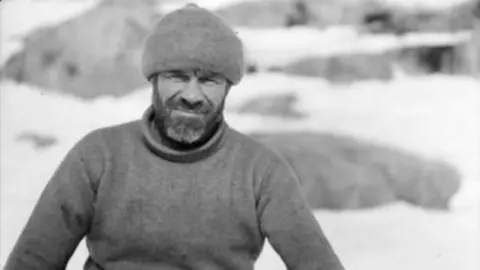
It was led by James Marr, a marine zoologist, and its intention was to ward off claims to the region from Chile and Argentina.
 BAS
BAS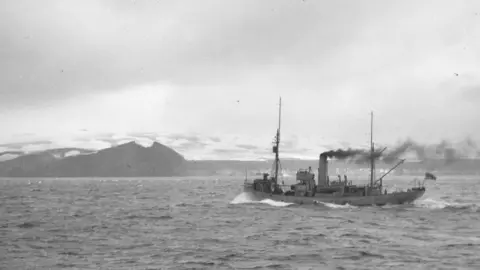 BAS
BASHis team encountered problems with their initial expedition ship, in addition to sea ice at Hope Bay, which forced them to set up Base A on Goudier Island instead.
Scientific work carried out during the expedition included meteorology, topographical and geological surveying, biological research, glaciological studies and sea ice observation.
 BAS
BAS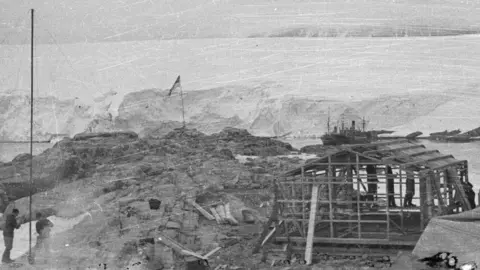 BAS
BASPort Lockroy was occupied until 1962, but was largely abandoned for several decades before being restored in 1996 with support from the Antarctic Heritage Trust (UKAHT).
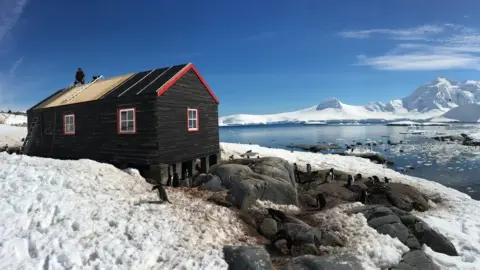 UKAHT
UKAHTIn 2006 the trust took over full management of the site.
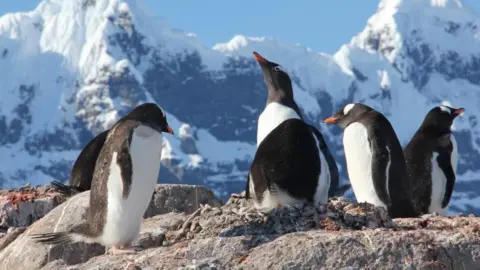
These days, Port Lockroy is home to a museum, a Post Office and a colony of about 2,000 gentoo penguins.
 UKAHT
UKAHT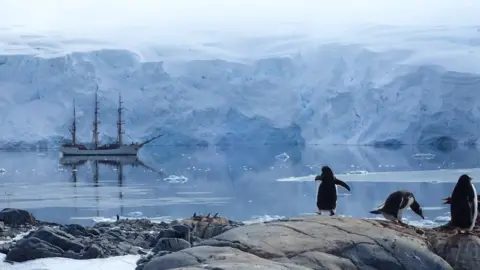 UKAHT
UKAHTA small team of specially trained people is deployed each year to the base to look after it, monitor wildlife, and host the thousands of tourists who visit on cruise ships.
The team spends about five months on the island with no flushing toilets and no internet, and, as the UKAHT warned - they must be comfortable surrounded by penguin poo.
Applications for the posts are taken each year and at the height of its popularity, about 6,000 people from around the work expressed an interest.
Being a part of "a remarkable tale of scientific advancement on the continent" draws people in, the UKAHT said.
"Pioneering research took place at Base A Port Lockroy including studies of the ionosphere (the Earth's upper atmosphere) which played a role in advancing our understanding of the ozone layer and the role Antarctica plays in the Earth's climate."
 BAS
BASIts chief executive, Camilla Nichol, said: "Base A Port Lockroy is where Britain's scientific age in Antarctica truly began.
"It is an important heritage site as it marks a time when understanding and inquiry replaced heroism and exploitation on the continent.
"Today, we manage and conserve Port Lockroy with a small on-site team.
"We hope the original Operation Tabarin team and their descendants would be proud of our careful protection of this special place for generations to come."

Follow East of England news on Facebook, Instagram and X. Got a story? Email eastofenglandnews@bbc.co.uk or WhatsApp 0800 169 1830
