Cambridge University museum finds 150-year-old platypus specimens

 Jacqueline Garget
Specimens of mammals that helped support the theory of evolution 150 years ago have been found at a museum.
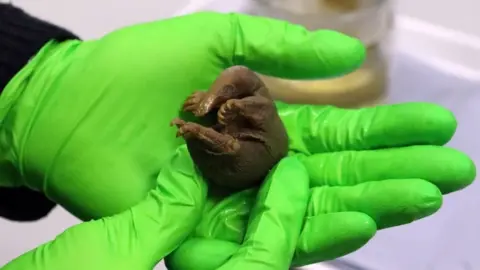
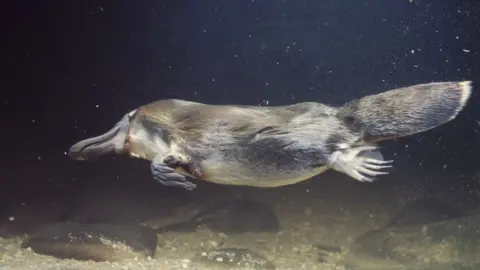
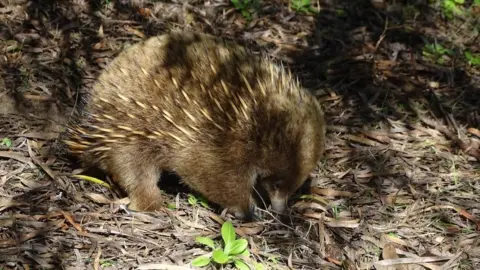
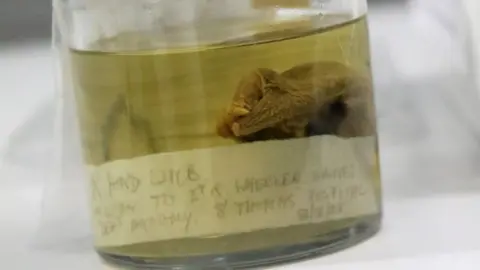
The platypus and echidna (spiny anteaters) samples discovered at Cambridge University's Museum of Zoology had been collected in the late 1800s by scientist William Caldwell.
At that time, they were key to proving some mammals laid eggs, and supported the theory of evolution.
Jack Ashby, from the museum, said the discovery was "pretty amazing".
The collection had not been catalogued by the museum, so until recently staff did not know it existed.
 Getty Images
 Jack Ashby
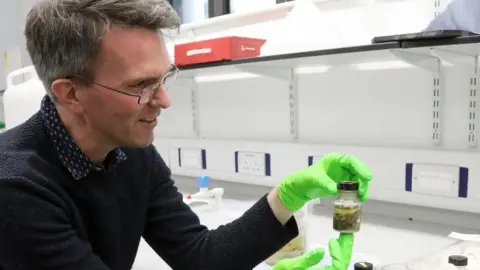
Mr Ashby, the museum's assistant director, said: "I knew from experience that there isn't a natural history collection on Earth that actually has a comprehensive catalogue of everything in it, and I suspected that Caldwell's specimens really ought to be here."
 Jacqueline Garget
He asked the collections manager to keep an eye out, and the samples were found in a box.
Until Europeans first encountered platypuses and echidnas in the 1790s, it had been assumed that all mammals gave birth to live young.
The question of whether some mammals lay eggs then became hotly debated in scientific circles.
"In the 19th Century, many conservative scientists didn't want to believe that an egg-laying mammal could exist, because this would support the theory of evolution, the idea that one animal group was capable of changing into another," Mr Ashby said.
"Lizards and frogs lay eggs, so the idea of a mammal laying eggs was dismissed by many people - I think they felt it was degrading to be related to animals that they considered 'lower life forms'."
 Jacqueline Garget
William Caldwell had been sent to Australia in 1883, with financial backing from the University of Cambridge, the Royal Society and the government, to try and resolve the long-standing debate.
The collection includes echidnas, platypuses and marsupials at varying life stages - from fertilised egg to adolescence.
Mr Ashby said: "It's one thing to read the 19th Century announcements that platypuses and echidnas actually lay eggs, but to have the physical specimens here, tying us back to that discovery almost 150 years ago, is pretty amazing."

Find BBC News: East of England on Facebook, Instagram and Twitter. If you have a story suggestion email eastofenglandnews@bbc.co.uk
