Stories of East Anglia's Basque child refugees revealed

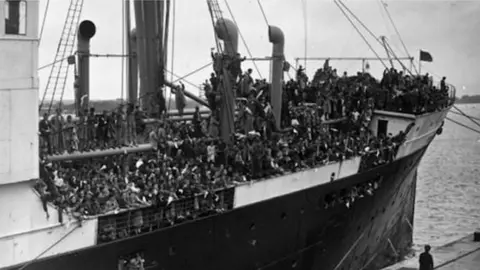 University of Southampton Special Collections
The story of how East Anglia became a safe haven for Basque child refugees of the Spanish Civil War has been revealed online through rarely seen film and photographs.
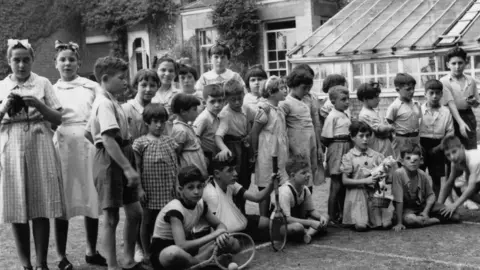
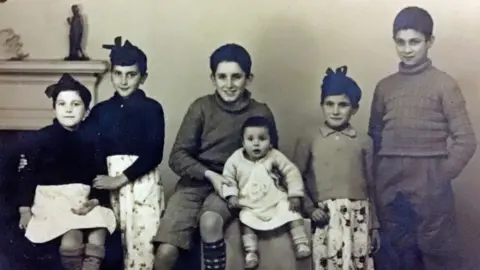
Nearly 4,000 boys and girls arrived at Southampton in May 1937 and some found refuge in volunteer-run colonies.
Their story is told in an Anglia Ruskin University project.
Project director Dr Jeannette Baxter said the bombing of Guernica a month earlier precipitated their flight.
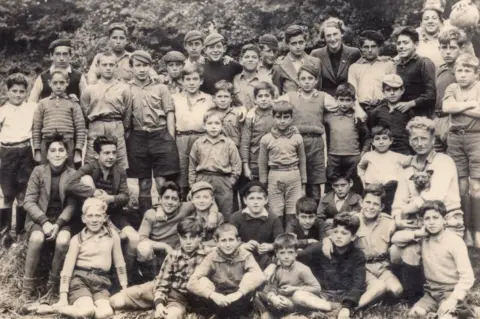 University of Southampton Special Collections
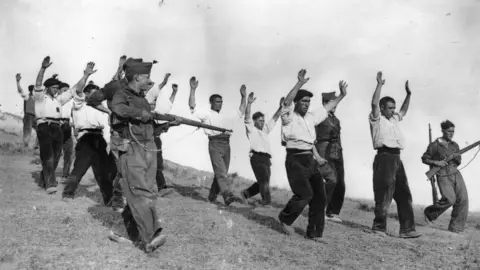 Getty Images
The Spanish Civil War broke out in 1936 and while Britain and France supported a non-intervention policy, this was not the case for Nazi Germany and Fascist Italy.
But when German and Italian aircraft destroyed 80% of the Basque market town Guernica - an event immortalised in Pablo Picasso's painting - there was an upsurge of British support which led to the rapid evacuation by ship of 3,881 children, organised by volunteers, according to Dr Baxter.
"The children, who were aged five to 15, thought they would only be gone for three months - but after Bilbao fell, they were unable to go home," she said.
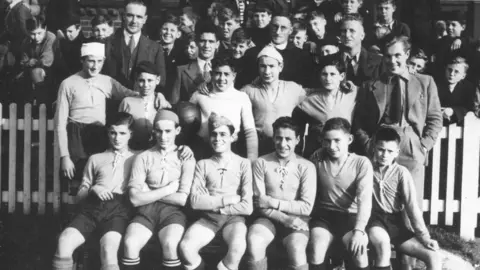 The Association for the UK Basque Children
Volunteer Poppy Vulliamy established a colony at Oakley Park, near Hoxne on the Norfolk/Suffolk border, for 50 older "bad boys".
Dr Baxter said: "She rubbished the idea the boys were 'bad', as the press had called them
"They were strongly political, opinionated hormonal adolescents who had been traumatised."
Ms Vulliamy encouraged them to organise a parliament to help run the colony, an organisational structure which continued when they moved to Rollesby near Great Yarmouth.
 The Association for the UK Basque Children
Jessie Stewart, from the Cambridge Basque Children's Committee, helped organise a home for 29 children, first in Pampisford and later in Cambridge.
They created their own school magazine, which has been translated for the first time thanks to the Heritage Lottery funded project.
Most of the children returned to Spain in 1939 after the civil war ended.
 Paul Gallego
Plans to restage a boys football match have been shelved due to the coronavirus restrictions.

Find BBC News: East of England on Facebook, Instagram and Twitter. If you have a story suggestion email eastofenglandnews@bbc.co.uk
