Spanish Civil War: Evacuees football and other stories remembered in East Anglia

 University of Southampton Special Collections
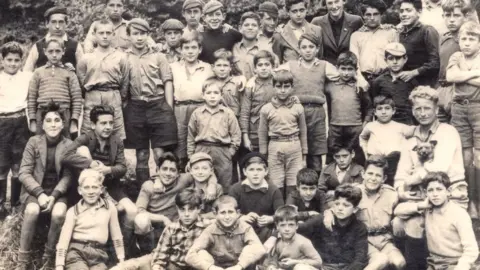
A 1937 football match between children evacuated from the Spanish Civil War and a British youth side is to be recreated with the help of the lottery.
The Anglia Ruskin University project will also tell the stories of the children from the Basque region who came to East Anglia.
The project will stage a football match to remember the game between Basque Boys and Great Yarmouth Boys.
The National Lottery Heritage Fund is providing a £54,600 grant.
 Cambridge City Football Club
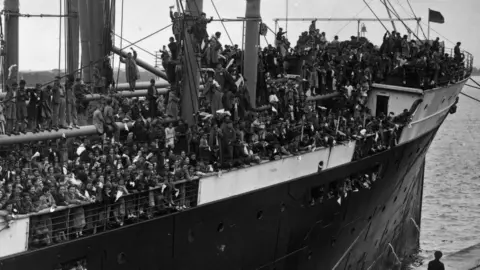
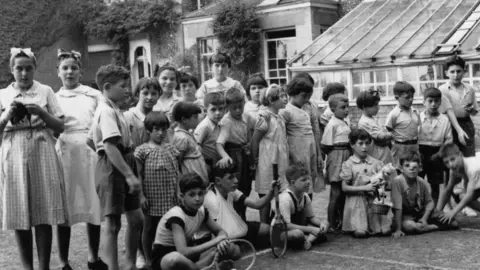
The project looks at the lives of some of the 4,000 children who came to Britain after the outbreak of the 1936-39 conflict.
One part of the project will focus on the boys based in Rollesby in Norfolk and at Hoxne in Suffolk.
 Getty Images
The project will shed light on the everyday life and culture of the boys and aims to interview those still alive to look at the evacuees relationship with the local community.
The Basque Boys beat a local Great Yarmouth Boys XI 8-2 at the Wellesley Ground, Great Yarmouth on 21 October 1937, and then triumphed 9-0 in a rematch played on the same ground two months later on Boxing Day.
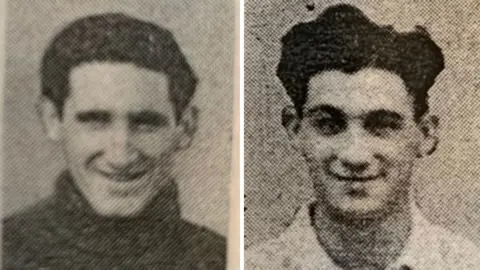
New research will focus on the stories of the local volunteers as well as the children who remained in the region after the war ended, such as the Gallego brothers, Joe and Tony, who played football for Cambridge United, Cambridge Town and Norwich City in the 1940s and 1950s.
Participants will create a publication and exhibitions will be held in Norwich and Cambridge to support Refugee Week 2020.

Spanish Civil War
 Getty Images
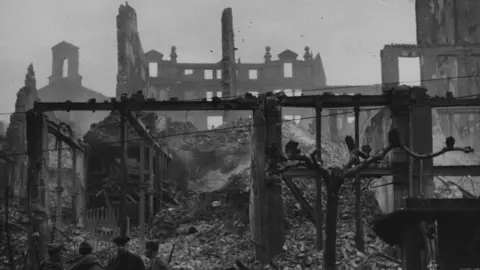
- On 17 July 1936, the Spanish military - supported by right-wing nationalists - stage a coup against the elected Republican government, which was backed by most of the left
- Within a few days, they achieve control in some parts of Spain while Republican forces put down the uprising in other areas
- General Francisco Franco emerges as the main Nationalist leader, while the civil war becomes a proxy war among other European powers
- Hundreds of thousands of people die before Franco's Nationalists win the war in spring 1939
- By 1940, about 470 of the refugees who came on the Habana remained in the UK, with some fighting for British forces during World War Two
Sources: National Archives/Britannica/Basque Children's Committee

 University of Southampton Special Collections
Dr Jeannette Baxter, of Anglia Ruskin University, who heads the project, said: "The Cambridge Basque child refugee story has only partially been told and the Norfolk and Suffolk Basque child refugee story has not been told at all.
"With this project we have a unique opportunity to capture personal stories, memories and testimonies, and to bring generations together so that our younger participants can experience history at first hand."
