National Trust's Wicken Fen reserve joins European 'rewilding' network

 Richard Nicoll
A "precious sliver" of fenland has joined a European-wide network devoted to "rewilding" native landscapes.
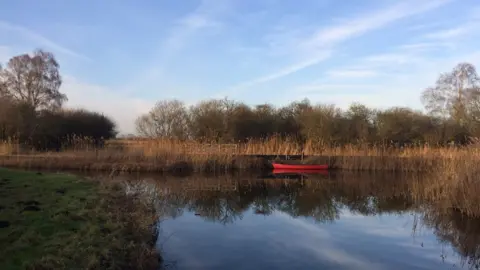
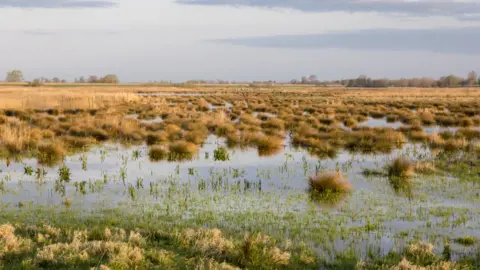
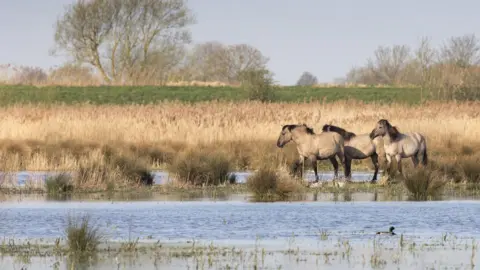
The conservation team at Wicken Fen in Cambridgeshire is working to revert a large area of agricultural land back to wetland as part of a 100-year vision.
It is the newest member of the European Rewilding Network (ERN), which includes more than 70 conservation projects.
Wicken Fen countryside manager Martin Lester said it would allow them to "trade ideas and share best-practice".
The network brings together conservationists across 27 countries, with rewilding programmes as diverse as Lapland in northern Sweden to North Uist in the Outer Hebrides of Scotland.
It describes rewilding as "a progressive approach to conservation" which aims to increase the diversity of animals and plants.
Mr Lester said it "makes sense to talk to our neighbours in Europe, who are doing similar things, like-minded people".
 JUSTIN MINNS/NATIONAL TRUST
Low-lying fenland once covered the counties of eastern England, but it was gradually drained for industry and agriculture from the mid-1600s.
Less than 1% of original fen survives, according to the National Trust.
 JUSTIN MINNS/NATIONAL TRUST
 Getty Images
"The ERN is a cluster of European initiatives that are working to support the comeback of wilder nature, moving away from traditional approaches and sharing a set of common principles," said Mei Elderadzi, Rewilding Europe's ERN coordinator.
"By sharing insight and knowledge, members are in a far stronger position to bring about positive change."
The National Trust's 100-year plan for Wicken Fen aims to expand the reserve fifteen-fold by 2099 by buying more land.
"We are not trying to recreate the fen," said Mr Lester, "rather to re-establish the wetland and reintroduce the processes that will allow it to ease itself into whatever it wants.
"Sometimes normal conservation methods don't work."
