National Heritage List: Slough trading estate among new additions

 Historic England
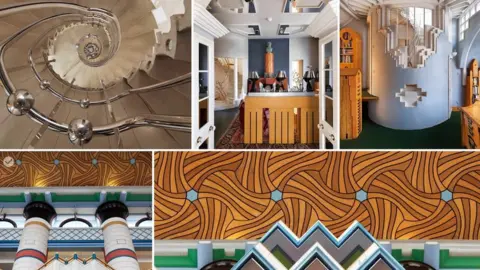
Buildings across England considered post-modern in design including a Slough trading estate have been given listed status.
The 17 structures, which also include houses and schools, have been added to the National Heritage List for England.
A crown court in Cornwall and housing schemes in London's Docklands are also on the list.
Post-modern architecture emerged in the 1970s in reaction to modernism but fell out of favour before a revival in 2011.

Commercial buildings recognised
 Steven Baker/Historic England
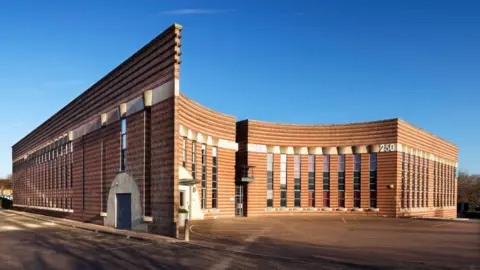
Slough's McKay Trading Estate has been Grade II listed.
Patience Trevor, Historic England's Senior Listings Adviser said: "Rather than the functional, modernist box you might expect... it's a very elegant and distinctive building. It's dignified, but strong and robust at the same time".
Last year, a survey found Slough was the best place to work and live.
Also Grade II listed is a business park near Bristol, that is "injected with glamour" and "features circular forecourts following the turning circle of a car".
 James Davies/Historic England
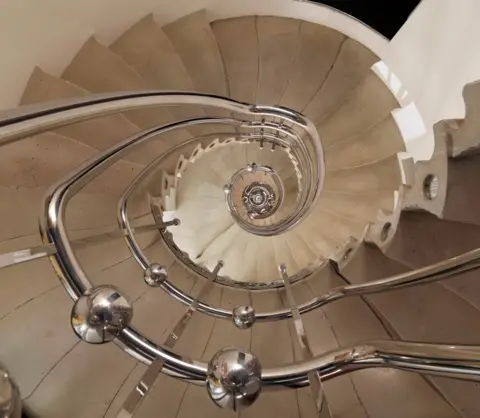
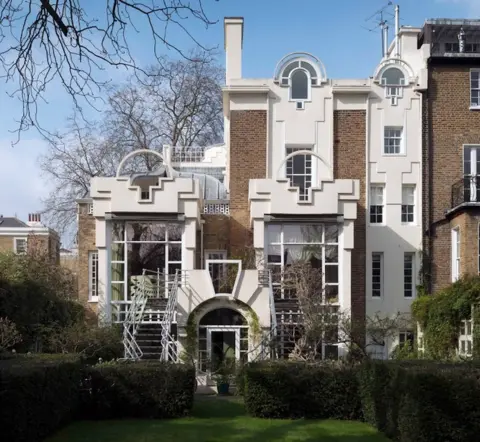
Thematic House, Kensington and Chelsea, London
 Davies James/Historic England
Renowned historian and architecture critic Charles Jencks designed Thematic House, which has been Grade I listed.
 Chris Redgrave/Historic England
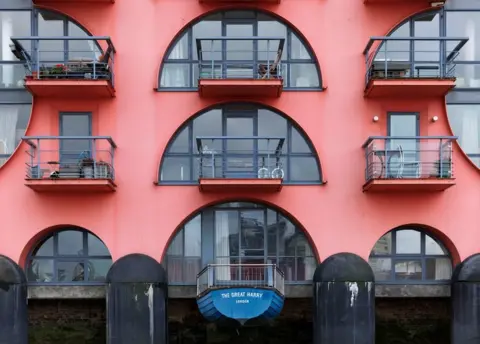
London's Docklands - four buildings get Grade II status
China Wharf, Cascades, Newlands Quay and Swedish Quays were all given the third level of listing protection and were built between 1982 and 1990.
 James Davies/Historic England
A number of other London terraces and blocks of flats were listed in Kensington, Hackney and Islington as has the Sainsbury Wing at the National Gallery in Trafalgar Square.
Educational buildings
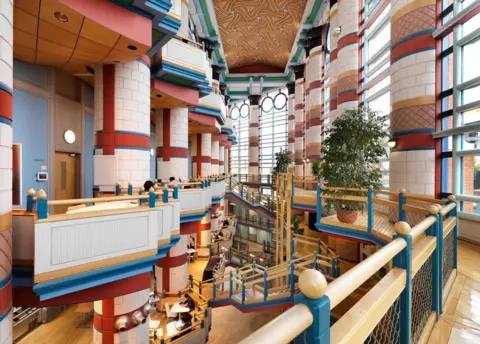
Judge Business School in Cambridge was given the second highest listing status, Grade II*.
 James Davies/Historic England
The Katharine Stephen Rare Books Library at Newnham College, Cambridge, and the Gough Building at Bryanston School in Dorset, were both Grade II listed.
 James Davies/Historic England
You may also be interested in:
Truro Crown Court - the only legal building on the list
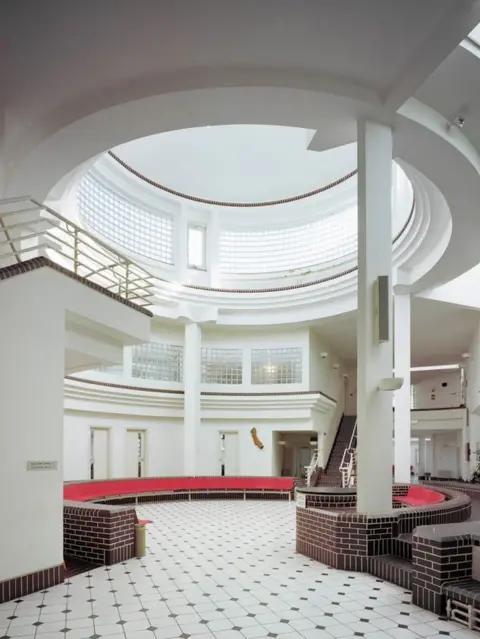
Historic England said the Cornwall court's architects, Eldred Evans and David Shalev, achieved "a landmark civic complex that is an elegant and sophisticated addition to Truro".
 Historic England
The building has been Grade II* listed. Its courtrooms are built within complex circular patterns around a naturally-lit atrium.
The civic buildings
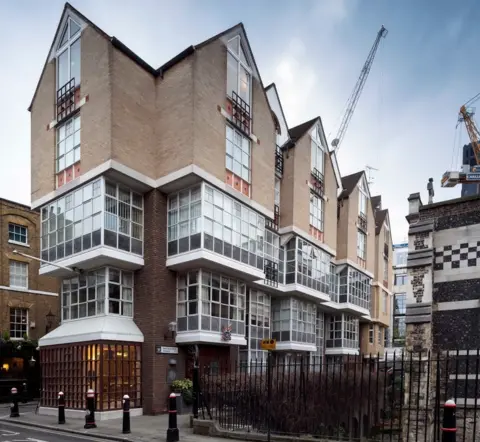
Hillingdon Civic Centre in Uxbridge and Founders' Hall in the City of London were both Grade II listed.
 Chris Redgrave/Historic England
Categories of listed buildings
The system used for listing buildings in England was introduced just over 70 years ago.
A building is listed when it is of special architectural or historic interest considered to be of national importance and therefore worth protecting.
- Grade I buildings are of exceptional interest, with 2.5% in this category.
- Grade II* buildings are important buildings of more than special interest and account for 5.8% of listed buildings.
- Grade II buildings are of special interest; 91.7% of listed buildings are in this class - the most likely grade for domestic buildings.
- Today there are around 400,000 structures listed - from windmills, pigsties, piers and one rocket.
A building's listed status means there will be extra control over what changes can be made to its interior and exterior, which is different for each one that makes the list.
