Big Butterfly Count: Which common UK species to look for

 Butterfly Conservation
The UK public has been asked to take part in the world's largest butterfly count, to see if the nation is experiencing a once-in-a-decade phenomenon.
Butterfly Conservation said unusually high numbers of the painted lady butterfly had been spotted flying from Europe to the UK. They usually fly to Britain in the summer, but every 10 years millions arrive in a mass migration.
The charity's Big Butterfly Count begins on Friday and runs until 11 August.
To take part, people must spend 15 minutes in a sunny spot anywhere in the UK, counting the butterflies they see before submitting sightings online or via the app.
They are encouraged to spot and record 17 species of common butterfly - but what should you be looking out for?
Britain's most common butterflies and how to spot them
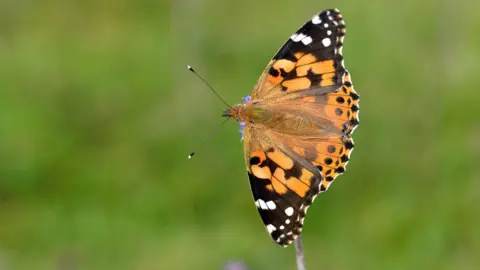
Painted lady: With mainly orange wings, black markings plus white and black spots, painted ladies can be seen anywhere but like dry open spaces. Butterfly Conservation wants to know if this summer is a "painted lady summer". The last time this happened was in 2008 when about 11 million arrived in the UK. The butterflies, flying at speeds of up to 30mph, cover 7,500 miles (12,070km) over several generations as they migrate from Africa to the Arctic Circle and back.
 Butterfly Conservation/PA
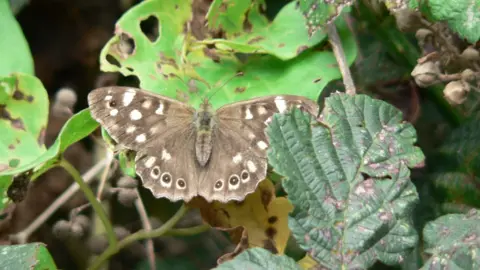
Speckled wood: Look for dark brown wings with cream spots. The butterfly has spread in recent years - an extraordinary "success story" in response to climate change, says Butterfly Conversation - and can be found in East Anglia, the Midlands, much of northern England and some parts of Scotland.
 BBC
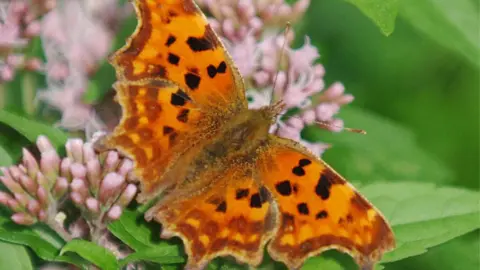
BBCComma: The comma used to only breed in southern Britain but is now found as far north as central Scotland, with some even crossing the sea to colonise Ireland, says the Woodland Trust. Its wings are orange and brown with deep scallops, giving "an almost ragged appearance".
 PA Media
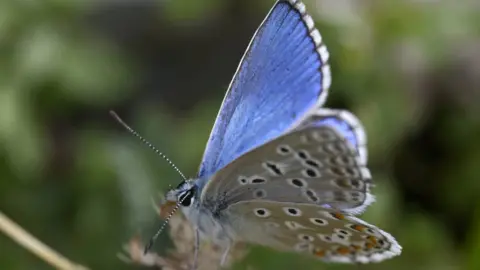
Common blue: This is the most widespread blue butterfly in Britain, according to Butterfly Conservation. The males are blue, while the colour of the females varies from nearly completely brown to predominantly blue.
 Getty Images
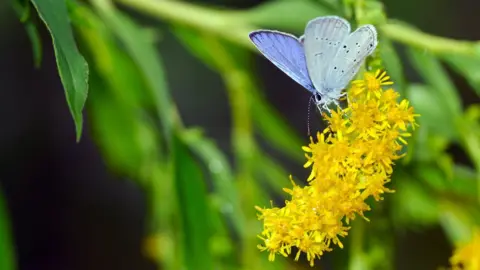
Holly blue: This is different from the Common Blue as it does not have orange dots on the underside of its wings. It is widespread in the south of the UK but spreading northwards.
 Getty Images
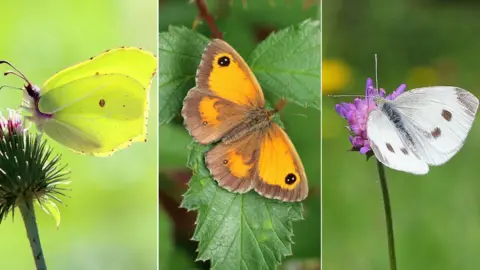
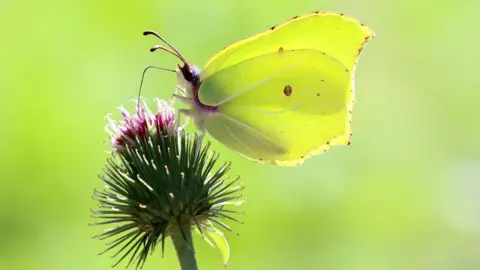
Brimstone butterfly: Yellow wings for the males - which is how it is suggested the "butterfly" could have got its name - and pale green for the females. It's spread in recent years, mainly in northern England, Butterfly Conservation says.
 Mark Searle/Butterfly Conservation
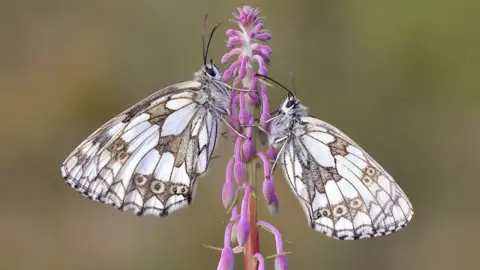
Marbled white: This species has distinctive black and white wings, unlike any others. It can be found in gardens and especially likes purple flowers. The marbled white is widespread in the south of the UK but has spread north over the last two decades.
 Mark Searle/Butterfly Conservation
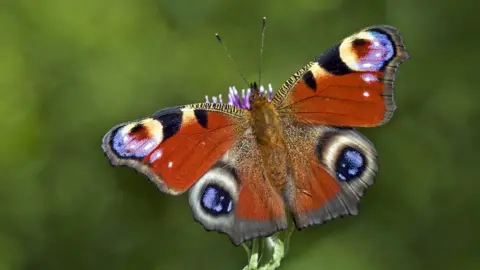
Peacock: The peacock - found throughout the UK - is distinguished by its eye-spot patterns, which it uses to scare off predators by flicking open its wings.
 PA Media
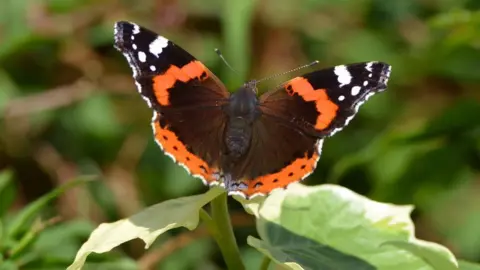
Red admiral: Found anywhere in Britain and in all habitats, these have dark brown wings with a band of orange or red. After hibernating, each spring they migrate northwards, with many crossing the sea to the UK from Europe.
 BBC
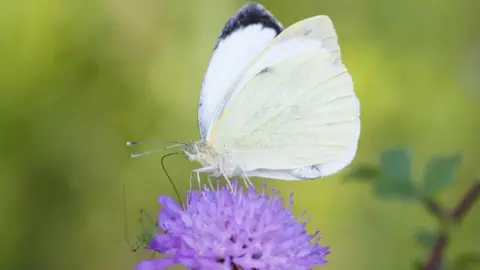
BBCLarge white: Look out for white wings and black tips and, for females, two spots on the upper side of each wing. It is common throughout Britain although many gardeners consider them pests as the caterpillars severely damage Brassica crops, says the RSPB.
 Getty Images
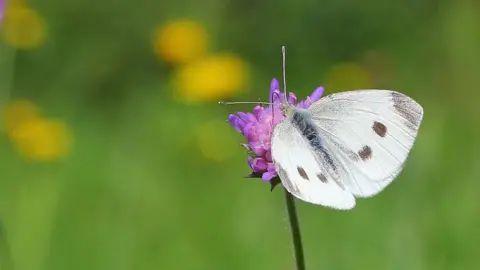
Small white: Similar to the large white but obviously smaller, this has brilliant white wings with one or two wing spots. It is found in a range of habitats including gardens and particularly allotments where cabbages are growing, says Butterfly Conservation.
 Ann Collier/Butterfly Conservation
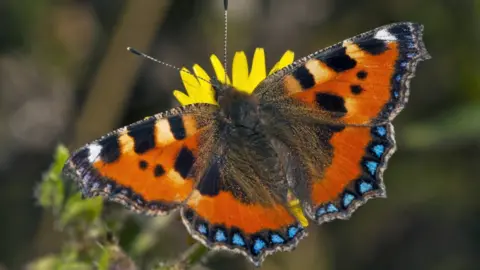
Small tortoiseshell: These are widespread and found throughout Britain. It's bright orange and black with blue markings around the edges of the wing.
 Science Photo Library
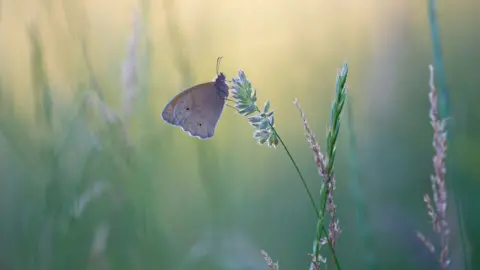
Meadow brown: This is the most abundant species in many habitats, with hundreds together at some areas. It is brown with an orange patch on each wing around a black eye spot.
 Jaco Costerus/Butterfly Conservation
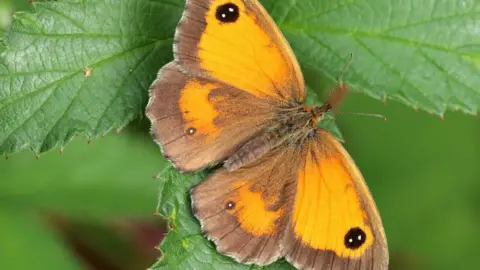
Gatekeeper: This is often seen alongside the meadow brown (above), but is more orange with a brown edge around the wings.
 Mark Searle/Butterfly Conservation
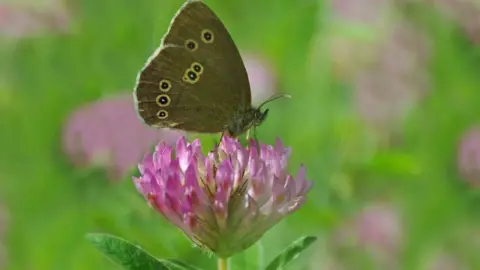
Ringlet: Another brown butterfly, the ringlet's appearance has been described as "velvety" and is almost black with rings on its wings. It has spread across England and Scotland in recent years.
 Tim Melling/Butterfly Conservation
Green-veined white: Like its name, look out for white wings with greenish veins. It prefers damp areas and can often be found in hedgerows, ditches, riverbanks as well as ponds and lakes, the charity says.
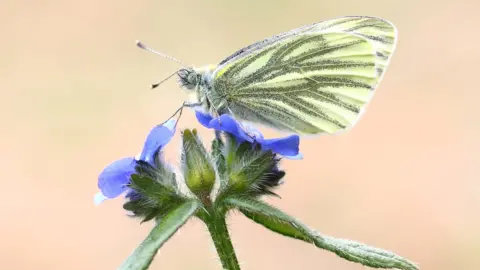 Mark Searle/Butterfly Conservation
Small copper: These are usually spotted on their own or in pairs, says Butterfly Conversation - with territorial males behaving aggressively to other insects. They sometimes visit gardens, so look out for its orange wings and dark brown spots.
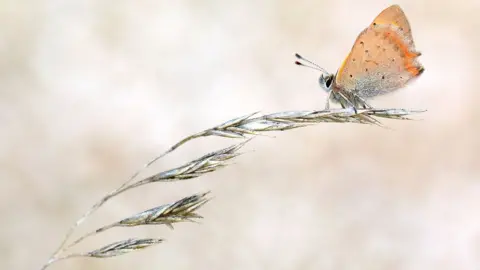 Mark Searle/Butterfly Conservation
All pictures subject to copyright.
