VE Day: People celebrate with bunting and bonfires

Following the surrender of Germany in World War Two, on 7 May 1945, Prime Minister Winston Churchill declared the following day a public holiday, Victory in Europe (VE) Day.

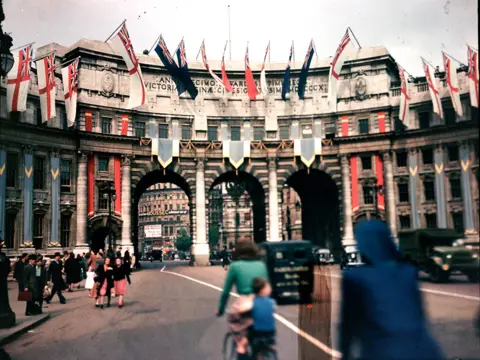
News imageGetty Images Admiralty Arch in London on VE DayGetty Images
A Dufaycolor colour transparency of Admiralty Arch, in London

And, after nearly six years of conflict, the public took to the streets to celebrate.
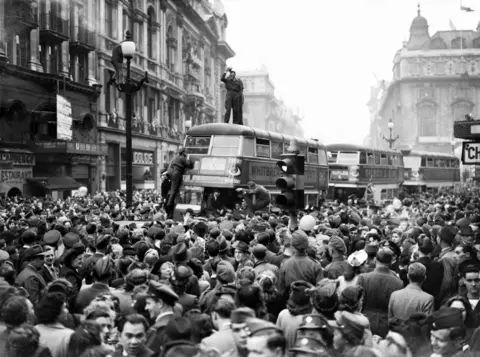
News imageGetty Images Crowds celebrating VE Day in Piccadilly CircusGetty Images
Celebrations in Piccadilly Circus, London
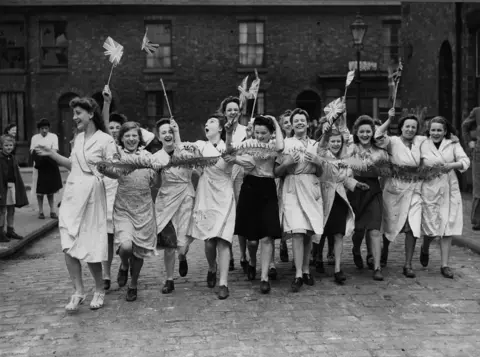
News imageGetty Images Workers celebrate in the streetGetty Images
Workers celebrate in Manchester
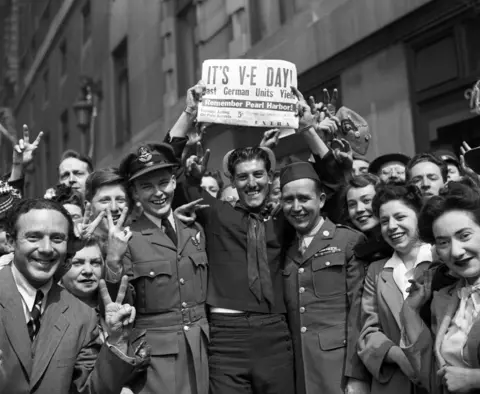
News imageGetty Images Crowds celebrate VE DayGetty Images
Crowds celebrate in London

There was dancing, music and street parties up and down the country, with many people dressed in the red, white and blue colours of the union flag.
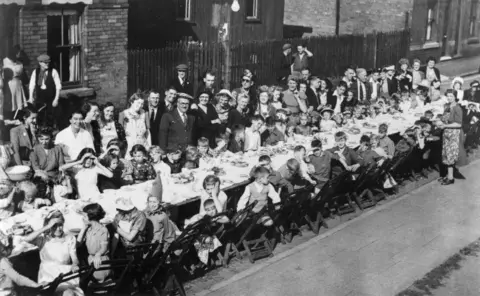
News imageGetty Images A VE Day celebration street party with people having a meal at a long tableGetty Images
A party on Dunstan Street, Netherfield, Nottinghamshire
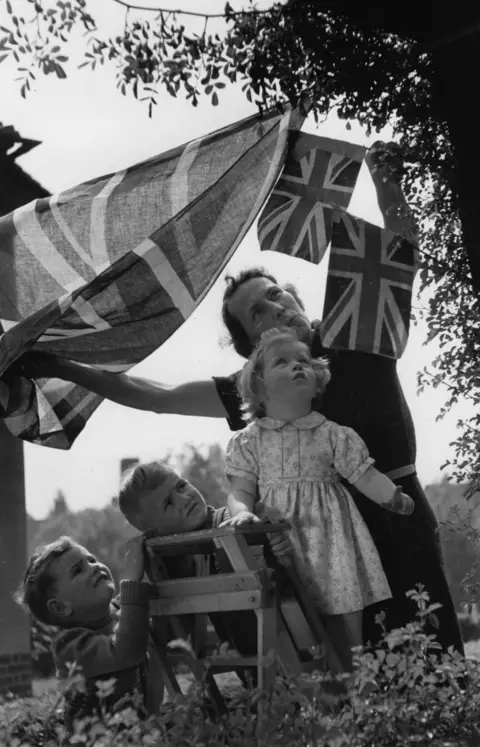
News imageGetty Images Children help put up bunting and flags on VE Day in LondonGetty Images
Children help put up bunting and flags in London
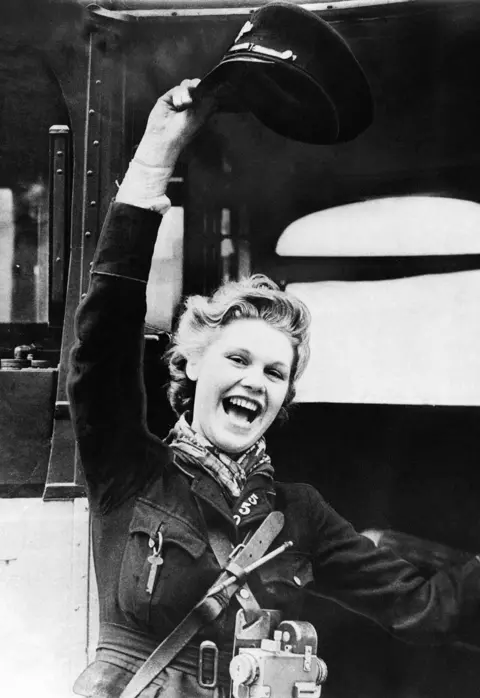
News imageGetty Images A woman bus conductor waves her hat in celebrationGetty Images
A bus conductor celebrates in Scotland
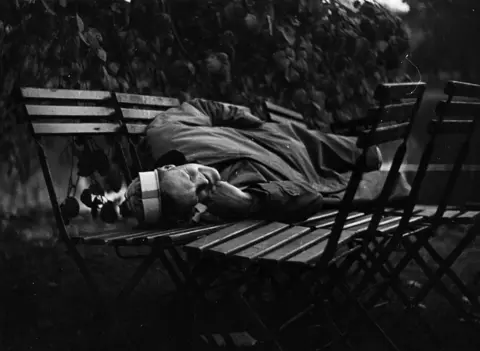
News imageGetty Images A man sleeps on chairs wearing a party hatGetty Images
A reveller sleeps off the day's celebrations, in London

Huge crowds cheered from below as Churchill appeared on the balcony of Buckingham Palace with King George VI and the Royal Family, including the 19-year-old Princess Elizabeth.

The future Queen called it "one of the most memorable nights of my life".
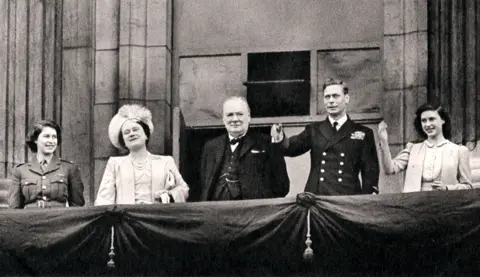
News imageGetty Images King George VI, Winston Churchill and the royal family wave to crowds from Buckingham PalaceGetty Images
Princess Elizabeth, the Queen, Winston Churchill, King George VI and Princess Margaret wave to crowds from Buckingham Palace
News imageGetty Images Crowds outside Buckingham Palace cheer on VE DayGetty Images
King George VI, the Queen and Princess Elizabeth wave to cheering crowds
News imageBBC Presentational white space

London's St Paul's Cathedral held 10 services, attended by thousands of people.

News imageGetty Images Floodlights illuminate the building tops near St Paul's Cathedral with revellers on the streetGetty Images
Floodlights illuminate the building tops near St Paul's Cathedral

And, in the evening, people even lit bonfires, which had been banned during the War.

News imageGetty Images People gather around a bonfire in the streetGetty Images
People gather around a bonfire in West Croydon, London

But VE Day did not mark the end of the World War Two, as fighting continued in the Asia-Pacific region.
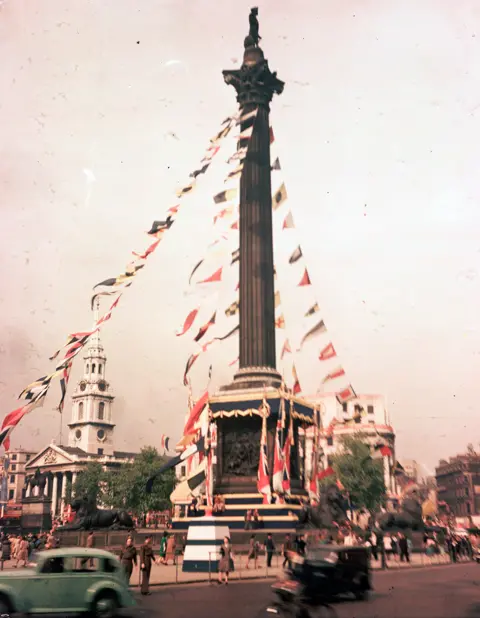
News imageGetty Images Bunting attached to Nelson's Column in Trafalgar Square, LondonGetty Images
A Dufaycolor colour transparency of Trafalgar Square, London
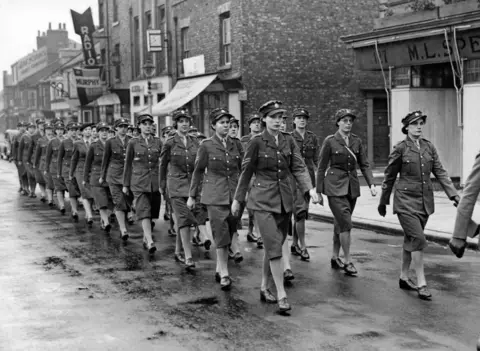
News imageGetty Images A VE Day parade of uniformed servicewomen marching down the streetGetty Images
A parade in Teesside

Churchill said: "We may allow ourselves a brief period of rejoicing but let us not forget for a moment the toil and efforts that lie ahead."
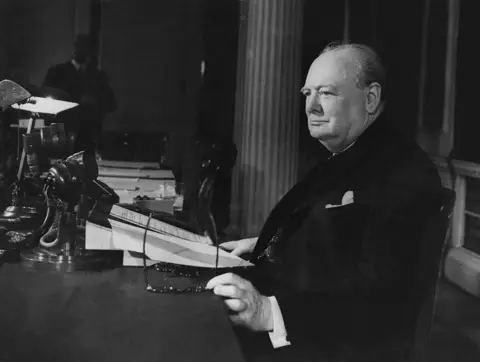
News imageGetty Images Winston Churchill makes his VE Day broadcastGetty Images
Winston Churchill makes his broadcast to the world, on 8 May 1945

Victory over Japan (VJ) Day came on 15 August 1945, following US atomic bombs being dropped on Hiroshima and Nagasaki.

News imageGetty Images People are caught in the beam of a floodlightGetty Images
Revellers are caught in the beam of a floodlight in London
News imageBBC Presentational white space

VE Day and VJ Day marked victory for the Allies but the lives of many survivors had been changed forever, as millions had lost loved ones.

And the British people had the task of rebuilding the nation, with food rationing lasting until 1954.
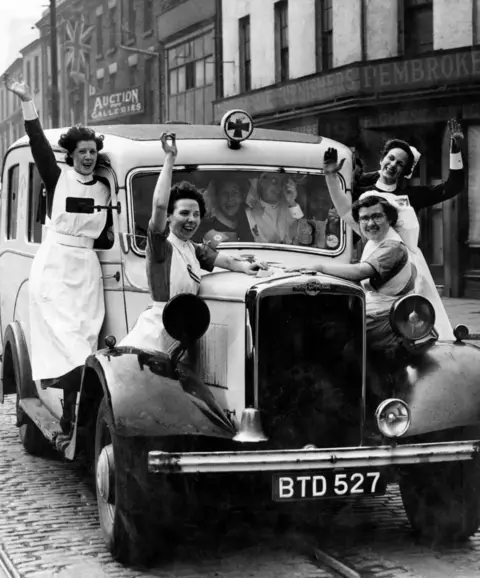
News imageGetty Images Nurses on a car wavingGetty Images
Jubilant nurses celebrate in Liverpool
News imageBBC Presentational white space

All photographs subject to copyright.