Royal Society of Biology reveals Photographer of the Year 2018

Striking images of a leopard gecko and intricately-patterned autumnal leaves have won the Royal Society of Biology's Photographer of the Year and Young Photographer of the Year competitions.

The theme of Patterns in Nature attracted entries exploring forms, sequences and structures in the natural world, with entries ranging from microscopic symmetries to the spots and stripes of plants, insects, birds and mammals.

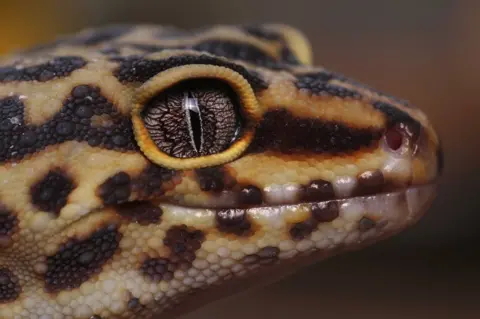
The Young Photographer of the Year prize was awarded to 17-year-old Jack Olive from Devon, who took this striking photo of a leopard gecko.

News imageJack Olive Leopard GeckoJack Olive

"The leopard gecko stared down the lens allowing me to take this picture," said Jack.

"The array of yellow-and-black scales contrast brilliantly together and the eye shows magnificent pattern and detail."

The winning entry for Photographer of the Year, submitted by Roberto Bueno, captures intricate trails left by larvae on autumnal leaves on the forest floor in the Yukon valley, in Canada.
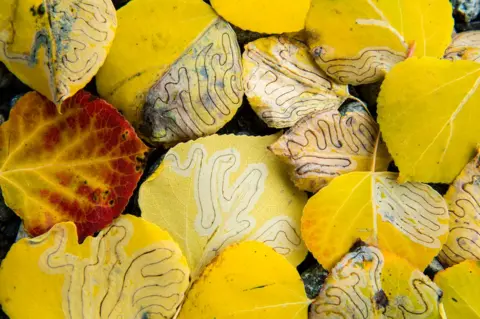
News imageRoberto Bueno The forests of the North are beautiful in autumn, with the variety of colours of the trees. A little larvae is an autumnal surprise in the northern woods of Alaska and Yukon. The feeding behaviour of aspen leaf miner (Phyllocnistis populiella) larvae, on the leaves of aspen (Populus tremuloides), make interesting patterns, with intricate trails on every leaf. The floor of the yellow forest becomes a new world to enjoy nature.Roberto Bueno

"A little larvae is an autumnal surprise in the northern woods of Alaska and Yukon," said Roberto.

"The feeding behaviour of aspen leaf miner (Phyllocnistis populiella) larvae, on the leaves of aspen (Populus tremuloides), make interesting patterns, with intricate trails on every leaf.

"The floor of the yellow forest becomes a new world to enjoy nature."

A total of 12 shortlisted entries were released for this year's photo competitions, from both amateur and aspiring photographers under the age of 18.

More than 2,500 pictures were submitted from more than 900 entrants across the two competitions.

Four entries were shortlisted for the Young Photographer of the Year award, and eight for the Photographer of the Year prize.

Young Photographer of the Year shortlisted entries
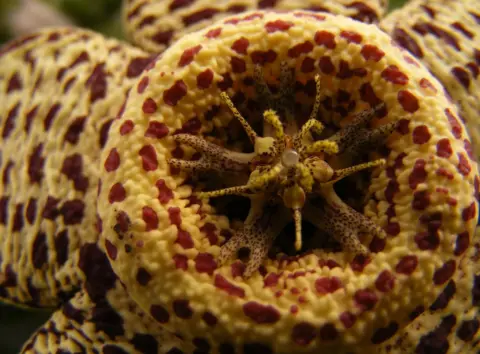
News imageMilo Hyde Orbea variegata flowerMilo Hyde
This Orbea variegata flower was captured by 10-year-old Milo Hyde.
News imageBBC Presentational white space
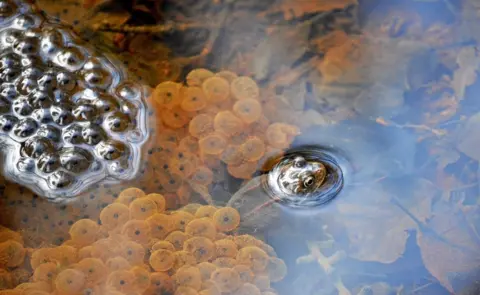
News imageRebecca Keen Frog surround by its spawnRebecca Keen
Rebecca Keen spotted this frog surrounded by its spawn in Lake Windermere, UK.
News imageBBC Presentational white space
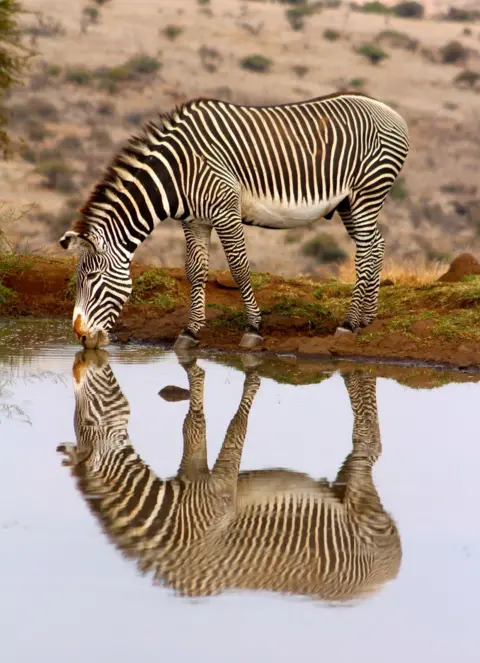
News imageImogen Smith Zebra and its reflection in waterImogen Smith
Imogen Smith, 17, photographed this zebra in Lewa Reserve, Kenya.
News imageBBC Presentational grey line

Photographer of the Year shortlisted entries
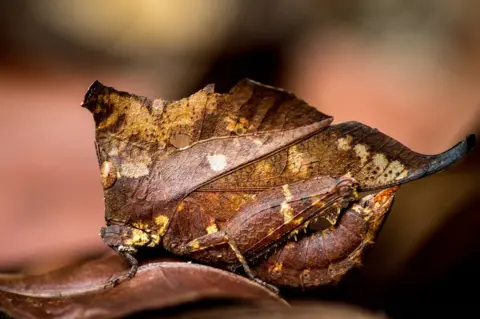
News imageGuilhem Duvot GrasshopperGuilhem Duvot
"I saw the grasshopper only because it jumped," said Guilhem Duvot, who took this photo in Borneo.
News imageBBC Presentational white space
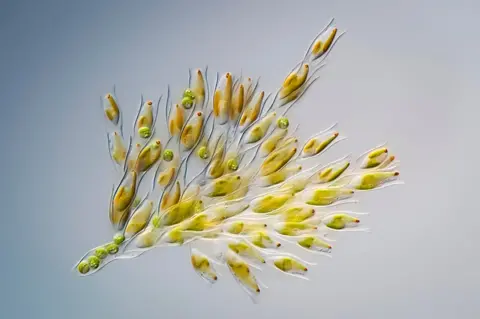
News imageHåkan Kvarnström Dinobryon divergensHåkan Kvarnström
"Dinobryon divergens is commonly known as golden algae," said Håkan Kvarnström. "It lives in lakes and ponds around the world and forms colonies composed of about six to 50 cells that are surrounded by a vase-like shell of cellulose."
News imageBBC Presentational white space
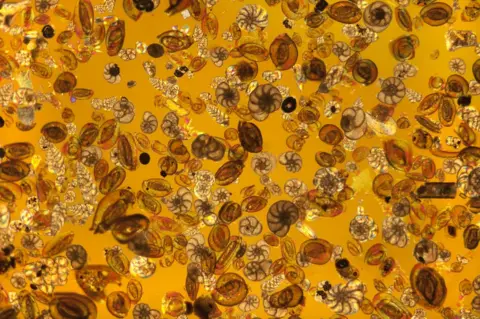
News imageSteve Lowry A wide variety of foraminifera photographed using polarised light microscopySteve Lowry
Steve Lowry's polarised light microscopy shows a variety of foraminifera. The shells of these tiny creatures form large deposits of limestone.
News imageBBC Presentational white space
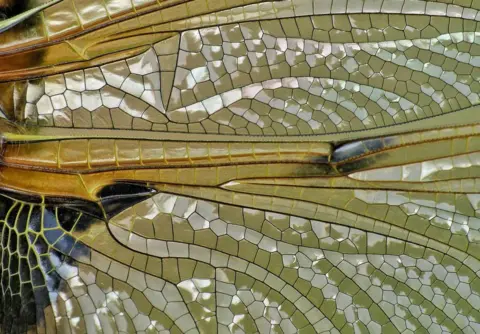
News imageSean Clayton Dragonfly wingsSean Clayton
These dragonfly wings were photographed by Sean Clayton, in Gelston, Scotland. "Dragonfly wings are incredibly intricate and when viewed close up I think they contain some of the most beautiful patterns in nature," said Sean.
News imageBBC Presentational white space
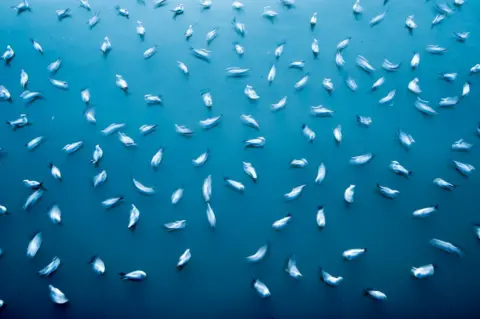
News imageViraj Ghaisas Flock of seagullsViraj Ghaisas
Viraj Ghaisas captured this image in Mumbai, India. "In winter, these birds congregate in several places where the locals have made it a daily ritual to feed them junk food."
News imageBBC Presentational white space
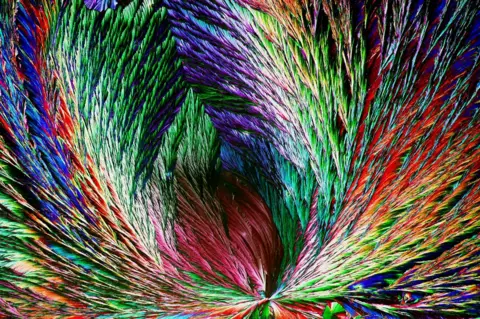
News imageHenri Koskinen Citric acid crystallized on a microscope glass slideHenri Koskinen
"My image depicts citric acid crystallised on a microscope glass slide," said Henri Koskinen. "Citric acid is an organic compound that occurs in the metabolism of all aerobic organisms."
News imageBBC Presentational white space
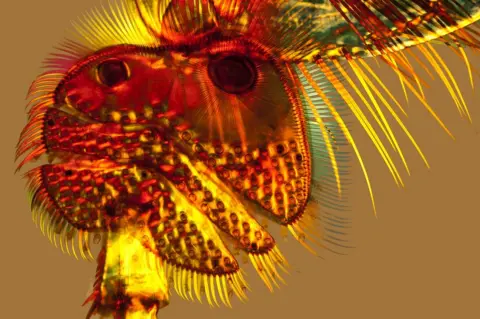
News imageSteve Lowry/Royal Society of Biology Polarised light micrograph depicting elaborate suckers found on the tarsus of the foreleg of a male great diving beetleSteve Lowry/Royal Society of Biology
Steve Lowry's polarised light micrograph depicts elaborate suckers found on the tarsus of the foreleg of a male great diving beetle.

All photographs subject to copyright.