'Ship disaster victims deserve to have story told'

 BBC
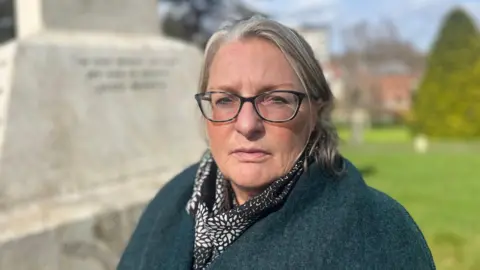
BBCLooking up at the memorial to the disaster which claimed the life of her great-great-great-grandmother, Hilary Challis says she feels "overwhelmed".
Her relative died when the boat she was on sank into the Thames, with hundreds losing their lives.
Though it led to maritime safety reforms, the sinking of the Princess Alice pleasure boat on 3 September 1878 as it returned from the Kent coast to London has "all been forgotten", Challis said.
She has spent the last year researching the victims and survivors so they can be remembered, finding more than previously thought.
 Hulton Archive/Getty Images
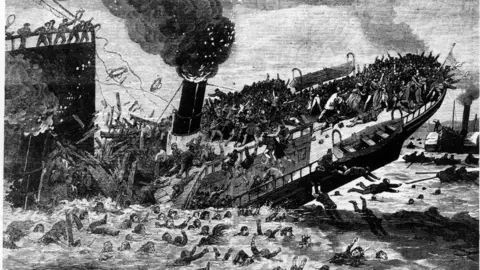
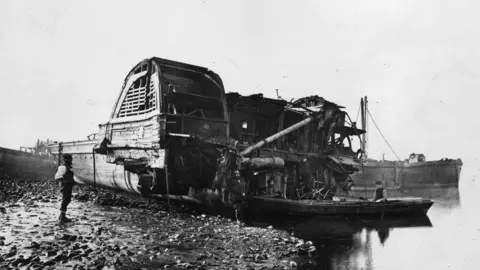
The Princess Alice was returning hundreds of men, women and children to London from a day trip to Sheerness when a huge coal ship crashed into its side.
Challis, from Worthing, said she "felt sick" when reading reports of the incident.
"Even with the distance of time, I was just horrified, I just found it really traumatising actually," she said.
"The horror of what people went through in those split seconds."
 Hulton Archive/Getty Images
She said everyone on the Princess Alice deserved "to have the same effort put in to telling their story".
Previous estimates said between 600 and 700 people died in the incident, and the memorial is to "the 550 who were drowned".
But using death records, newspaper reports and censuses, Challis has identified and named more than 700 people who died, including 142 children and 33 babies.
"This was such a major part of our social history and it's all been forgotten," she said.
'Reclaim their memory'
Hannah Stockton, curator at Royal Museums Greenwich, said the sinking was overshadowed by a mining accident shortly after, and that collisions on the Thames were quite common – just not to this extent.
While a "rough headcount" would have been done as tickets were being taken, Stockton said children over a certain age were counted as half a ticket and those under a certain age not counted at all.
"So that was always going to be an inaccurate way of finding out how many people were on board," she added.
The disaster caused discussion about safety on the river including improved safety equipment, river navigation and a push to improve swimming abilities.
"This is a historic moment in which a lot of people died and it feels like it needs to be remembered," Stockton said.
"I think for some reason these people were lost and if we can reclaim that for those people and reclaim their memory, that's really important."
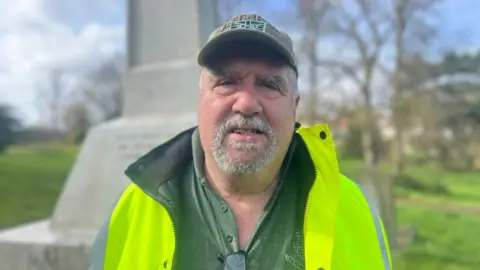
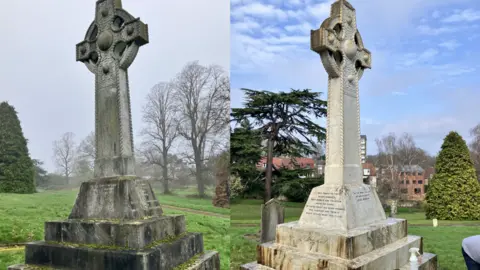
Challis worked with Steve Davies, a military grave restorer from Hawkhurst, Kent, to clean the memorial to the victims in Woolwich Old Cemetery, where many are in a mass grave.
"It stands out where it didn't before," he said, adding that the disaster was "too big a thing to forget about".
"The suffering, the death, the pain, everything about it makes you want to scream and shout," he said.
"People will hopefully know about this now."
 Steve Davies
Follow BBC Kent on Facebook, on X, and on Instagram. Send your story ideas to southeasttoday@bbc.co.uk or WhatsApp us on 08081 002250.
