How a secret woodland is healing nature and health

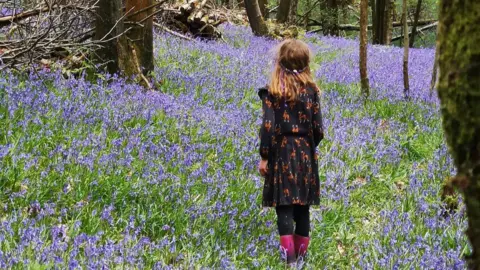 Mark Herbert
People who have found their way into an ancient woodland have told how it has helped them rediscover their connection to nature and find a new sense of wellbeing.
Combwell Wood is just off the A21 London to Hastings road, tucked away near the village of Kilndown in Kent.
Marine biologist Frankie Read-Cutting, who has worked with the Global Rewilding Alliance, stumbled on it after her parents won a raffle to visit and learn about beekeeping for a day at Combwell's bee rescue project - and she went along too.
She said it was five minutes from her home and what made it so special was "it was on my doorstep, and I'd never even heard about it".
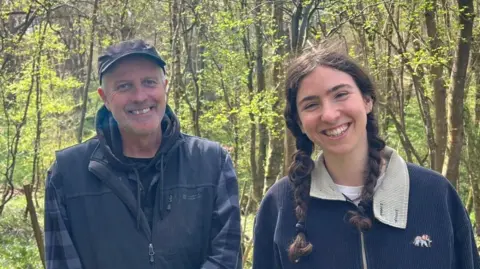 Eben Lenton
Read-Cutting told Secret Kent the site was "incredible".
She said Combwell had shown her humans were part of nature and that how people conducted themselves in an environment could make the difference between restoring life cycles or losing ecosystems.
She said it was known forests could reduce stress levels and allow people to reconnect with others, adding: "It makes you start thinking about yourself so differently."
The woodland, found down narrow and winding country lanes, is a "ghyll wood", an area of wetland wood on the steep side of a stream's upper reaches.
According to the Wildfowl & Wetlands Trust (WWT), ghyll woodlands are often undisturbed by human activity and have their own microclimate.
Mark Herbert, Combwell's warden, said the woods had existed since just after the Ice Age.
Volunteers manage about 200 acres of the 400-acre woodland, he said.
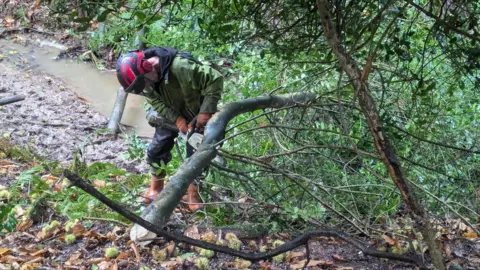 Frankie Read-Cutting
One volunteer, management consultant Almaas, said the woodland helped him recover his mental health.
"I had a nervous breakdown a few years back," he said, adding the woods had been "really important".
He said 18 months ago, he was barely able to look after himself or manage daily tasks.
"Coming out into the woods has really helped me feel part of a community," he said.
He said the activities were meaningful and that he had learned skills which were "really restorative to my sense of well-being".
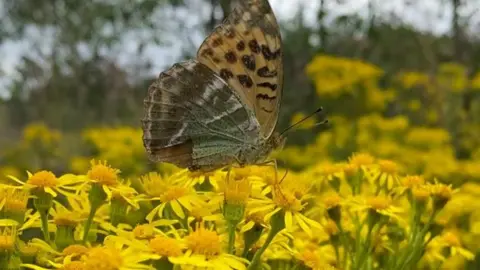 Mark Herbert
Nature itself has been recovering, as well as those caring for it.
Mark said it was "probably one of the only places you might find a little bit of wildwood left", because most Kent woodland had been "heavily managed".
At Combwell, conservationists discovered they only had to open up the forest floor "a little bit", and wildflowers emerged, followed by wildlife.
"You get the insects coming back and then you get the birds and everything comes back into place," he said.
The results were so "amazing", the team is working with Natural England and the Wildlife Trusts on some of their sites and projects.
Follow BBC Kent on Facebook, on X, and on Instagram. Send your story ideas to southeasttoday@bbc.co.uk or WhatsApp us on 08081 002250.
