Jim Clark racing cars to go on public display for first time

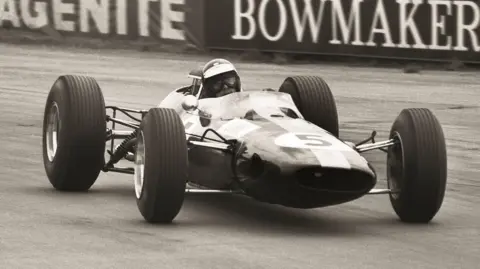 Peter Darley Collection - The Jim Clark Trust/Classic Team Lotus
Cars raced by a Scottish F1 legend more than 60 years ago are to go on public display for the first time at a Borders museum.
The life of Jim Clark, who was born in Fife in March 1936 and grew up on a Berwickshire farm, is celebrated at the Jim Clark Motorsport Museum in Duns.
It reopens on Sunday for its new season with exhibits of the driver's 1965 Type 35 Formula 2 and 1965 Lotus Type 33.
Clark, who died in a crash while racing in Germany in 1968, had achieved victories in both the cars.
As the new F1 season prepares to launch, local racing fans will be toasting the birthday of arguably the world's greatest F1 driver in the Scottish Borders.
Were he alive and competing today Borderer Jim Clark would be alongside world champion Lando Norris, Max Verstappen, George Russell and the leading lights preparing for the opening race in Melbourne next weekend.
The Jim Clark Motorsport Museum in Duns reopens with two surprise Clark cars making their first appearance since his death, to rekindle the Borders' connections with F1.
Assistant curator Andrew Tulloch said Clark had loved nothing more than racing and being on his family farm near Chirnside, but had felt equally at home in London and Paris.
"When he was older he lived in Paris, and enjoyed a much more sophisticated lifestyle, going out to nice restaurants and clubs and things, and by all accounts had a really good time," said Tulloch.
"So, I suppose, he would have been the centre of attention in F1 had he been racing now."
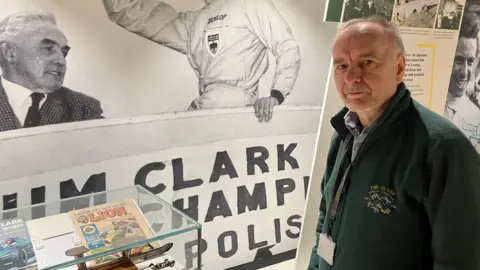
As a nation of sports fans, Scots tend to play down stardom, which is perhaps why Clark remains little known to many in his own country - and even in the Borders which he called home.
This was despite Clark being a two-times world F1 champion, and winning the Indianapolis 500 in the USA.
His life story is told in the museum in Duns.
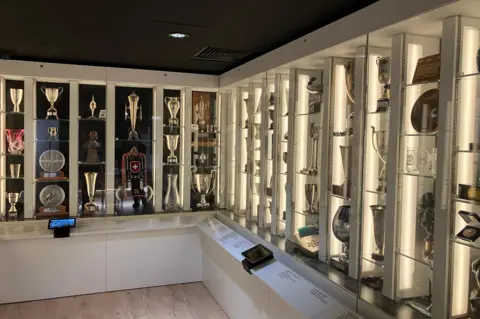
It houses racing cars, more than 100 trophies from around the world, Clark's original racing gear and rare film footage.
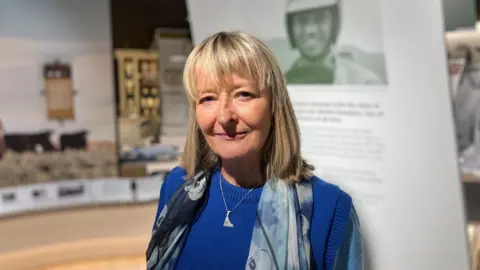
Shona Sinclair, curator with Live Borders Museums, Galleries and Archives, hopes the museum can attract a new generation of motorsport fans.
One reason is expected to be the popularity of Formula 1: Drive to Survive, a Netflix documentary credited with reducing the average age of an F1 race viewer from 44 to 32.
Sinclair said: "We have some great museums and galleries in the Borders.
"But the Jim Clark is our newest, shiniest museum with all the bells and whistles in terms of interactivity, the live footage, the F1 racing simulator, which the kids – and many adults - love, and incredible artefacts from his racing gear to trophies and gold and silver helmets."
She said Clark was a local and international hero whose legacy had been protected by the Jim Clark Trust and his family.
Sinclair added: "It would be great to think that we could turn a new generation onto the incredible sportsman that Jim was."
Racing cars tend to be among the museum's biggest attraction, and the two new arrivals have previously been unseen since Clark raced.
The 1965 Type 35 Formula 2 with a Cosworth engine was designed as F1's new car for that year.
Clark was the most successful of its drivers, winning five events and taking two thirds and a sixth place to win both the British and European F2 championships.
Only 22 Type 35s were built and Clark's had been in secure storage, untouched since 1970, but its new owner believed it should be more widely appreciated.
The 1965 Lotus Type 33, chassis R11, is also making its way to Duns.
Clark steered this car to victories across Europe, and to the 1965 World F1 Championship. It has been restored by Team Lotus to its original status.
