Live bullet find stops museum staff in their tracks

 The Tank Museum
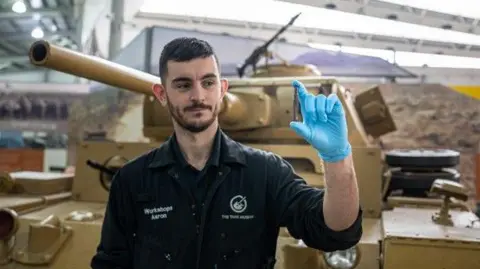
Museum staff has said the recent uncovering of a live bullet inside a World War Two tank "stopped us in our tracks".
The round was found in a Panzer III at the The Tank Museum in Bovington Camp, Dorset, during routine maintenance.
The tank was the backbone of World War Two German armoured divisions from mid-1940 to mid-1942, which meant the bullet remained hidden for more than 80 years.
Historian Ian Hudson said he could not definitely say the round was a wartime artefact but "it's certainly very likely".
 The Tank Museum
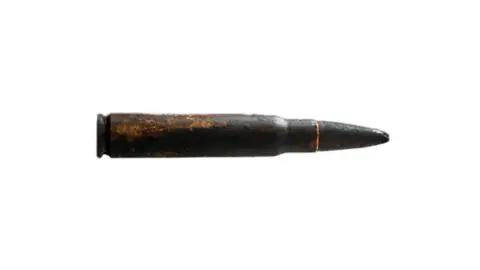
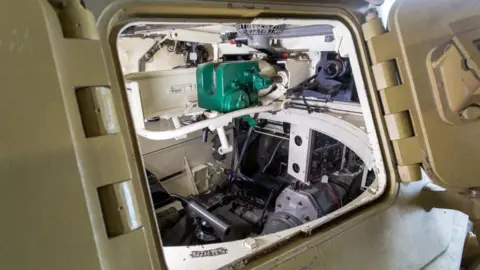
The museum says the 7.92mm by 57mm Mauser round was found beneath an internal panel of the vehicle's floor.
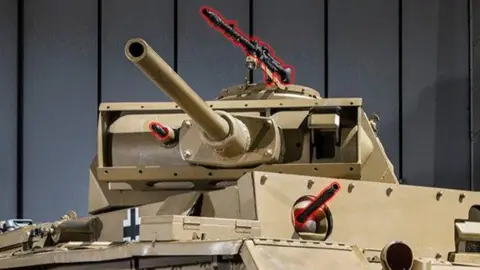
It matches those which would have been fired from the German Maschinengewehr 34 (or simply MG 34) machine gun.
The museum's Panzer III has three – one coaxially mounted, one in the hull position and one pintle-mounted.
Approximately 6,140 of the vehicle were built during World War Two and the museum has one of just two surviving Panzer IIIs maintained in running condition - Panzer III ausf L.
The tank was modified for "tropical" service and was issued to the 8th Panzer Regiment, part of the 15th Panzer Division and probably fought in the Battle of Alam el Halfa in 1942.
It was subsequently captured by the British Army and shipped to the UK but the museum says the details of its subsequent history are "unclear".
 The Tank Museum
The discovery was made during the Panzer III's routine servicing and maintenance, which takes place before and after each show at the museum.
"Every nook and cranny of the vehicle is well known to the workshop team (or so we thought!)," it wrote on its website.
"...when we removed an internal panel, something caught our eye – and (pun intended) stopped us in our tracks."
The museum said ammunition of such age "can be unstable and potentially dangerous" but it was "carefully deactivated" by trained staff and put into one of its collections.
Hudson said: "Though we can't definitively say that the round is a wartime artefact, it's certainly very likely.
"Either way, it's fascinating to be able to write another new chapter in the history of the vehicle – over 80 years since its capture."
 The Tank Museum
You can follow BBC Dorset on Facebook, X, or Instagram.
